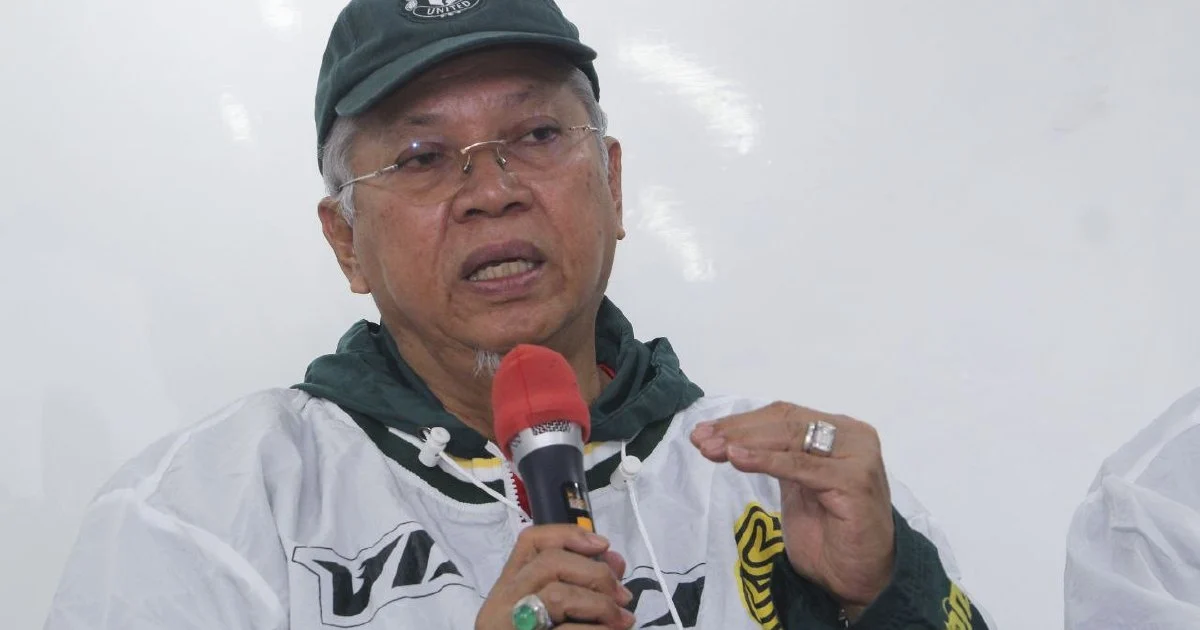
Perikatan Nasional has declared readiness to contest a general election this year, with coalition leadership confirming that its organisational machinery stands primed to respond immediately should GE16 be triggered. The statement, delivered in Kota Baru, reflects mounting uncertainty about the political calendar and suggests the opposition pact views an early dissolution as a plausible scenario requiring concrete preparation.
The coalition's confidence in its state of readiness appears rooted in operational strength at all administrative tiers. By pre-positioning resources and personnel across electoral divisions, PN aims to minimise response time should Prime Minister Anwar Ibrahim decide to call elections earlier than the constitutionally mandated deadline of 2027. This posture signals that the opposition maintains structural momentum despite having governed only Kelantan and Terengganu among Malaysia's states.
Political observers have increasingly speculated about parliamentary dissolution timing, particularly given economic headwinds and shifting voter sentiment that could influence government calculations. A mid-term election would theoretically allow the ruling coalition to consolidate power if it can overcome fragmentation within Pakatan Harapan, or alternatively enable an opposition breakthrough if public dissatisfaction crystallises into electoral momentum. PN's explicit readiness statement effectively challenges the government to demonstrate comparable preparedness while simultaneously projecting organisational competence to potential supporters.
The timing of such announcements carries strategic weight in Malaysian politics. By publicly committing to electoral readiness, PN frames itself as a government-in-waiting prepared to assume administrative responsibilities on short notice. This positioning addresses a persistent criticism from some quarters that the coalition lacks the institutional depth required for federal governance, particularly following its 2022 general election loss and subsequent exclusion from the federal cabinet formation process.
Kelantan's status as PN's most secure state fortress lends credibility to the coalition's electoral confidence. The northeastern state has provided consistent voting patterns favourable to PN components, particularly PAS, serving as both a revenue base and morale booster during challenging political periods. However, Kelantan alone cannot deliver federal power, obliging PN to build broader peninsular appeal, particularly in urban centres and among Malay-Muslim voters beyond traditional strongholds.
The coalition faces competing imperatives as it prepares for potential elections. Maintaining unity between its constituent parties—principally PAS, Bersatu, and HAMIM—remains perpetually challenging given their divergent ideological orientations and internal power dynamics. A snap election called with minimal notice could either crystallise organisational discipline through urgency or expose fault lines through compressed campaign periods that leave insufficient time for coalition consensus-building on candidate selection and policy platforms.
Malaysia's electoral environment has grown more volatile since 2022, with voter behaviour patterns less predictable than during previous decades. The emergence of fissures within Pakatan Harapan, reflected in tensions between DAP and PKR as well as occasional PAS cooperation on specific issues, suggests that anti-establishment sentiment might benefit a united opposition more than fragmented components working at cross-purposes. PN's declaration assumes it can capitalise on such divisions, though this requires articulating a compelling alternative vision beyond opposition to current governance.
Economic conditions significantly influence electoral timing calculations for sitting governments. Inflationary pressures on household incomes, rising unemployment particularly among youth, and real estate affordability concerns weigh against Anwar Ibrahim's administration despite achieving some macroeconomic stabilisation. Should these conditions deteriorate further, the ruling coalition might view early elections as preferable to facing voters amid deepening hardship, conversely, improved economic indicators could justify delaying polls until conditions strengthen perceptions of government competence.
Regional political developments also intersect with Malaysian electoral speculation. Thailand's political instability, Myanmar's continued military rule, and Indonesia's governance challenges create a complex regional backdrop where Malaysian stability or perceived weakness carries diplomatic implications. PN's international positioning as an opposition force centred on Islamist-influenced governance differs notably from incumbent portrayals of continuity and secular pluralism, potentially influencing how regional powers assess Malaysia's trajectory.
The practical implications of PN's readiness extend beyond campaign mechanics to encompass policy development and shadow cabinet formation. An opposition genuinely preparing for potential governance must articulate positions on critical issues from fiscal management to foreign policy, creating public records against which performance would later be measured. PN's visibility on such matters remains comparatively limited relative to Pakatan Harapan's more extensive policy documentation, presenting both vulnerability and opportunity depending on electoral framing.
Snap elections carry costs and uncertainties for any government invoking them. While strong polling might justify the gamble, poor calculations could backfire spectacularly, as witnessed internationally when sitting leaders miscalculated public sentiment. The Malaysian electorate, having experienced three general elections in four years between 2018 and 2022, demonstrates both voter fatigue regarding frequent polls and capacity to pivot substantially between contests. PN's preparation essentially places the coalition in position to capitalise should opportunities arise, whilst competitive disadvantage remains a possibility if elections are delayed until 2027 when electoral dynamics may shift unfavourably.

