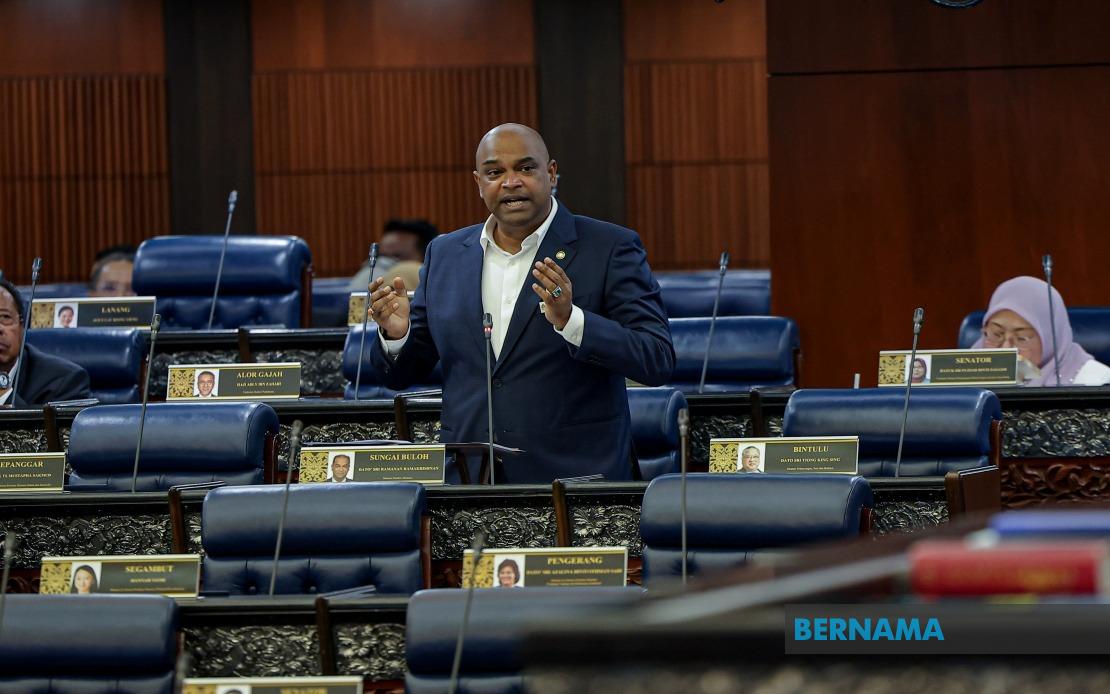
Malaysia's Social Security Organisation (PERKESO) has delivered on its service promises, achieving a compliance rate exceeding 96 per cent in claims and benefit payment processing during the past year, Human Resources Minister Datuk Seri R. Ramanan told Parliament on June 24. The organisation's robust performance reflects the implementation of more rigorous customer service standards introduced across its protection schemes, demonstrating a meaningful commitment to serving the nation's workforce and self-employed contributors more efficiently.
Minister Ramanan outlined how PERKESO has established strict benchmarks through updated Customer Charter standards that apply uniformly across the LINDUNG Pekerja, LINDUNG Kendiri and LINDUNG Kasih schemes. These standards kick into effect once claimants have submitted all required documentation, ensuring clarity about processing timelines from the outset. The structured approach eliminates ambiguity that previously frustrated contributors waiting for their entitlements, creating predictable service delivery expectations across the social security system.
Processing timelines vary according to benefit type and complexity. Funeral benefits and claims for temporary disablement receive priority handling with a two-day processing window, recognising the urgent circumstances often surrounding these applications. By contrast, claims for permanent disablement benefits, invalidity pensions, survivor pensions and dependent allowances warrant more thorough investigation and approval scrutiny, consequently requiring three business days from complete submission. This differentiated approach balances speed with rigour, preventing premature approvals whilst ensuring critical benefits reach vulnerable beneficiaries without unnecessary delay.
The LINDUNG Kerjaya scheme, introduced more recently, sets even tighter performance benchmarks. Under its 2025 Customer Charter, all benefit claims must be processed within two days of receiving complete applications. Minister Ramanan reported that PERKESO's performance against this demanding standard reached an exceptional 99.68 per cent average compliance rate, substantially exceeding the already ambitious 96 per cent benchmark applied to other schemes. This outstanding result suggests the organisation's systems and personnel have successfully adapted to heightened expectations, delivering service excellence consistently.
Digitalisation forms the backbone of PERKESO's efficiency gains. The organisation has substantially upgraded its operational infrastructure through multiple technological initiatives designed specifically to accelerate claims handling. The LINDUNG Faedah PERKESO portal allows contributors to submit applications and track progress online, reducing paperwork and eliminating delays caused by physical document transit. These digital channels have proven particularly valuable for contributors managing multiple touch points with the social security system, whether due to workplace accidents, disablement, or planning for survivor protection.
Beyond the primary claims portal, PERKESO has implemented the 1Best system, a comprehensive internal processing infrastructure deployed throughout 2024. This backbone system manages the entire lifecycle of claims within PERKESO's offices, enabling staff to access unified contributor records and coordinate benefit payments across multiple schemes simultaneously. The PRIHATIN mobile application extends digital accessibility further, allowing contributors to access personalised information about their accounts and PERKESO services from their smartphones. Such innovations acknowledge that modern Malaysian workers expect digital engagement options, particularly younger contributors who view online interactions as standard practice.
Human interaction remains central to PERKESO's service model despite technological advancement. The organisation recently established the Prihatin Squad, a dedicated advisory unit providing personalised guidance to contributors, beneficiaries and insured persons navigating claims procedures. Squad members offer direct assistance that technology cannot fully replace—explaining eligibility criteria, identifying missing documentation, and building confidence among individuals unfamiliar with social security processes. This hybrid approach, combining digital efficiency with human support, addresses the reality that vulnerable groups including elderly beneficiaries and informal sector workers often require face-to-face assistance.
Accident claims receive particular attention through the INSPIRE System, which creates direct digital linkages between hospitals and PERKESO. When workplace injuries occur, medical institutions immediately transmit relevant clinical information into PERKESO's systems, eliminating the traditional back-and-forth communications that previously delayed approvals. Emergency cases follow simplified procedures designed for completion within 24 hours, recognising that injured workers require prompt income replacement. This hospital integration represents a fundamental shift in how PERKESO coordinates with healthcare providers, treating accident claims as urgent matters requiring rapid institutional cooperation.
Fraud detection poses ongoing challenges for any social security organisation managing large claim volumes. Minister Ramanan acknowledged this reality whilst explaining PERKESO's approach: a multi-layered assessment process incorporating artificial intelligence for preliminary screening alongside mandatory manual verification. This dual-verification strategy prevents false negatives that would award fraudulent claims whilst minimising false positives that would unnecessarily delay legitimate applications. The combination reflects mature understanding that sophisticated algorithms alone cannot reliably distinguish genuine claims from fabricated ones, necessitating human judgment as a safeguard.
For Malaysian contributors and beneficiaries, these improvements translate into tangible service benefits. Workers injured in workplace accidents face reduced uncertainty about payment timelines and can access support more rapidly. Families who lose income earners receive survivor benefits without navigating confusing procedures or waiting weeks for approvals. Self-employed individuals covered under LINDUNG Kendiri can plan with confidence about benefit timelines. Small business owners operating under LINDUNG Kerjaya benefit from the fastest processing standards, reflecting their sector's particular vulnerability to disruption from disablement or death.
The 96 per cent compliance achievement carries broader significance for Malaysia's social safety net. As the nation pursues higher-income economic status and the workforce ages, social security systems face increasing demand and complexity. PERKESO's performance metrics demonstrate that Malaysian public institutions can deliver world-class operational efficiency whilst maintaining the human compassion essential to social protection. The results validate substantial investments in digitalisation and staff training, proving that modernisation enhances rather than diminishes service quality.
Looking forward, PERKESO's trajectory suggests continued refinement rather than complacency. The Minister's detailed responses about fraud detection, hospital coordination, and emergency procedures indicate the organisation remains focused on identifying service bottlenecks and implementing targeted solutions. As Malaysia's workforce composition continues shifting toward service sectors and self-employment, PERKESO's ability to adapt its schemes and processes will determine whether the social safety net remains genuinely protective. Current performance metrics provide encouragement that institutional capacity exists to meet these evolving challenges effectively.

