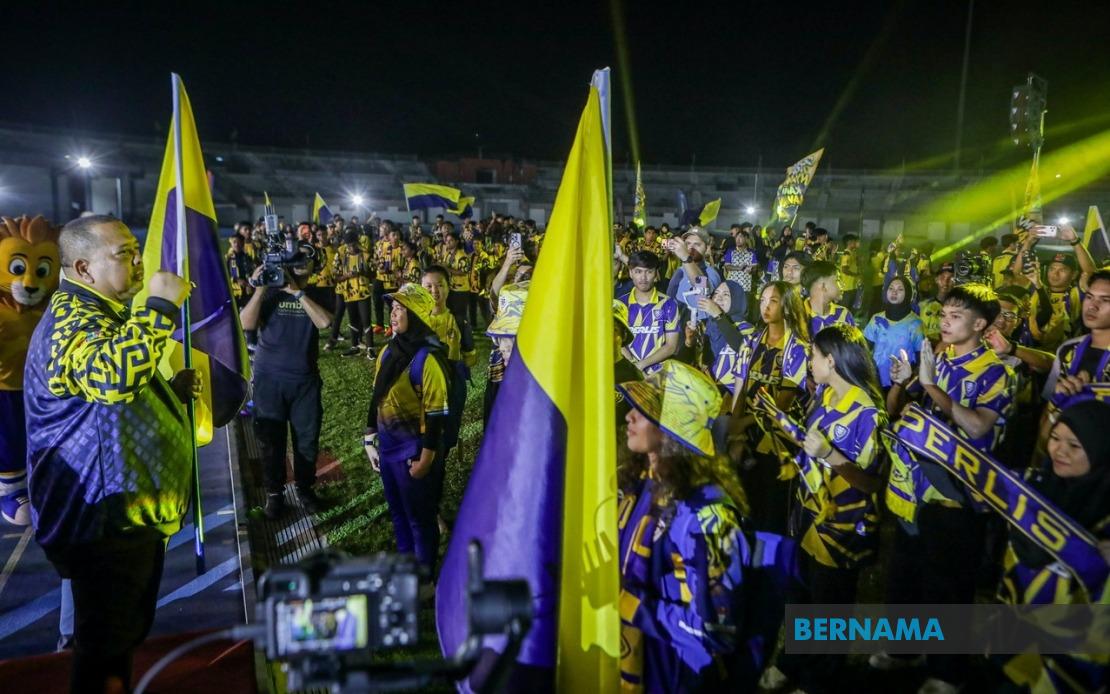
Perlis has etched a significant milestone in its sporting history by capturing 17 gold medals at the 2026 Malaysia Games held in Selangor, representing the state's most successful SUKMA campaign to date. The achievement comes as validation of a strategic approach to sports development that the state government has pursued over recent years, combining investment in training infrastructure, coaching excellence, and athlete welfare.
Menteri Besar Abu Bakar Hamzah highlighted the accomplishment during a press conference in Kangar following an Exco Meeting at Kompleks Seri Putra, framing the result as tangible evidence that Perlis's coordinated sports development initiatives are delivering measurable outcomes. The state's overall medal haul of 42 medals—comprising 17 gold, seven silver, and 18 bronze—reinforces a consistent upward trajectory in competitive performance within the SUKMA framework.
Among the standout performances were record-breaking achievements in athletics and weightlifting disciplines. Perlis athletes shattered the existing SUKMA games record in the shot put event, demonstrating technical excellence and the benefits of specialised coaching in field events. Equally impressive was the state's weightlifting contingent's dominance, with the team securing overall championship honours in their sport at SUKMA Selangor 2026, indicating deep strength across multiple competitors in that category.
The significance of this performance extends beyond medal counts. For a state with Perlis's population base and resource constraints compared to larger Malaysian territories, accumulating 17 gold medals represents efficient deployment of sporting talent and focused development strategies. The result suggests that Perlis has successfully identified and cultivated athletes capable of competing at the highest levels of domestic sports competition.
Abu Bakar's remarks indicate that the state government views this outcome not as a plateau but as a foundation for future advancement. He outlined an agenda encompassing talent identification and development pathways, high-performance training regimes, coaching staff quality, sports science integration, facilities enhancement, and comprehensive athlete support systems. This holistic framework suggests Perlis is approaching sports development with strategic depth rather than episodic investment.
The performance also carries implications for understanding regional sports dynamics within Malaysia. SUKMA serves as the primary competitive platform for measuring state-level sporting capability and development effectiveness. Perlis's achievement places it competitively alongside larger and more resourced states, suggesting that strategic focus and efficient resource allocation can yield results comparable to jurisdictions with greater absolute spending capacity.
Recognition of athlete success forms another element of the state's strategy moving forward. The government is currently formulating incentive structures for SUKMA medallists, with a formal presentation ceremony scheduled following the conclusion of Para SUKMA Selangor 2026. Such recognition mechanisms serve multiple purposes: they acknowledge individual and team achievement, signal state commitment to sports pursuits, and create aspirational pathways for younger athletes observing these rewards.
The coordination evident in Perlis's SUKMA campaign involved multiple institutional stakeholders working in concert. Athletes, coaching personnel, sports associations, and the State Sports Council collectively contributed to the outcome. This inter-agency alignment suggests maturity in how Perlis approaches sports governance, moving beyond isolated efforts toward systemic coordination that pools expertise and resources effectively.
For Southeast Asian and Malaysian sports observers, Perlis's trajectory offers insights into how smaller states can compete effectively within national sporting frameworks. The approach emphasises identifying sports where competitive advantage is achievable through focused development rather than attempting broad-based excellence across all disciplines. This targeted methodology appears to be yielding superior results compared to less strategic approaches.
Looking ahead, the state's stated commitment to continuous enhancement suggests Perlis intends to build upon this foundation rather than treat 2026 as a peak achievement. Investment in sports science capabilities, advanced training facilities, and coaching development indicates forward planning beyond the current Olympic quadrennial cycle. Such long-term orientation often distinguishes sustainably successful sports programs from those achieving episodic success.
The broader context for Malaysian sports includes SUKMA's role as both a competitive proving ground and a development platform for athletes who may progress to international representation. Perlis's strong domestic performance potentially signals emerging talent capable of representing Malaysia in Southeast Asian and global competitions. The state's investment in high-performance infrastructure may therefore yield returns extending beyond domestic rankings.
For Malaysian policymakers examining effective sports development approaches, Perlis demonstrates that strategic prioritisation, institutional coordination, and sustained investment can produce measurable improvements in competitive outcomes. The state has effectively translated policy commitments into tangible results, providing a case study in evidence-based sports governance that other Malaysian jurisdictions may reference when designing their own development strategies.

