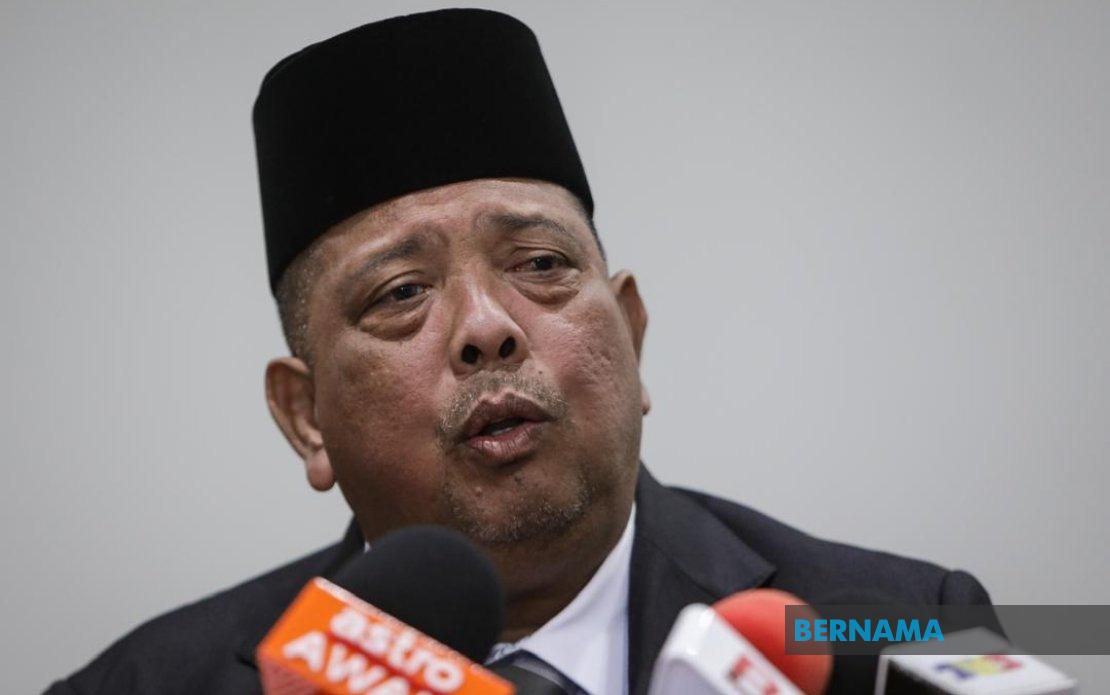
Perlis Menteri Besar Abu Bakar Hamzah has relinquished his position on Parti Pribumi Bersatu Malaysia's (Bersatu) Supreme Leadership Council, a move the senior politician says will enable him to channel his full energies into managing state affairs during the final phase of his tenure. Abu Bakar submitted his resignation letter to the party's central leadership the preceding week, he disclosed on July 9 during a ceremony marking the resumption of cross-border ferry connections between Kuala Perlis and Satun, Thailand.
The decision represents a recalibration of priorities as the Perlis chief executive faces the dual pressures of delivering on state-level commitments whilst maintaining party obligations at the national tier. Although stepping away from the Supreme Leadership Council, Abu Bakar clarified that his roles as Perlis Bersatu state chief and Kangar division chief remain intact, underscoring a strategic differentiation between party governance bodies and grassroots party structures.
Abu Bakar's rationale centred on the administrative demands confronting Perlis during a critical juncture. With roughly twelve months remaining before the current state legislative assembly term concludes in 2026, the Menteri Besar characterised the workload as incompatible with sustained engagement at the national leadership echelon. The portfolio encompasses investor recruitment drives and the pursuit of performance metrics essential for demonstrating progress during his final year in office. These objectives, he suggested, require undivided concentration at a time when the state administration confronts evolving economic and developmental challenges.
The announcement carries significance beyond mere personnel reshuffling. In June, during the opening of the Perlis state legislative assembly sitting, the Raja of Perlis, Tuanku Syed Sirajuddin Jamalullail, issued a directive granting Abu Bakar latitude to govern the state unimpeded until the conclusion of the 15th legislative assembly term. This royal endorsement provided political cover for the Menteri Besar's strategic pivot, essentially affirming the legitimacy of concentrating attention on state-level governance rather than divided loyalties between multiple organisational layers.
The timing of the resignation reflects broader dynamics within Bersatu, the party founded by former Prime Minister Mahathir Mohamad that has become a significant coalition partner in several state governments. Abu Bakar's decision suggests a recognition that the party's Supreme Leadership Council obligations, whilst prestigious, may prove burdensome for state-level executives managing complex administrative portfolios, particularly those approaching the terminal stages of their terms when legacy-building and performance delivery assume heightened importance.
Perlis, while Malaysia's smallest state by population, occupies a strategically important position on the Thai border and has emerged as a focus for regional tourism and economic integration initiatives. The cross-border ferry service resumption, which occasioned Abu Bakar's announcement, exemplifies the infrastructure and connectivity projects that have dominated his administration's agenda. Paradoxically, such initiatives demand sustained attention precisely when party leadership obligations might pull focus elsewhere.
Sources indicated that Datin Marzita Mansor, the Sena assemblyman and state executive councillor, had similarly departed from Bersatu's Supreme Leadership Council ranks. However, verification of this information proved elusive at the time of reporting, suggesting the possibility of a broader retreat among Perlis party figures from the central party governance structure, potentially reflecting a coordinated approach to managing competing commitments between state and national party responsibilities.
The resignation underscores a persistent tension within Malaysia's political system regarding the extent to which state-level executives can balance their gubernatorial duties with participation in national party hierarchies. For elected chief ministers leading smaller states with limited administrative capacity, the reality of competing calendars, meetings, and policy deliberations at multiple tiers can prove untenable. Abu Bakar's choice to prioritise state delivery over national party prestige may resonate with other state executives grappling with similar dilemmas.
For Bersatu, the loss of Perlis representation on its Supreme Leadership Council represents a consolidation of influence among remaining party figures at the national level. How this develops could shape the party's internal power distribution as it navigates its role within the current political coalition landscape and prepares for potential electoral contests ahead. The party's capacity to retain talented administrators at the state level whilst maintaining their engagement with national decision-making forums remains an unresolved challenge.
Abu Bakar's emphasis on investor attraction and performance indicators suggests that his final year as Menteri Besar will emphasise measurable economic outcomes and developmental progress. The removal of Supreme Leadership Council duties may prove instrumental in his ability to deliver on these objectives. His decision ultimately reflects a pragmatic recognition that political effectiveness at the state level demands concentrated effort, particularly when the opportunity to shape outcomes before electoral transitions approaches its final window.

