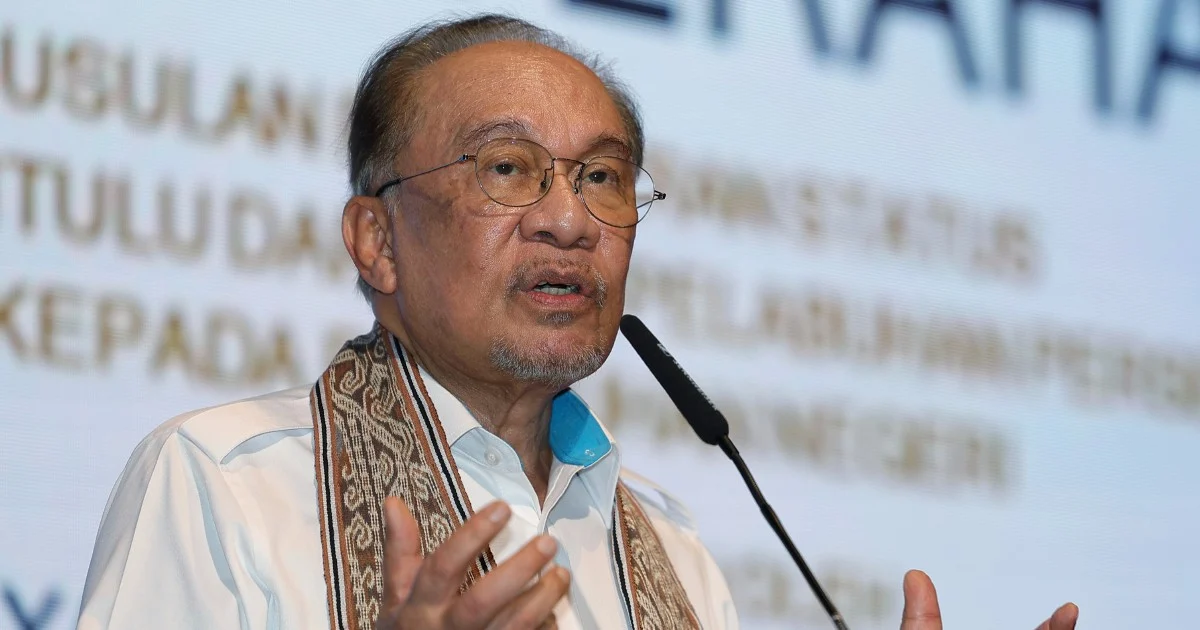
Prime Minister Datuk Seri Anwar Ibrahim has signalled that ongoing discussions between Petronas and Petros are moving in a constructive direction, offering hope for deeper cooperation between Malaysia's national energy champion and Sarawak's resource development arm. Speaking in Kuching, the premier expressed optimism about the trajectory of negotiations, suggesting that both entities are inching towards an agreement that could reshape energy-sector dynamics in the state.
The talks between Petronas and Petros represent one of the most significant energy-sector initiatives in recent years for Sarawak, a state that remains central to Malaysia's hydrocarbon strategy despite regional energy transitions. Petros, which manages petroleum resources on behalf of the Sarawak state government, has long sought greater involvement in upstream projects and expanded commercial leverage. Petronas, meanwhile, operates extensive concessions in Sarawak waters and onshore fields, making any accord consequential for both the national economy and state revenues.
The negotiations underscore broader efforts within Malaysian government circles to strengthen the relationship between federal and state-level energy authorities. Over recent years, various stakeholder groups in Sarawak have pushed for more transparent revenue-sharing mechanisms and greater participation in strategic decision-making around resource development. These talks appear to address some of those concerns by creating a framework for enhanced collaboration rather than maintaining traditional hierarchies.
Anwar's public affirmation of positive momentum carries particular weight given the heightened political sensitivity surrounding Sarawak's relationship with Kuala Lumpur. The state government has historically maintained careful distance from federal control over natural resources, jealously guarding its constitutional rights to manage petroleum assets within state boundaries. By announcing progress publicly rather than through routine corporate channels, the prime minister was signalling political commitment to resolving longstanding friction over energy governance.
The timing of these statements also reflects Malaysia's broader energy security concerns. As global oil markets remain volatile and regional competition for hydrocarbon investment intensifies, securing stable domestic supply chains and maximizing return on existing assets has become strategically important. Petronas and Petros working more closely could improve operational efficiency, reduce redundant exploration efforts, and enable more aggressive development of marginal fields that might otherwise remain dormant due to capital constraints or technical complexity.
For Malaysia's downstream sectors and power generation, enhanced cooperation between the two entities could eventually translate into more reliable feedstock availability and potentially more competitive pricing. Manufacturing hubs in Sarawak—particularly those dependent on energy-intensive processes—stand to benefit from any arrangements that stabilize supply or improve cost structures. Similarly, the electricity sector in the state relies heavily on hydrocarbon-fired generation, making investment coordination between Petronas and Petros consequential for long-term tariff sustainability.
The financial implications merit careful attention as well. Sarawak has historically received petroleum royalties from the federal government, but negotiations around these payments have occasionally been contentious. A more integrated operational structure between Petronas and Petros could fundamentally alter how revenues are calculated and distributed, potentially increasing the state's direct participation in profits from production rather than relying solely on royalty streams. Such restructuring would require careful actuarial work and sustained negotiation over contract terms.
Regional geopolitics also colour these discussions. Several Southeast Asian nations have invested substantially in upstream petroleum development and liquefied natural gas infrastructure. Indonesia, Thailand, and Vietnam all compete for international energy investment capital. Malaysian energy authorities understand that without dynamic, well-coordinated domestic frameworks, capital will simply flow elsewhere. Petronas and Petros demonstrating unified strategic direction sends important signals to international oil majors and independent explorers contemplating investments in Malaysian waters.
Environmental and regulatory dimensions cannot be overlooked either. As the global energy industry faces increasing pressure to meet net-zero commitments and stricter environmental standards, having a single coordinated approach to operational practices—whether regarding emissions management, waste handling, or ecosystem protection—becomes administratively simpler and potentially more cost-effective. Enhanced cooperation could establish unified environmental and safety protocols across Sarawak's petroleum assets.
Anwar's optimism suggests that negotiating teams have likely resolved several foundational disagreements and are now focused on technical implementation details and governance structures. Such progress rarely emerges unless both parties recognize mutual benefit outweighing their individual preferences. The willingness to announce positive movement publicly—particularly from the prime minister himself—indicates sufficient confidence that an agreement is within reach.
The path forward remains complex, with questions lingering about operational integration mechanics, ownership structures, and profit-sharing formulas. However, the momentum acknowledged by Anwar suggests those questions are being addressed constructively rather than becoming entrenched positions. For Malaysia's energy future and Sarawak's economic prospects, successful completion of these negotiations could prove transformative.

