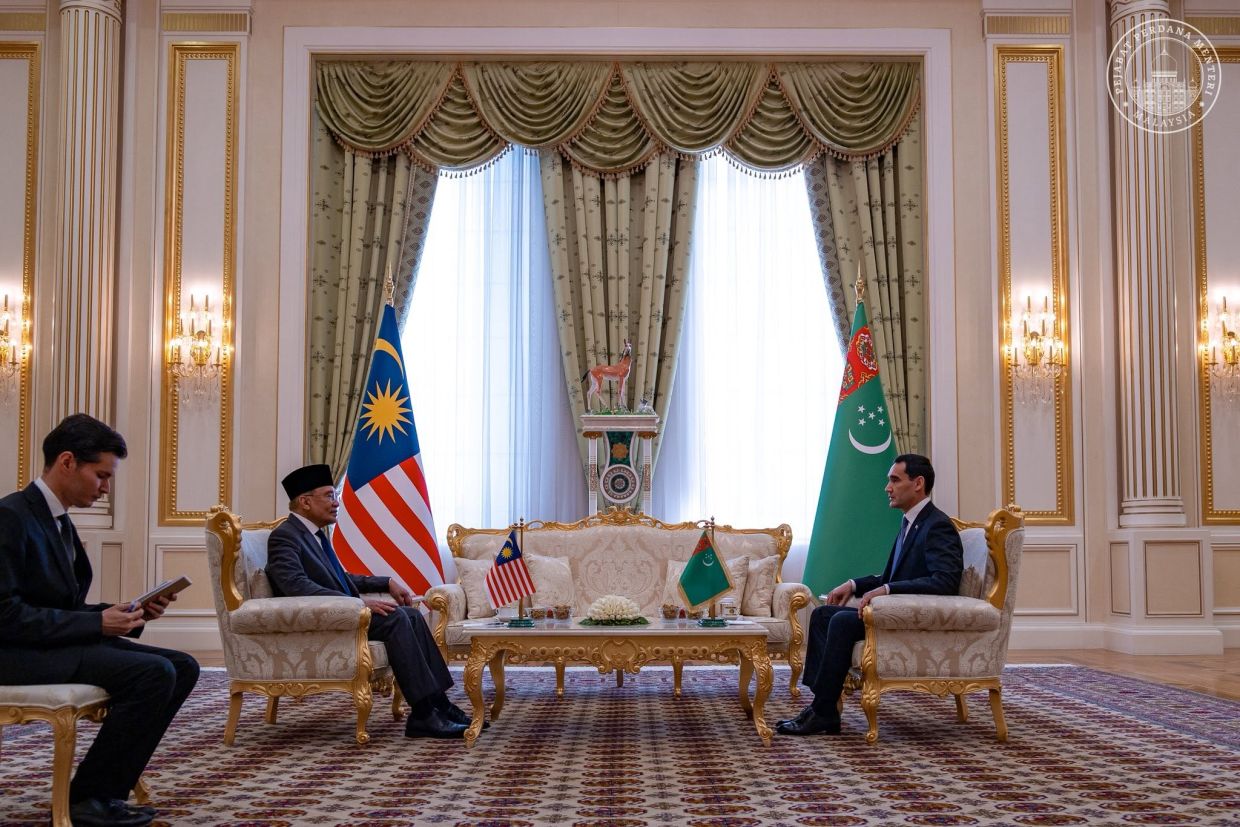
Prime Minister Datuk Seri Anwar Ibrahim and Turkmenistan President Serdar Berdimuhamedov oversaw the formal signing of a strategic partnership agreement between the Malaysian state oil company Petronas and Turkmenistan authorities during an official visit to Ashgabat. The milestone accord represents a significant deepening of bilateral relations, particularly in the energy sphere where both nations have collaborated successfully for the past three decades.
The partnership announcement comes at a particularly opportune moment for Malaysia's energy sector, signalling international recognition of the country's technical prowess and capacity to compete in complex upstream petroleum operations. By formalising this agreement under the auspices of both nations' top leadership, the accord elevates Petronas beyond a commercial relationship into the realm of strategic state interest, a classification that typically ensures long-term government support and favourable regulatory treatment.
Turkmenistan holds some of the planet's most substantial natural gas reserves, positioning it as a crucial energy supplier within Central Asia and beyond. The nation's gas wealth remains substantially underutilised relative to global demand, creating substantial commercial and developmental opportunities for experienced international operators. Petronas, with its track record of successful operations across diverse geological and political environments, brings both the technical knowledge and financial capacity to unlock value from these resources in ways that benefit Turkmenistan's economy and energy security objectives.
The three-decade history of Malaysia-Turkmenistan energy cooperation provides a robust foundation for expanded engagement. Rather than starting from scratch, both parties can leverage institutional knowledge, established supply chains, and mutual trust accumulated over generations of successful partnership. This continuity matters significantly in capital-intensive industries where reliability and predictability form the basis of investment decisions running into billions of dollars.
Petronas has accumulated total investments in Turkmenistan exceeding RM52.73 billion since establishing its operations there in 1996, making the country one of the company's most substantial overseas commitments. Such magnitude of investment reflects confidence in Turkmenistan's resource base, political stability, and commitment to honouring contractual obligations. The fresh partnership agreement signals Petronas' intention to deepen rather than merely maintain its existing footprint, suggesting new project development or expansion of current operations may be under consideration.
Bilateral trade between Malaysia and Turkmenistan reached RM75.80 million in 2025, positioning the Central Asian nation as Malaysia's fourth-largest trading partner within its region. Malaysian exports to Turkmenistan totalled RM75.50 million, reflecting a nine percent year-on-year increase that underscores growing commercial momentum between the countries. While these trade volumes may appear modest compared to Malaysia's commerce with major Asian economies, the trajectory and composition of trade—heavily weighted towards energy sector services and products—demonstrates the specialised nature of the relationship and its critical importance to Malaysian industrial capabilities.
The partnership resonates with Malaysia's broader regional strategy within Central Asia, a geopolitically significant zone where several major powers compete for influence. By strengthening energy ties with Turkmenistan through landmark agreements, Malaysia positions itself as a constructive economic partner focused on mutual development rather than geopolitical competition. This approach aligns with the MADANI government's emphasis on pragmatic, benefit-focused international engagement that prioritises wealth creation and stability over ideological considerations.
The accord also addresses critical dimensions of Malaysia's energy future, particularly the transition towards more sustainable sourcing and operational practices. Natural gas serves as a transitional fuel in global energy systems, offering substantially lower carbon intensity than coal whilst providing the reliability that renewable sources cannot yet guarantee. By investing in Turkmenistan's gas sector, Petronas helps secure long-term supply for Malaysian power generation and industrial use, whilst also positioning the company favourably within international energy markets increasingly focused on lower-carbon intensity sources.
The timing of this announcement carries additional significance given ongoing global energy market volatility and geopolitical uncertainties affecting traditional supply routes. Diversification of Malaysian energy sources and strengthening ties with reliable Central Asian suppliers reduces dependency on any single source or route, enhancing national energy security. This strategic hedging approach protects Malaysia's industries and consumers from future supply disruptions that could result from regional conflicts or unexpected political changes elsewhere.
Beyond energy cooperation, the partnership framework creates pathways for broader economic collaboration encompassing technology transfer, workforce development, and knowledge sharing. Malaysian expertise in petroleum engineering, reservoir management, and project execution can be exported to Turkmenistan, creating service sector opportunities for Malaysian professionals and companies. Conversely, Turkmenistan's resource wealth and infrastructure development needs present market opportunities for Malaysian construction, engineering, and financial services firms.
The strategic nature of the partnership, underscored by high-level political endorsement from both nations' leaders, provides certainty to investors and stakeholders contemplating involvement in Turkmenistan-related projects. When partnerships gain status as matters of state policy rather than purely commercial arrangements, they typically receive preferential treatment regarding regulatory approval, currency access, and dispute resolution. This elevated status reduces non-commercial risks that often deter investment in frontier or developing energy markets.
The partnership announcement reflects Malaysia's maturing approach to international engagement, moving beyond traditional reliance on Western markets or immediate Asian neighbours towards building durable relationships with energy-rich nations in strategically important regions. As global energy markets continue fragmenting along geopolitical lines, nations that cultivate deep partnerships with reliable resource suppliers and technical partners position themselves advantageously. Malaysia's expanded commitment to Turkmenistan energy cooperation exemplifies this forward-thinking strategy.

