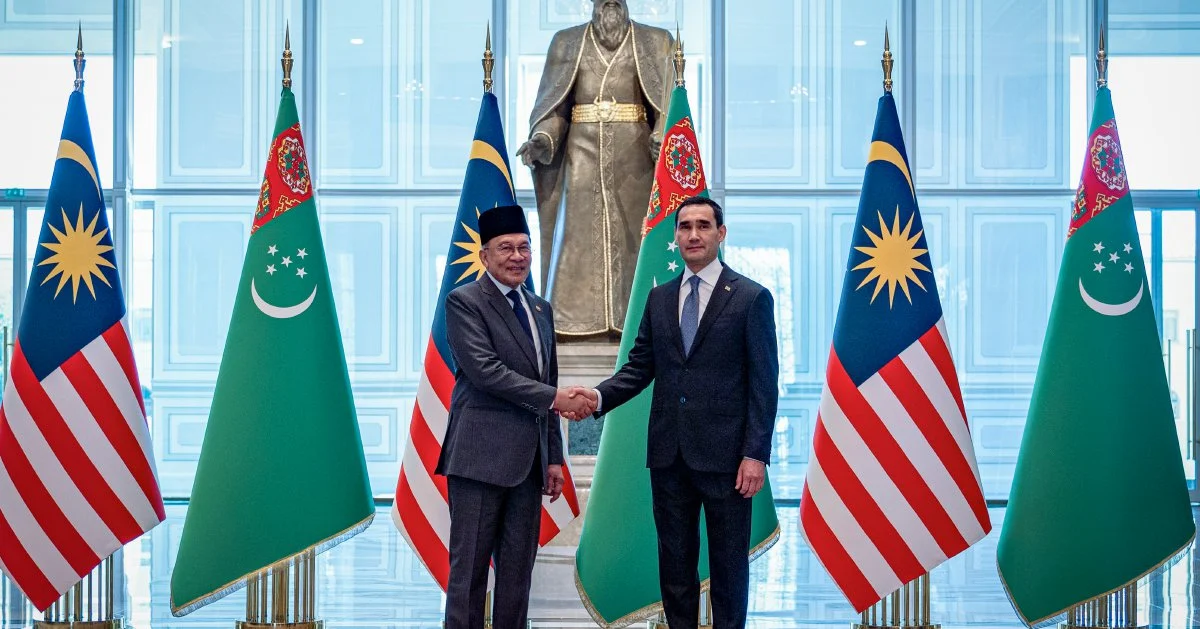
Malaysia's petroleum sector is experiencing a strategic shift toward Central Asia, with national oil and gas giant Petronas positioning itself at the centre of strengthened bilateral ties with Turkmenistan following Prime Minister Datuk Seri Anwar Ibrahim's official visit to the resource-rich nation. The energy company's deepening involvement in Turkmenistan's hydrocarbon sector represents far more than a commercial venture—it has become a diplomatic instrument reinforcing Malaysia's geopolitical reach beyond its traditional Southeast Asian sphere into emerging markets with substantial development potential.
Petronas has maintained a consistent operational footprint in Turkmenistan for years, developing technical expertise and institutional relationships that few other Malaysian enterprises can match. This accumulated presence provides a crucial foundation upon which the government can build broader economic and political engagement. The company's technical capabilities, project management experience, and access to international capital position it uniquely to identify and execute projects that benefit both nations while creating employment and technological transfer opportunities. For Malaysia, this presence transforms an abstract diplomatic relationship into tangible business activity that generates real economic returns and sustainable partnerships.
The timing of PM Anwar Ibrahim's visit underscores the Malaysian government's recognition that energy security and economic diversification demand engagement with major hydrocarbon-producing nations outside the immediate region. Turkmenistan, the world's fifth-largest natural gas reserve holder according to various energy assessments, represents significant commercial opportunity. Yet energy transactions between Malaysia and Turkmenistan cannot succeed without institutional framework and trust—precisely what Petronas has spent years cultivating through operational excellence and reliable partnership practices. This foundation allows Malaysian policymakers to pursue cooperation at multiple levels simultaneously: commercial partnerships, technical knowledge exchange, and broader strategic alignment.
The implications for Malaysia's position within global energy markets are substantial. As nations worldwide pursue energy transition and decarbonization, the flexibility to source from diverse suppliers becomes increasingly valuable. Turkmenistan's vast natural gas reserves and hydrocarbon resources offer Malaysia potential advantages in feedstock security and cost optimization. Simultaneously, Petronas can export Malaysian expertise in renewable energy integration, deepwater technology, and downstream operations—areas where the company has developed world-class capabilities. This two-way knowledge exchange creates genuine partnership rather than mere resource extraction, establishing the foundation for cooperation spanning multiple energy transitions and technological cycles.
Central Asia remains underutilized in Malaysian strategic calculations despite its geopolitical significance and resource wealth. While Southeast Asia dominates Malaysian foreign policy, the region's energy requirements increasingly demand looking beyond immediate neighbours. Turkmenistan's position along critical trade corridors connecting Europe, Asia, and the Middle East adds strategic dimension beyond direct energy commerce. Malaysian companies operating successfully in Turkmenistan gain exposure to regional supply chains, investment opportunities, and market entry points that facilitate broader Central Asian engagement. For Petronas specifically, success in Turkmenistan opens pathways into upstream development, infrastructure projects, and downstream opportunities across the entire region.
The company's expanded role also addresses Malaysia's need for economic partnerships that generate high-value employment and technology sector development. Energy sector operations require sophisticated engineering, project management, and specialized workforce capabilities. As Petronas deepens its Turkmenistan engagement, it creates demand for Malaysian technical expertise, creating career pathways and professional development opportunities for Malaysian workers. These expatriate assignments simultaneously build institutional knowledge that benefits Malaysia's broader energy sector development and strengthens the country's technical prowess in global energy markets.
From Turkmenistan's perspective, Petronas offers credible access to international energy markets and technical standards compliance. The company's established reputation and track record of successful international operations provide assurance to Turkmen authorities that projects will be executed professionally and transparently. This matters considerably in energy sectors where project reliability directly impacts national revenues and international relationships. By proving itself as a trustworthy operational partner, Petronas facilitates not merely its own commercial interests but broader foreign investment into Turkmenistan's energy sector, ultimately benefiting both nations through accelerated development and expanded economic activity.
The broader economic context strengthens the strategic logic of Malaysia-Turkmenistan energy cooperation. Global energy markets remain volatile, with geopolitical disruptions regularly affecting supply chains and pricing. Diversifying supplier relationships insulates Malaysian industry and consumers from excessive exposure to any single regional producer or supplier network. Turkmenistan's relative geographic isolation from current Middle Eastern tensions and its substantial reserve base provide stability that justifies long-term engagement. For Petronas, establishing itself as a preferred international partner in Turkmenistan's energy development creates decade-spanning revenue streams and operational opportunities that support corporate growth and shareholder value creation.
The visit by PM Anwar Ibrahim signals that Malaysia's government views energy cooperation as integral to its broader foreign policy framework. Malaysia increasingly emphasizes South-South cooperation and non-aligned positioning, which naturally directs attention toward nations like Turkmenistan seeking diversified international partnerships. By demonstrating Malaysian capability and commitment to Central Asian energy development, the government strengthens its diplomatic influence and creates platforms for cooperation spanning multiple sectors—agriculture, infrastructure, technology, and education. Petronas serves as the visible manifestation of this commitment, providing concrete evidence of Malaysian seriousness and capability in executing complex international business arrangements.
Moving forward, the trajectory of Malaysia-Turkmenistan relations will substantially depend upon Petronas' ability to deliver successful project outcomes while maintaining professional relationships with Turkmen counterparts. The company's performance directly influences government-to-government relations, investor confidence, and broader perceptions of Malaysian reliability as development partner. This dual responsibility—serving both shareholder interests and national strategic objectives—requires sophisticated management balancing commercial discipline with diplomatic sensitivity. Successfully navigating this balance positions Petronas as exemplary model for how Malaysian enterprises can advance national interests while pursuing legitimate business objectives in emerging markets.
For Malaysian investors and businesses more broadly, Petronas' success in Turkmenistan creates demonstration effects that encourage broader Central Asian engagement. Service companies, technology providers, and specialist contractors benefit when anchor tenants like Petronas establish regional operations requiring supporting ecosystem. The energy company's presence catalyzes broader Malaysian business community participation in Central Asian markets, creating multiplier effects that extend well beyond Petronas' direct operations. This ecosystem development ultimately strengthens Malaysia's competitive position as regional economic and technology hub, potentially attracting additional investment and opportunities from Central Asian sources seeking reliable Southeast Asian partners.
The strategic partnership between Malaysia and Turkmenistan, anchored in energy sector cooperation and embodied through Petronas' expanding presence, represents rational positioning for both nations navigating complex global energy transitions. For Malaysia, it diversifies partnerships, creates economic opportunities, and amplifies diplomatic influence. For Turkmenistan, it provides access to international expertise and market connectivity. As both nations deepen cooperation across multiple sectors, the foundation established through energy collaboration provides stability and mutual confidence that facilitates expansion into additional areas of mutual interest and complementary advantage.

