Pakatan Harapan faces an uncomfortable predicament as it prepares for the Johor state election scheduled for July 11, grappling with uncertainty over how voters aligned with Perikatan Nasional will cast their ballots in the 23 constituencies where PN is not contesting. The coalition's wariness reflects a fundamental reality of Malaysian electoral politics: votes are not immobile, and the absence of a preferred candidate does not automatically deliver supporters to any particular alternative.
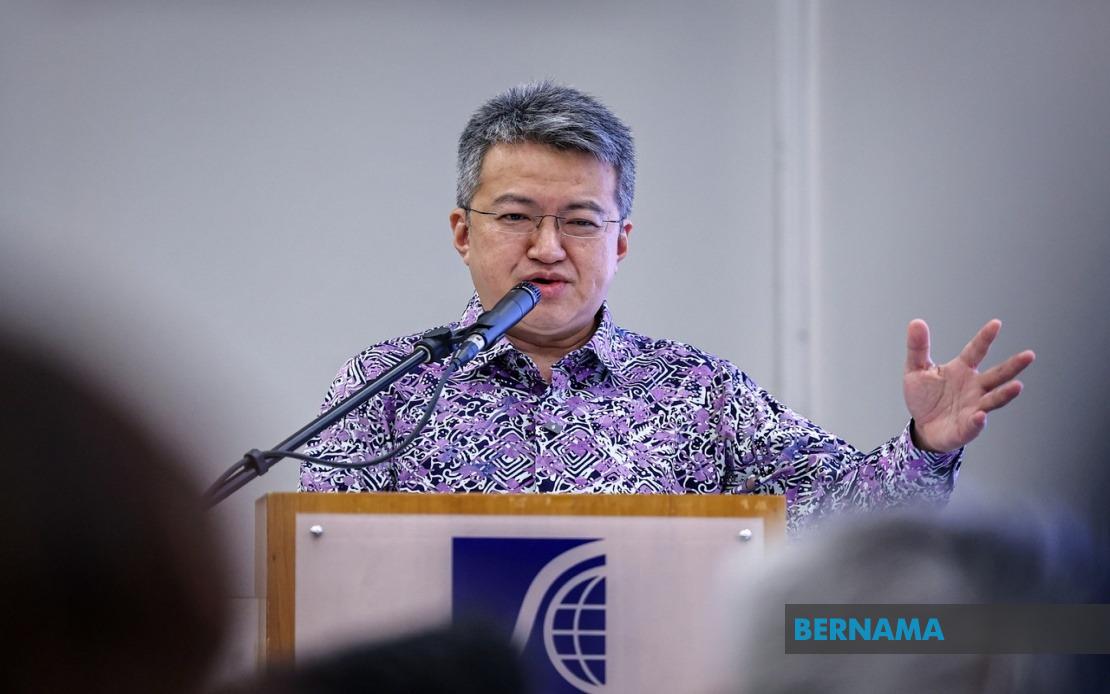
DAP Strategic Director Liew Chin Tong articulated PH's central anxiety during a briefing on June 29, framing the tactical challenge facing the coalition as one requiring constant vigilance rather than complacency. The Deputy Finance Minister's comments underscore a strategic vulnerability that extends beyond mere speculation; in a fragmented political landscape where multiple parties compete for the same voter base, the migration of votes from one camp to another can decisively shift outcomes in closely marginal contests. For PH candidates, particularly those representing the DAP, this uncertainty introduces a layer of complexity that transcends conventional campaigning.
The mechanics of vote leakage in Malaysian elections have become increasingly sophisticated over successive electoral cycles. When a major political force withdraws from particular constituencies, their supporters face a genuine decision point rather than an automatic default. Some may abstain from voting altogether, disheartened by the absence of their preferred choice. Others might gravitate toward ideologically adjacent parties or candidates perceived as closer to their worldview. Still others could be swayed by tactical voting calculations or personal relationships with individual candidates. The aggregate effect of these individual decisions can fundamentally alter the competitive balance in seats that PH might otherwise have expected to retain or capture.
Liew's acknowledgement that such variables defy easy prediction reflects mature electoral analysis rather than mere pessimism. He emphasized that every election cycle introduces unforeseen variables that even sophisticated campaign machinery struggles to anticipate fully. This candid assessment distinguishes realistic political management from overconfident posturing. For Malaysian voters and observers tracking the Johor contest, it signals that PH is not taking victory as assured, despite entering the campaign as the incumbent state government.
The coalition's response to this uncertainty centers on demonstrable competence and fresh personnel. Liew stressed that PH fielded what it considers an optimal lineup of candidates for each constituency, emphasizing both youth and credibility as selection criteria. This approach reflects a broader understanding that in contexts where voter behavior becomes more volatile, the local candidate's profile and track record acquire heightened importance. When the broader political environment becomes turbulent, constituency-level factors often assume disproportionate weight in voter calculations.
Liew's own decision to vacate the Perling state seat after winning it in the 2022 Johor election exemplifies DAP's stated principle against permitting elected representatives to simultaneously occupy parliamentary and state assembly positions. Beyond this institutional philosophy, the move also strategically addresses the generational question increasingly salient in Malaysian politics. By stepping aside and endorsing former Senai assemblyman Alan Tee Boon Tsong as his successor in Perling, Liew simultaneously demonstrated leadership discipline and created space for newer political talent within the party. For DAP, which has faced criticism over aging leadership in certain regions, such transitions carry broader organizational significance beyond any single electoral cycle.
The Perling contest itself illustrates the multifaceted competition shaping the Johor battleground. With 109,992 registered voters, the seat will feature a three-cornered fight involving Tee, Barisan Nasional's P. Pannir Selvam, and Boo Wei Han from Parti Bersama Malaysia. This configuration—featuring a coalition incumbent, a traditional opposition force, and a newer splinter movement—captures in microcosm the fragmentation defining contemporary Malaysian state politics. Each candidate must navigate not only direct competition but also the possibility of votes flowing from unexpected quarters as voters respond to circumstances and personalities beyond the immediate contest.
For Pakatan Harapan more broadly, the Johor election represents a critical test of its sustainability as a governing coalition. The coalition must demonstrate that it can retain voter support not through automatic loyalty but through demonstrated effectiveness and compelling vision. The 23 constituencies where PN abstains become particularly significant barometers: they reveal whether PH's appeal extends beyond its core constituencies to voters who might previously have backed alternative coalitions. A strong showing in these seats would signal that PH has broadened its electoral base, while underperformance would suggest that Perikatan's support base remains structurally resilient and capable of shifting en bloc to other parties.
The electoral arithmetic matters enormously for Malaysian politics beyond Johor's borders. The state represents a critical economic zone and a strategic constituency within the broader Malaysian federation. How voters respond to the choices before them on July 11 will provide valuable data about the evolving political landscape. The possibility of PN supporters pivoting to other parties—whether toward BN, Bersama, or smaller movements—would signal that Malaysian voters are becoming increasingly willing to cross traditional coalition boundaries based on local circumstances and candidate attributes rather than rigid partisan loyalty.
Early voting commences on July 7, giving campaigns a final week to test their messaging and organizational capacity. For PH, that window represents an opportunity to reinforce the coalition's case directly to voters, emphasizing accomplishments and articulating a vision that appeals beyond traditional supporters. For voters facing genuine uncertainty about where their preferences align following PN's partial withdrawal, the campaign period offers time to crystallize choices. The outcome will reflect not merely which party prevails, but how Malaysian voters behave when presented with genuinely open choices rather than pre-determined partisan alignments.

