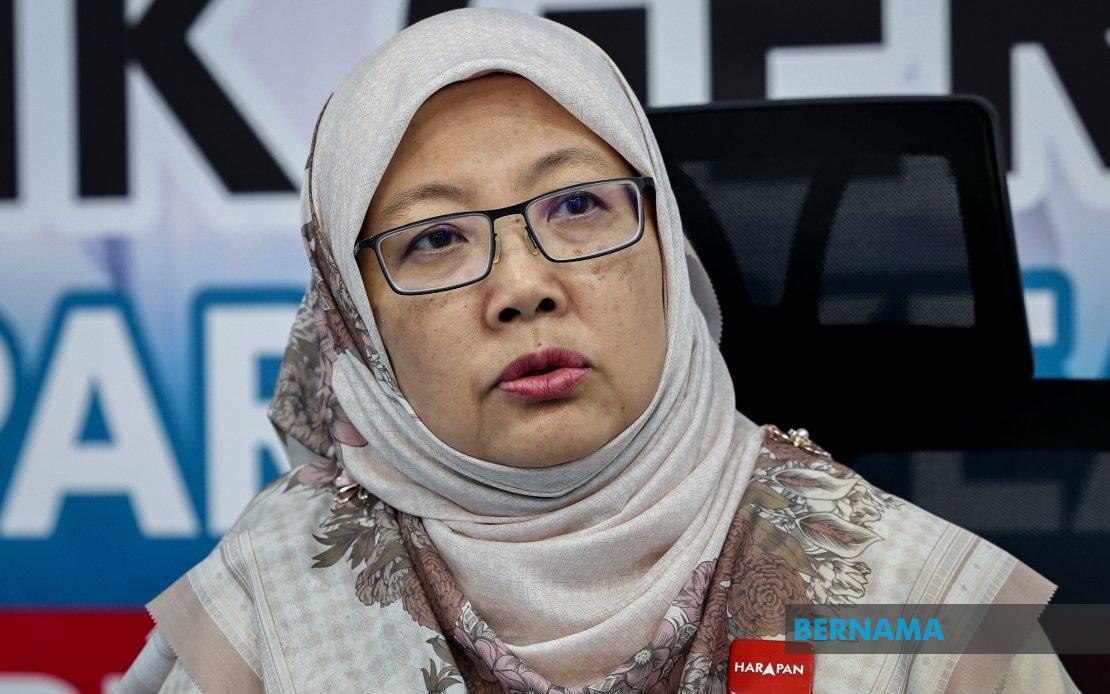
Pakatan Harapan has moved to defuse campaign tensions in the Johor state election by publicly committing to respect the constitutional prerogatives of the Johor palace in appointing the chief executive if the coalition gains electoral advantage. The promise, articulated through Johor PKR chairman Datuk Seri Dr Zaliha Mustafa, represents a deliberate attempt to reposition the coalition's messaging away from post-election power-sharing uncertainties and toward substantive governance offerings that resonate with voters grappling with economic pressures.
Dr Zaliha's statement responds to earlier public pressure from the incumbent Menteri Besar Datuk Onn Hafiz Ghazi, who had challenged opposition figures to declare their preferred candidate for the top state office before voters cast their ballots. This demand, a familiar tactic in Malaysian electoral politics, seeks to force opposition coalitions into early commitments that might expose internal fissures or constrain subsequent negotiations with the palace. By declining to name a specific successor before the election, PH attempts to preserve strategic flexibility while signalling constitutional fidelity.
The political calculation underlying PH's position reflects deeper tensions within Malaysian federalism regarding the balance between popular mandates and monarchical prerogatives. Under the Johor State Constitution 1895, the Sultan retains formal authority to appoint the Menteri Besar, typically following consultation with legislators but not bound by rigid procedural constraints. This constitutional arrangement, inherited from British colonial administrative structures, periodically generates friction in Malaysian electoral cycles whenever opposition coalitions believe their parliamentary majorities entitle them to unilateral chief executive selection.
For Malaysian voters, particularly in an economically significant state like Johor, the distinction between electoral victory and guaranteed executive power carries tangible consequences. The region serves as Malaysia's second-largest economy by gross domestic product, hosting major petrochemical, port, and manufacturing facilities whose strategic direction depends significantly on state-level policy decisions. Hence, voter concerns about whether their ballots genuinely translate into governance changes remain rational political preoccupations rather than arcane constitutional pedantry.
PH's strategic recalibration toward policy promotion rather than personnel pledges offers several advantages in the electoral marketplace. First, it sidesteps the divisive internal question of which faction or personality should claim the Menteri Besar portfolio should the coalition succeed—a question that has historically fractured multiparty alliances in Malaysian politics. Second, it allows PH campaigners to emphasize concrete proposals on living standards, employment generation, and economic development without appearing to circumvent constitutional norms that retain considerable legitimacy among traditional and conservative constituencies throughout Johor.
Dr Zaliha's emphasis on listening to citizen concerns and presenting solutions addressing cost-of-living pressures, job quality, and economic dynamism reflects PH's recognition that voter dissatisfaction centres on bread-and-butter governance rather than technicalities of ministerial appointment protocols. Economic anxieties in Johor have intensified as global supply-chain volatility and domestic inflation affect manufacturing competitiveness and household purchasing power. Across Malaysia more broadly, election surveys consistently rank economic anxiety above constitutional procedures in voter priority hierarchies.
The palace angle merits consideration within the broader Malaysian power structure. Johor's sultanate maintains substantial financial independence through land holdings and investment portfolios, allowing it considerable discretionary influence over state administration independent of federal budget allocations. Palace-government relations in Johor have historically proven more complex and negotiation-intensive than in states where monarchical authority remains more ceremonial. Explicitly acknowledging sultan-appointed authority thus carries practical significance beyond formal constitutional observance.
PH's pledge represents implicit acknowledgement that attempting to challenge or circumscribe the Sultan's appointment prerogative would constitute electoral liability in Johor society, where royal institution reverence remains pronounced. Malaysian voters, especially in hereditary sultanate states, generally view palace powers as integral to constitutional identity and regional governance legitimacy. Opposition parties confronting palace prerogatives directly often encounter public resistance framing such challenges as threatening institutional stability or national constitutional order.
The timing of this declaration also signals PH's confidence in eventually securing sufficient parliamentary strength that internal coalition negotiations with the palace become inevitable, rather than engaging in premature disputes about appointment procedures. Should PH fail to achieve electoral plurality, public commitment to sultan-respecting governance becomes moot. Should PH succeed, the actual appointment negotiation will likely involve formal consultations between palace officials and coalition leadership, during which practical power-sharing arrangements emerge through traditional Malaysian political bartering rather than public pledges.
For Southeast Asian observers, the Johor situation illustrates enduring tensions between democratizing electoral politics and constitutional monarchical structures across the region. Unlike Westminster systems where executive appointment follows clearly defined party success, Malaysian federalism requires negotiation between popular mandates and institutional prerogatives. This dynamic generates strategic ambiguity that major coalitions must navigate diplomatically rather than confront directly.
Moving forward, PH's repositioning suggests the coalition intends to compete on substantive governance credentials while respecting constitutional constraints that frame the actual appointment process. Whether this stance sufficiently differentiates PH's offering from incumbent governance records will determine electoral outcomes far more decisively than constitutional pronouncements about palace authority. Malaysian voters ultimately reward coalitions delivering tangible improvements in living standards and economic opportunity, with constitutional respect forming a necessary but insufficient condition for electoral success.

