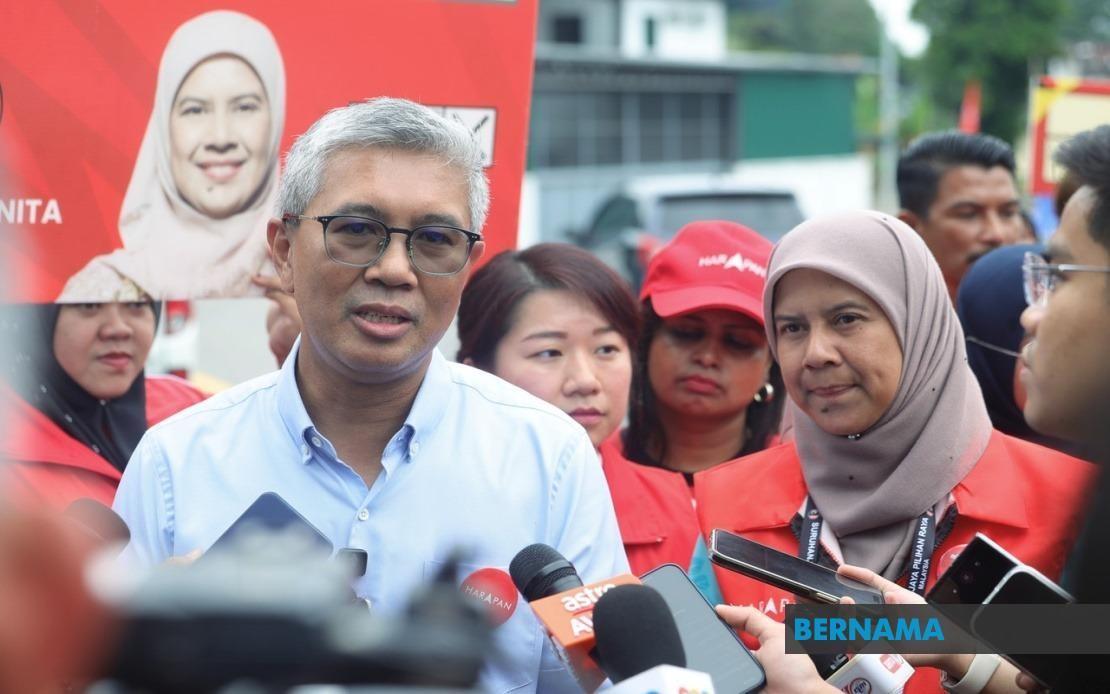
Pakatan Harapan's prospects in the Pilah state constituency appear buoyant, according to Senior Political Advisor to the Prime Minister Tengku Datuk Seri Zafrul Tengku Abdul Aziz, who pointed to encouraging responses from voters during recent ground assessments in the Negeri Sembilan seat. The coalition's confidence stems from what officials describe as a strong track record in administering the state alongside demonstrated dedication from the incumbent assemblyman representing the area.
Tengku Zafrul underscored that preliminary surveys and feedback mechanisms deployed before his arrival in Kuala Pilah indicated substantial local approval for both the candidate and the broader PH platform. He attributed this receptiveness to the tangible contributions made by sitting representative Datuk Noorzunita Begum Mohd Ibrahim, whose tenure has apparently resonated with residents across multiple demographics. Notably, he cautioned against overconfidence, emphasizing that sustained voter engagement and community-focused work would remain essential through the final stages of campaigning.
During a walkabout through residential neighbourhoods, Tengku Zafrul and Noorzunita Begum engaged directly with constituents, creating forums for residents to raise pressing concerns and propose infrastructure initiatives they deemed necessary. These interactions served the dual purpose of reinforcing PH's presence on the ground while gathering real-time intelligence about constituent priorities. Such grassroots mobilization reflects the coalition's strategy of translating policy achievements into visible local benefits that resonate with ordinary voters.
The broader political context favours the incumbent administration, Tengku Zafrul argued, citing Negeri Sembilan's economic metrics as evidence of competent stewardship. The state has attracted total investments worth RM19 billion, while accumulated reserves now exceed RM1 billion—figures the senior advisor presented as validation of the current governance framework led by Menteri Besar Datuk Seri Aminuddin Harun. Maintaining political continuity was positioned as prerequisite for sustaining this economic momentum.
Economic inclusion emerged as a central theme in Tengku Zafrul's remarks about Pilah's development trajectory. He identified the creation of high-quality professional employment for younger generations as critical, framing retention of talent within Negeri Sembilan as essential to the state's long-term vitality. The emphasis on preventing youth migration represents acknowledgment of a persistent challenge across Malaysian states, where economic opportunities remain concentrated in major metropolitan areas, compelling younger professionals to relocate.
The MADANI Government's broader agenda of bridging regional development disparities found expression in Tengku Zafrul's comments about Kuala Pilah's economic potential. While he acknowledged that secondary economic benefits in certain areas remain modest, he outlined ongoing efforts to redirect investment flows towards more equitable geographical distribution. This framing attempts to present the coalition's approach as strategically committed to rural revitalization rather than accepting historical patterns of centre-periphery imbalance.
Noorzunita Begum characterized her campaign progress as covering substantial territory within the constituency by its eighth day, with remaining efforts focused on traditional villages—typically smaller settlements where mobilization requires customized approaches. Her observation about persistent youth demand for professional opportunities aligned with messaging from coalition leadership, suggesting alignment between candidate messaging and party positioning. The assertion that development priorities would be fine-tuned based on constituent feedback offered implicit promise of responsiveness to local preferences.
The election features a two-way contest between Noorzunita Begum representing PKR, the largest coalition partner, and Barisan Nasional candidate S. Leza Md Yasin. Pilah forms one of five state constituencies within the larger Kuala Pilah parliamentary constituency and sits in central Negeri Sembilan, positioned geographically between the state capital Seremban and the town of Bahau. The constituency encompasses 18,034 registered voters according to the June 4 electoral roll update, distributed nearly equally across genders at 49.49 per cent male and 50.51 per cent female voters. The voter roll includes 17,775 ordinary voters alongside 259 police personnel and their spouses.
Early voting was scheduled for July 28, with election day set for August 1, allowing both campaigns final opportunities to mobilize supporters. The timeline compressed the formal campaigning period, necessitating intensive ground operations in the preceding weeks. For PH, the strategy concentrated on translating perceived incumbent performance into renewed electoral mandates, while opponents sought to present alternative governance approaches to voters weighing their preferences.
The Negeri Sembilan state election represented a significant political indicator for Malaysia's broader electoral dynamics, particularly concerning PH's capacity to sustain control in states where it governs. Success in retaining seats like Pilah would reinforce the coalition's claim to effective administration and voter confidence, whereas losses might suggest vulnerability or constituent restlessness. Tengku Zafrul's confident pronouncements reflected PH's internal optimism, though the cautionary remarks about avoiding complacency acknowledged awareness that electoral outcomes remained contingent on sustained effort and genuine constituent satisfaction rather than assumed advantage.

