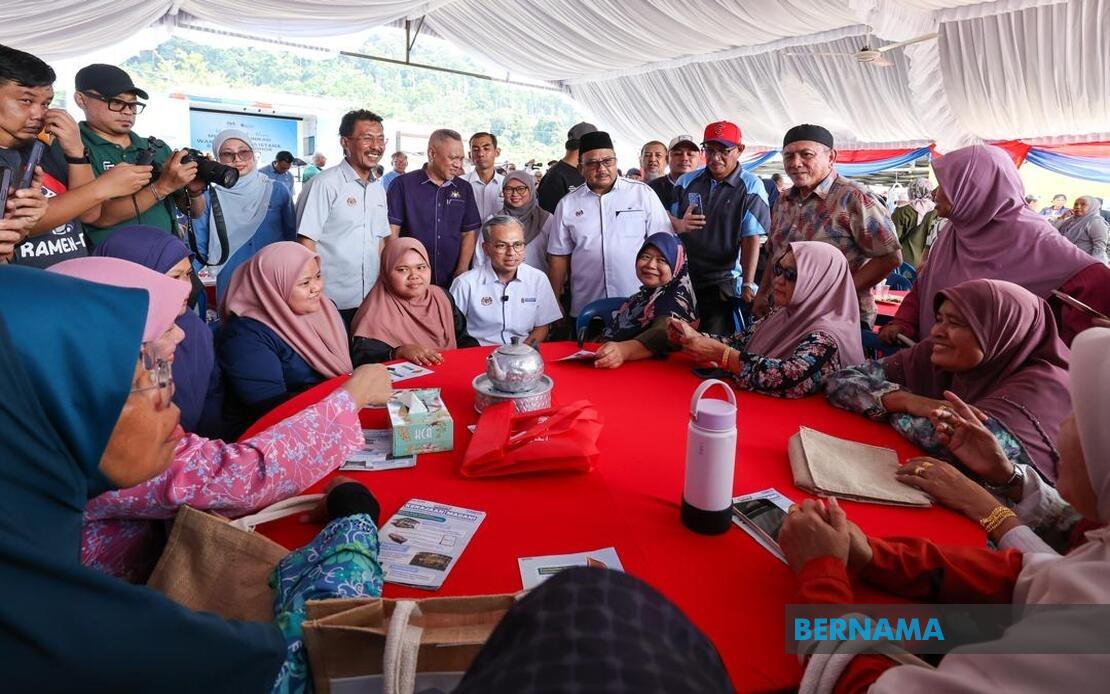
Pakatan Harapan's communications director Datuk Fahmi Fadzil has robustly defended the timing of the coalition's manifesto rollout for the Johor state election, arguing that the July 4 launch occurred precisely when conditions were optimal and all necessary approvals had been secured. Speaking during a walkabout in Batu Pahat, Fahmi, who also serves as Communications Minister, categorically rejected suggestions from former Bangi MP Ong Kian Ming that the delayed manifesto unveiling would undermine PH's campaign machinery and hand a decisive advantage to the ruling Barisan Nasional bloc.
Fahmi's remarks underscore an emerging tension within opposition circles regarding campaign strategy in Malaysia's fractious electoral landscape. By defending the manifesto's timing as methodical rather than tardy, Fahmi has effectively reframed what opposition critics saw as a misstep into a virtue. He contended that PH's approach reflected a commitment to thoroughness, with the coalition refusing to present policy commitments to voters until senior party leaders, including Prime Minister Anwar Ibrahim, had thoroughly vetted and endorsed every substantive element. This stance carries implications for how Malaysian political parties balance speed and substance—a perennial challenge for coalitions juggling multiple constituent parties with divergent policy priorities.
The manifesto arrived during the second week of the official Johor campaign period, a moment Fahmi positioned as strategically sound. By this juncture, both major political blocs had already introduced their respective candidates to constituents, creating a natural transition point for the presentation of party platforms and policy blueprints. Fahmi argued this sequencing represented conventional and appropriate campaign architecture, not a defensive scramble prompted by internal delays or coordination failures. His framing attempts to insulate PH from suggestions that it entered the final campaign stretch operating from a position of weakness or disorganisation.
Ong Kian Ming had painted a darker electoral picture for the opposition alliance, predicting Barisan Nasional would sweep the July 11 polling day by a substantial margin. Beyond the manifesto timing critique, Ong cited additional vulnerabilities: PH's failure to nominate a declared menteri besar candidate, the apparent absence of heavyweight party figures actively campaigning in marginal seats, and the lack of a compelling narrative to mobilise voters. These observations reflected concerns that PH faced structural organisational challenges that extended beyond mere presentation scheduling. Yet Fahmi's counterargument suggests these criticisms, while pointed, have not infiltrated grassroots sentiment or dimmed voter enthusiasm.
The manifesto timing dispute intersected with a separate controversy surrounding the document's substance. Former UMNO Youth chief Khairy Jamaluddin alleged the PH manifesto amounted to little more than recycled content borrowed wholesale from Barisan Nasional's platform—a characterisation that, if sustained, would undermine claims of distinctive policy direction. Fahmi responded with a cutting observation: he noted that Khairy appeared to be conducting a more vigorous personal campaign than Johor Menteri Besar Datuk Onn Hafiz Ghazi, the official BN standard-bearer. This pointed to a potential weakness in the ruling coalition's own machinery, with a secondary figure overshadowing the ostensible frontline leader in campaign intensity and media prominence.
Fahmi's quip about "copying and pasting" Khairy's campaign energy into Onn Hafiz carried a barbed implication about the current menteri besar's gravitational pull among voters and party cadres. By suggesting that Khairy possessed greater capability and political stature than Onn Hafiz, Fahmi highlighted an internal Barisan Nasional dynamic that could complicate the ruling coalition's campaign messaging. The observation suggests that even as critics attack PH's organisational coherence, the government side grapples with its own centre-of-gravity questions regarding leadership visibility and electoral appeal. Khairy's apparent readiness to engage in substantive debates with PH candidates further suggests Barisan Nasional's message discipline may be splintering.
Internally, Pakatan Harapan contended with challenges emanating from its own component parties, particularly the Democratic Action Party (DAP). Social media allegations circulated regarding a senior DAP personality's supposed stance on clemency for former Prime Minister Datuk Seri Najib Tun Razak, a figure of profound division within Malaysian politics. These intra-coalition tensions threatened to distract from the broader PH campaign narrative and potentially alienate swing voters sensitive to corruption accountability issues. Marina Ibrahim, the former Skudai assemblyman, publicly announced her political retirement, citing disillusionment with what she characterised as DAP leadership's "charade" surrounding the Najib pardon question.
Fahmi addressed these internal vulnerabilities by grounding his confidence in direct observational evidence from campaign events. He reported witnessing consistently robust turnout and enthusiastic grassroots participation across multiple PH gatherings throughout the campaign period. This bottom-up momentum, he suggested, provided more reliable prognostication than social media controversy or internal faction-building. The inclusion of DAP candidates like Ng Yak Howe in the Bentayan state seat, Fahmi argued, reinforced the coalition's capacity to maintain voter confidence despite party-specific controversies. By pivoting from abstract dispute to tangible evidence of voter engagement, Fahmi sought to establish that headline-dominating internal tensions had not penetrated deep into the electorate's decision-making calculus.
The July 11 Johor state election represented a significant bellwether for Malaysian politics, with 172 candidates contesting 56 seats across the nation's southern economic heartland. Early voting was scheduled for July 7, compressing the final campaign window into an intensely concentrated period. For Pakatan Harapan, the Johor contest carried particular weight as an opportunity to demonstrate organisational coherence and electoral viability in a strategically crucial state with a history of strong Barisan Nasional performance. Victory or substantial gains would vindicate PH's coalition model and campaign strategy; conversely, a decisive defeat would validate opposition critics' assessments regarding tactical and organisational deficiencies.
The manifesto timing controversy, while seemingly procedural, illuminated deeper questions about how Malaysian political coalitions manage internal coordination and external messaging. PH's emphasis on deliberative decision-making and comprehensive leadership endorsement reflected the complexity of herding multiple parties toward unified policy positions. Yet this methodical approach necessarily consumed time during the critical early campaign period when media attention and public interest peak. Balancing coalition consensus-building against campaign momentum represented a perpetual dilemma that no amount of rhetoric about "appropriate timing" could entirely resolve. The party's assertion of grassroots enthusiasm, if borne out in polling results, would suggest voters rewarded substance and coordination over speed.

