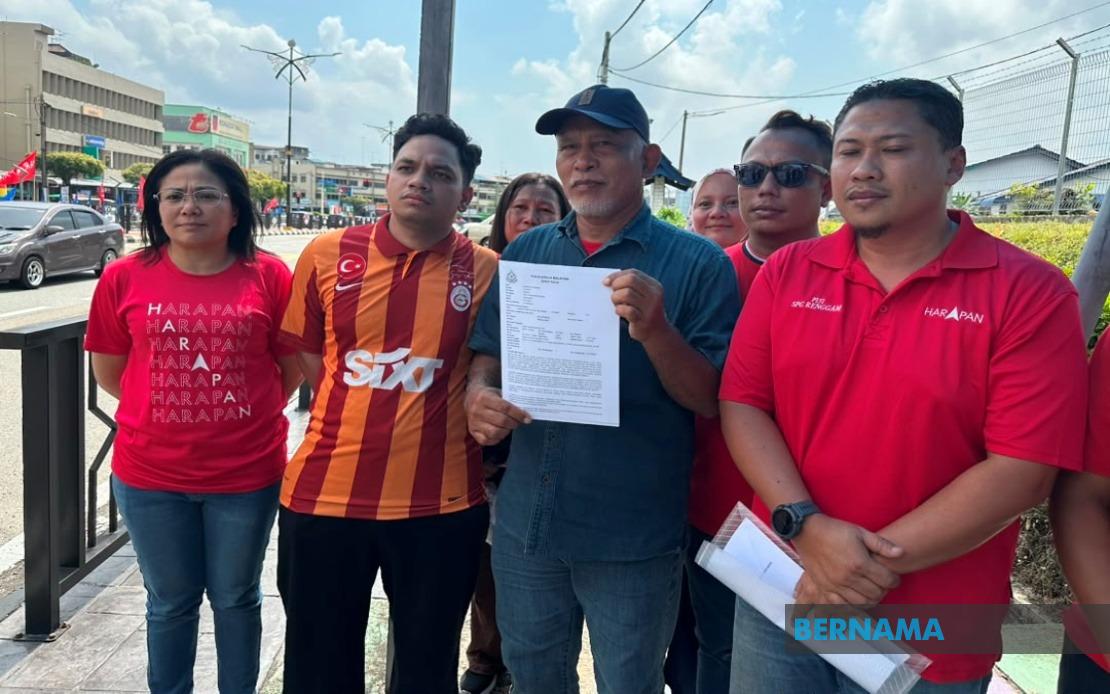
The representative backing the Pakatan Harapan candidate contesting the Machap seat has escalated campaign tensions in Johor by lodging a police complaint against Menteri Besar Datuk Onn Hafiz Ghazi, alleging systematic misconduct involving vocational students during the ongoing state election campaign. Khiru Nasir Rohani filed the report at Simpang Renggam district police headquarters, citing what he characterised as a coordinated operation to mobilise Technical and Vocational Education and Training institution students to attend politically motivated events designed to boost support for Barisan Nasional candidates.
The allegation centres on claims that the BN campaign apparatus leveraged its governmental advantage to influence young voters through their educational institutions—a practice that Khiru Nasir argues breaches fundamental campaign rules. He contended that the conduct violates multiple sections of the Election Offences Act 1954, particularly those addressing undue influence and the misappropriation of official authority or school resources for partisan purposes. The timing of such allegations underscores the heightened scrutiny that accompanies competitive state elections in Malaysia, where monitoring bodies face pressure to ensure compliance with electoral standards.
According to Khiru Nasir, who also holds the position of Simpang Renggam Amanah deputy division chief, a group of TVET students was compelled to participate in a programme held in Kluang on July 4. What began as what appeared to be an ordinary educational or developmental activity apparently transformed into an open endorsement platform for candidates running in the election—a transformation that opposition representatives regard as exploitative of the students' captive status and relative political vulnerability.
The complaint reflects broader concerns about the capacity of incumbent administrations to instrumentalise public institutions during campaign periods. In Malaysian electoral politics, such allegations surface regularly, yet their investigation and adjudication remain contentious. The complainant explicitly called upon three key institutions—the police, the Malaysian Anti-Corruption Commission, and the Election Commission—to jointly undertake comprehensive inquiries that would preserve democratic integrity and establish whether established campaign rules had been breached.
The stakes for this particular election are substantial. A total of 172 candidates are competing across 56 state seats in Johor, with polling scheduled for Saturday, creating a compressed timeline within which such allegations must be addressed. The proximity of election day adds urgency to investigative efforts and raises questions about whether authorities can meaningfully conclude their work before voters cast ballots, or whether this complaint will feed into broader post-election disputes over campaign propriety.
From a broader Southeast Asian perspective, the incident illustrates perennial tensions between executive power and electoral fairness in competitive democracies. Malaysia's federal structure distributes significant authority to state governments, creating opportunities for incumbents to mobilise state resources, including educational institutions, in support of their political agendas. Unlike more tightly regulated electoral systems, the enforcement of campaign restrictions in Malaysia often depends on the responsiveness and capacity of oversight bodies—institutions themselves subject to political pressures and resource constraints.
The targeting of TVET students is particularly noteworthy given Malaysia's ongoing effort to develop vocational pathways as alternatives to traditional academic routes. These institutions serve economically disadvantaged communities and first-generation tertiary students, populations that may be less politically experienced and potentially more susceptible to institutional pressure. If the allegations prove substantiated, they would highlight vulnerabilities within educational settings that campaign regulators struggle to protect effectively.
Onn Hafiz Ghazi, who heads the state government and commands considerable administrative machinery, has not publicly responded to the allegations at the time of reporting. The complaint's success will ultimately depend on whether investigating agencies view the evidence as establishing a coordinated campaign strategy or as isolated administrative decisions lacking clear partisan intent—a distinction that frequently determines the outcome of such disputes. The Menteri Besar's government benefits from institutional presumptions that favour official actions until proven otherwise, a structural advantage that opposition complaints must overcome.
The complaint also reveals how electoral campaigns in Malaysia increasingly involve multiple stakeholders from state structures, including educational institutions whose staff and students occupy ambiguous positions between civic obligations and institutional hierarchies. TVET instructors, administrators, and students themselves may face pressure to participate in officially endorsed activities while genuinely uncertain about the appropriateness of their involvement in overtly political contexts.
As Johor voters prepare to cast ballots, the complaint adds another layer to an election already marked by competition between an incumbent BN-led government and opposition forces represented by Pakatan Harapan. Whether the police investigation, Election Commission review, or MACC examination uncovers evidence supporting these allegations remains unclear, but the complaint itself signals that campaign practices and the boundaries between legitimate government activity and partisan electioneering will remain contested in Malaysian politics for the foreseeable future.

