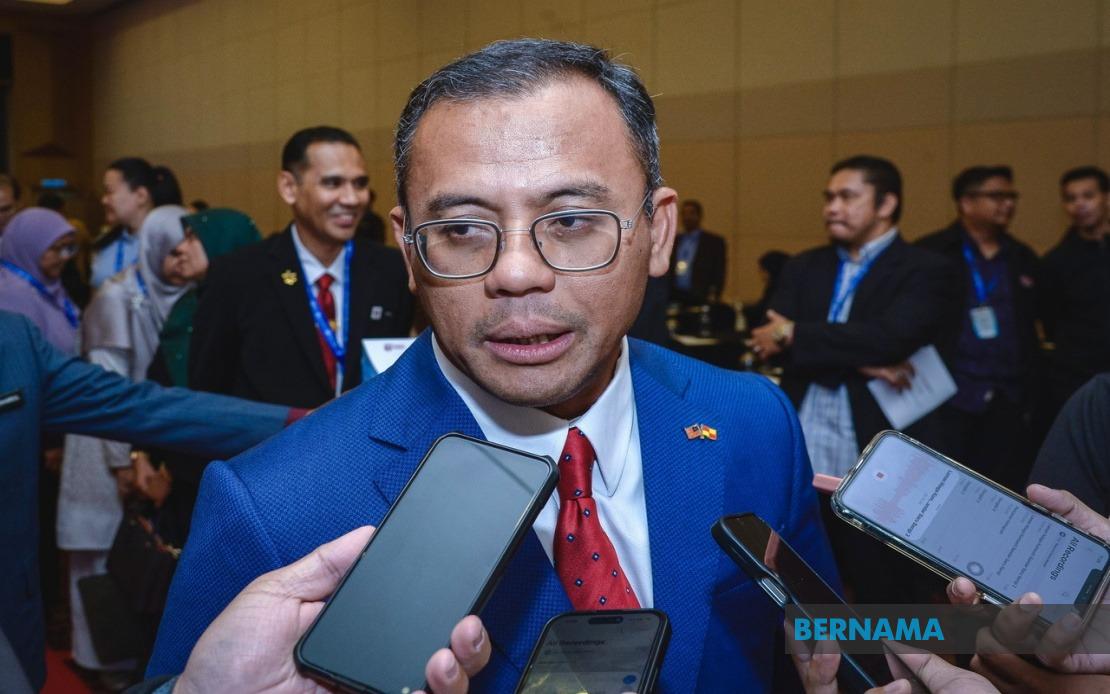
Pakatan Harapan has clearly articulated the benchmarks it will apply when evaluating any potential political partnerships, making political stability and the public interest the non-negotiable cornerstones of its decision-making process. Speaking in Bangi on August 10, Datuk Seri Amirudin Shari, a member of PH's Presidential Council and vice-president of PKR, reinforced this measured approach to coalition politics, signalling that the bloc remains receptive to working with other political entities provided these fundamental principles are upheld.
The Selangor Menteri Besar's remarks carry particular weight given recent speculation about possible cooperation between Selangor's PH chapter and Bersatu at the state level. Amirudin moved to dispel these suggestions, categorically denying that Selangor PH had entered into any formal arrangement with Bersatu or that substantive discussions had taken place. His clarification suggests that while external political actors may be exploring various alignment scenarios, PH's component parties have not yet committed to specific partnership arrangements born out of immediate electoral considerations.
What distinguishes PH's current posture from opportunistic coalition-building is its emphasis on rational evaluation at the national leadership level rather than ad-hoc state-level negotiations. Amirudin explained that any overtures or preliminary discussions originating from Selangor would necessarily be escalated to central party leadership for careful deliberation. This hierarchical approach reflects PH's awareness that major political realignments require coordination across the bloc's multiple parties and state branches, and cannot be undertaken unilaterally by individual state leaderships.
The timing of elections and broader political circumstances are positioned as critical variables in PH's calculus. Rather than pursuing cooperation purely to consolidate power ahead of upcoming contests—whether the general election or the Melaka state election—PH suggests it will weigh whether such partnerships genuinely serve long-term political stability and public interest objectives. This framing attempts to distinguish the coalition's approach from purely transactional politics, though it also acknowledges that electoral dynamics inevitably influence coalition discussions.
For Malaysian observers, PH's openness to cooperation with entities beyond Perikatan Nasional represents a significant statement about the political landscape's fluidity. Rather than viewing Bersatu and PN as permanent adversaries, the coalition signals flexibility that could reshape state and national politics depending on evolving circumstances. This pragmatism reflects the reality that Malaysia's multi-ethnic, multi-party political system often requires fluid coalitions rather than rigid ideological blocs.
The reference to external political ideas and views stemming from national-level realignments suggests PH recognizes that broader political tectonic shifts are underway in Malaysia. Various parties may be exploring different partnership configurations to position themselves advantageously for coming elections, and PH's leadership acknowledges these dynamics without committing to any particular course of action prematurely. This measured response demonstrates political maturity while maintaining strategic flexibility.
Selangor's role in these potential calculations cannot be understated. As Malaysia's most economically significant state and a PH stronghold, Selangor's political configuration carries implications far beyond the state itself. The state election represents a crucial test of any renewed partnership configurations, and how parties perform there could significantly influence calculations about broader alliances for the general election. Amirudin's insistence that any Selangor-level discussions remain subject to central party review protects PH from fragmentary decision-making that could undermine coalition cohesion.
For regional observers, PH's framework for evaluating cooperation reflects broader Southeast Asian trends where dominant coalitions must periodically adjust partnerships to maintain relevance and electoral competitiveness. Thailand, Indonesia, and the Philippines have all witnessed similar coalition recalibrations driven by changing political circumstances. Malaysia's situation demonstrates how even relatively stable democracies must navigate complex multi-party environments where flexibility and strategic repositioning are political necessities.
The emphasis on public interest as a criterion for cooperation also positions PH within a framework of governance legitimacy. Rather than couching alliance-building purely in terms of power consolidation, the coalition frames it as serving broader constituencies. This rhetorical positioning matters for voter perception, particularly among urban, educated voters who have increasingly viewed traditional Malaysian politics as elite-driven and self-interested. By articulating a public-interest criterion, PH attempts to distinguish itself from purely opportunistic political manoeuvring.
PH's stance also reflects the practical reality that neither Bersatu nor other potential coalition partners can be simply dismissed. Despite their differences with PH, these parties command electoral resources and geographic bases that any governing coalition must eventually accommodate or neutralize. Rather than maintaining permanent adversarial positions, PH's openness to cooperation acknowledges that Malaysian politics operates within a constrained set of major players who frequently find themselves in shifting combinations.
The exclusion of rigid ideological positioning from PH's cooperation framework is notable. Unlike some political systems where coalitions form around clear ideological differences, Malaysian coalition politics often operates through pragmatic accommodation of diverse interests and regional power bases. PH's criteria—stability and public welfare—allow maximum flexibility while maintaining a veneer of principled decision-making. Whether this balance can be sustained as electoral pressures mount remains to be tested.
Looking ahead, PH's stated openness will face immediate testing through the Melaka state election and subsequent general election campaigns. How the coalition actually applies its stability and public interest criteria when concrete opportunities for cooperation arise will reveal whether its current position represents genuine strategic flexibility or political rhetoric. The coming months will clarify whether PH's measured approach translates into actual partnership reconfiguration or remains a holding position pending clearer electoral circumstances.

