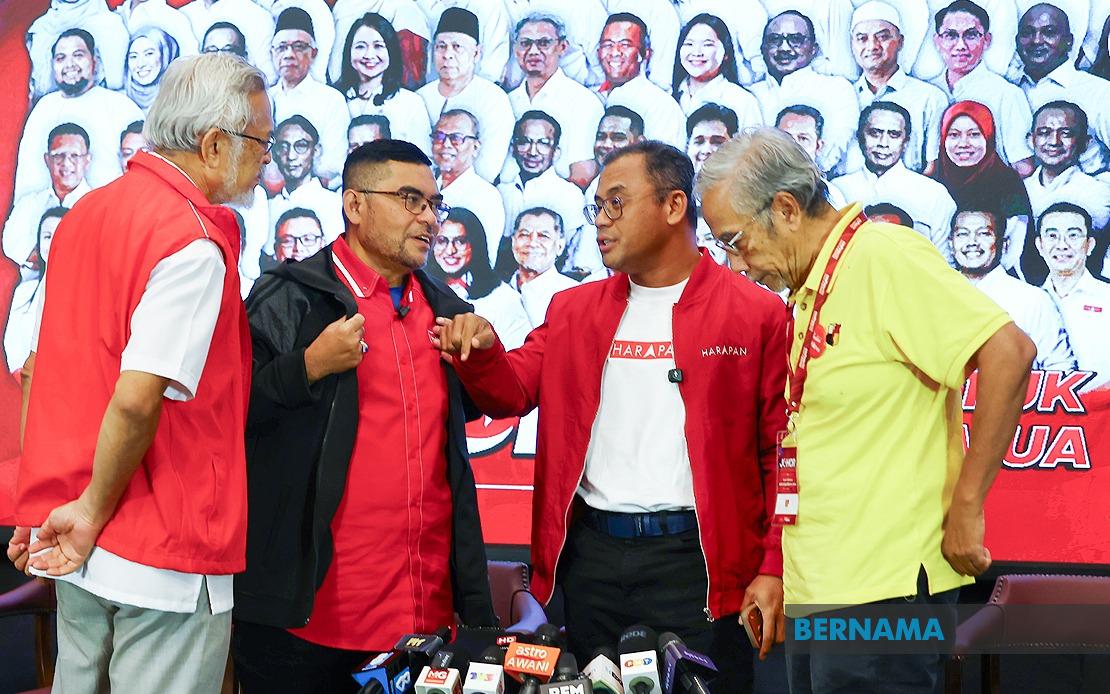
Pakatan Harapan has committed to a thorough examination of its performance in the Johor state election and intends to use those findings to strengthen its campaign machinery before facing voters in Negeri Sembilan. The opposition coalition's leadership signalled that while the immediate focus remains on understanding what went wrong in Johor, the party is already pivoting its attention towards defending its existing stronghold in the neighbouring state. Speaking from the PH operations centre in Johor Bahru on the evening of the state election, senior coalition figures laid out plans that suggest the coalition is treating the Negeri Sembilan contest as both an opportunity for recovery and a crucial test of its political viability in the region.
Barisan Nasional secured a commanding position in Johor by winning 29 of the 56 state seats at stake, representing more than half of the seats and constituting a significant setback for the PH coalition. The result underscores the competitive nature of Malaysian state politics and the volatility that opposition coalitions face even in contests where they had entertained serious ambitions. For PH, which has struggled to maintain momentum since the 2022 general election, the outcome represents another data point in what has been an uneven trajectory of electoral fortunes across different state contests.
Datuk Seri Amirudin Shari, the Selangor Menteri Besar and PKR's election co-director, emphasised that the coalition would not rush to conclusions before all outstanding seats were officially confirmed. He indicated that the review process would be methodical and would examine multiple dimensions of voter behaviour, particularly shifts in voting patterns across different demographic groups and the critical question of whether PH retained sufficient appeal among younger voters. This suggests that the coalition's leadership recognises that understanding why Johor voters rejected them requires moving beyond simplistic explanations to identify specific weaknesses in messaging, candidate selection, or ground organisation.
The upcoming candidate selection process for Negeri Sembilan is scheduled to commence immediately, with discussions planned for the day following the Johor election results. This compressed timeline reflects both the urgency PH feels about capitalising on whatever momentum it can build and the practical necessity of announcing its full slate of candidates by mid-July. The coalition appears to be treating Negeri Sembilan not as a secondary concern but as a critical test case where it hopes to demonstrate resilience and retain executive control despite the broader headwinds it faces in the peninsula.
PH's confidence in Negeri Sembilan rests significantly on the administrative record of incumbent Menteri Besar Datuk Seri Aminuddin Harun, whose leadership of the state has garnered sufficient approval for the coalition to believe it can defend the state. The coalition is essentially banking on the notion that good governance at the state level can overcome any national political currents working against it. This reflects a calculation that voters in Negeri Sembilan, unlike those in Johor, may prioritise local development and administrative competence over broader national political narratives.
The timing of these state elections carries particular significance in the Malaysian political context, as they represent the only opportunities for opposition coalitions to demonstrate electoral strength between general elections. For PH, struggling to maintain its 2022 election coalition together while facing internal tensions, state-level contests become crucial for maintaining party morale, fundraising capacity, and credibility with supporters. A loss in Negeri Sembilan would compound the Johor disappointment and raise questions about whether PH can effectively compete in peninsular Malaysia outside of traditional strongholds like Selangor and Penang.
Amirudin also sought to reassure stakeholders that state-level political developments would not destabilise the federal government. He noted that all components of the ruling coalition at the national level have made commitments to maintain the administration until the Prime Minister chooses to dissolve Parliament. This statement reflects awareness that opposition gains at the state level could otherwise embolden calls for federal-level political repositioning, and the coalition needed to demonstrate that state setbacks would not trigger defensive moves that could fracture the ruling alliance. The emphasis on federal stability also suggests that PH leadership remains attentive to the fragility of the Anwar Ibrahim government's parliamentary majority.
The coalition's approach to the Negeri Sembilan election reveals a strategic pivot towards emphasising state-level performance rather than national political narratives. This represents an acknowledgement that the anti-Mahathir and anti-corruption messaging that energised the 2018 election, and to some extent the 2022 contest, has lost its potency. Instead, PH appears to be betting that highlighting concrete achievements in health, education, infrastructure, and economic development at the state level can counteract whatever national-level disadvantages it faces. This recalibration suggests a maturation in opposition strategy, though whether it proves sufficient remains to be tested.
For Malaysian politics more broadly, the Johor results and PH's response illuminate the challenges facing opposition coalitions in sustaining electoral competitiveness in a system where the ruling party's machinery advantages and control of state resources remain substantial. The compression of the Negeri Sembilan campaign timeline also underscores how rapidly Malaysia's political calendar moves, with little respite between contests for opposition parties to rebuild, fundraise, and reorganise. This relentless pace may itself work to the advantage of better-resourced governing coalitions, even if it creates opportunities for opposition groups that can execute disciplined campaigns.
The review process Amirudin committed to will likely examine not only how PH lost ground in Johor but also whether its coalition structure remains optimal for contesting elections. Reports of tensions between PKR and other coalition partners, questions about candidate quality, and debates over resource allocation within the coalition all remain unresolved. The one-week timeline Amirudin suggested for completing this review, while practical given electoral schedules, may not be sufficient for addressing deeper structural questions about PH's viability as a governing coalition.
For Negeri Sembilan specifically, the state's character as a relatively small state with fewer than 900,000 registered voters means that targeted, ground-level campaigning could potentially make a difference. Unlike larger states where national messaging and media dynamics dominate, Negeri Sembilan voters may be more responsive to direct engagement with candidates and focused discussion of state-specific issues. This could create an opportunity for PH to execute a more disciplined campaign than it managed in Johor, even if broader political currents remain unfavourable.
The broader context for PH's struggles extends beyond electoral mechanics to encompass the question of whether the coalition can offer a sufficiently compelling vision of governance and change to overcome voter scepticism about its ability to deliver. The Johor result suggests that PH's narrative about defending democratic institutions and preventing authoritarian backsliding has not been persuasive enough to mobilise voters, particularly when those voters may prioritise bread-and-butter concerns. Whether the coalition can craft more effective messaging around economic management and state-level service delivery in time for Negeri Sembilan remains an open question, one that will substantially influence PH's trajectory heading into the remainder of this electoral cycle.

