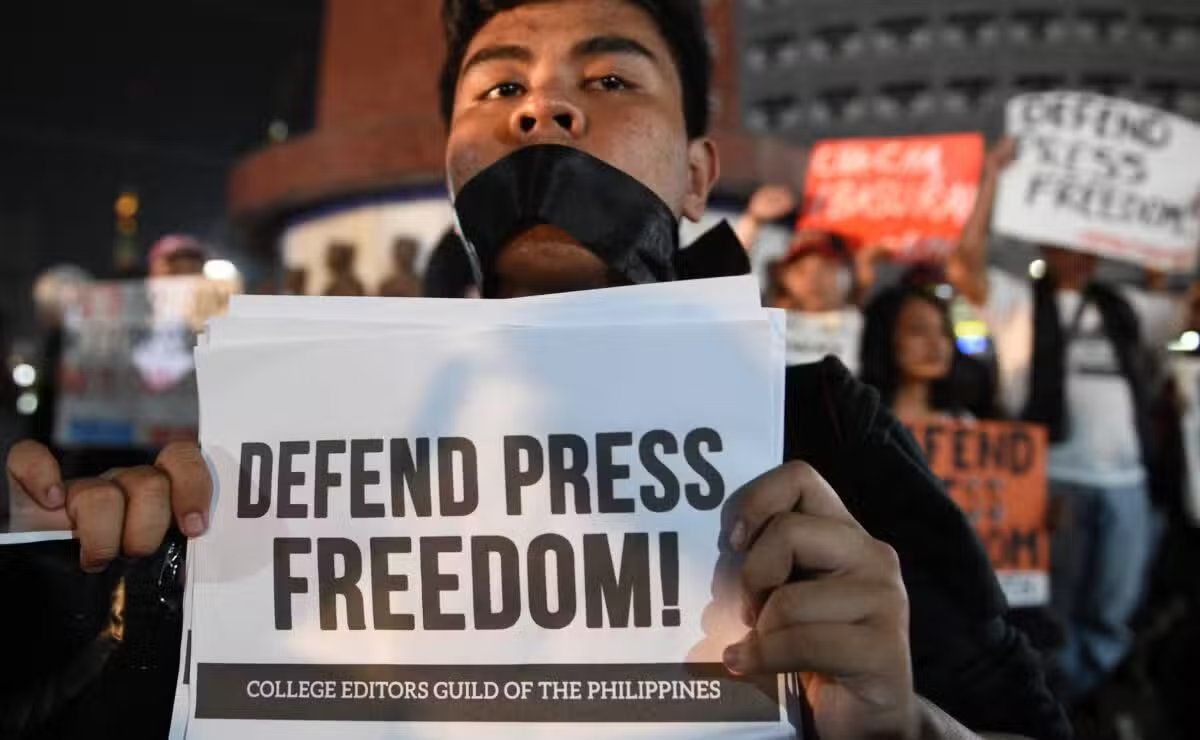
The safety of journalists in the Philippines has deteriorated significantly under President Ferdinand Marcos Jr.'s administration. According to documentation by the National Union of Journalists of the Philippines, approximately 260 separate cases of attacks against media workers have been recorded in the four-plus years since Marcos assumed office in 2022. This alarming trajectory underscores a deepening crisis for press freedom in a nation where journalism already operates under considerable strain.
What makes this statistical reality particularly troubling is not merely the quantity of incidents but rather their demographic distribution. The NUJP's research reveals a stark disparity: more than 180 of the documented cases targeted journalists employed by local newspapers, independent radio stations, alternative media outlets, and campus publications. This concentration exposes a systemic vulnerability affecting those furthest removed from the protective infrastructure of metropolitan newsrooms. Small and independent news organisations typically operate with constrained budgets, offer lower salaries to staff, and lack institutional mechanisms to shield their reporters from external pressure.
The implications for community journalism are severe. Provincial and local journalists operate in contexts where institutional safeguards are minimal and where entrenched political and economic interests wield considerable influence. Many local officials and business figures maintain tight control over narrative and access to information within their territories, creating an environment where critical reporting poses tangible personal risks. Yet despite these formidable obstacles, community journalists persist in covering stories that major national outlets either cannot reach or choose to ignore—stories that matter profoundly to ordinary Filipinos in smaller cities and rural areas.
Jay Lavapiez, a 48-year-old radio broadcaster and station manager of Baskog Radyo in Roxas City, Capiz, exemplifies the challenges facing provincial media workers. His case illustrates both the operational constraints and the physical dangers that distinguish community journalism from work conducted in Metro Manila's relatively sheltered newsrooms. Lavapiez operates with substantially fewer resources than counterparts at major news organisations, yet he faces significantly greater risks in his reporting environment. In June, he survived an assassination attempt when two men on a motorcycle blocked his vehicle and fired four bullets from a 9mm pistol—a stark reminder that intimidation tactics extend far beyond legal harassment.
The persecution of Lavapiez and his wife India began after they reported on a cemetery controlled by a local official and various allegations of corruption and abuse. What started as investigative journalism grounded in legitimate public interest concerns evolved into a coordinated campaign of legal harassment. Multiple cyberlibel cases were filed against the couple and their staff across Manila, Muntinlupa, and Capiz—a geographically dispersed strategy that compounds the burden of legal defence and amplifies the intimidatory effect. The April filing of these cases drew urgent attention from the NUJP, which recognised the pattern as retaliation for journalism deemed inconvenient to those in power.
Lavapiez articulates a reality that distinguishes provincial journalism from its metropolitan counterpart: community journalists cannot simply relocate or establish professional distance from the subjects of their reporting. Unlike reporters in Manila who might leave a conflict behind after filing a story, provincial journalists inhabit the same physical and social spaces as the officials they scrutinise and the communities they serve. Walking down the same streets daily, encountering sources and subjects repeatedly, and maintaining a broadcasting presence in a confined geographic area creates a uniquely vulnerable position. The psychological toll of this perpetual exposure—knowing that critical reporting may generate threats from neighbours and authority figures—cannot be overstated.
The compensation disparity between community journalists and their metropolitan counterparts further exacerbates vulnerability. Salaries in provincial media remain modest, often failing to reflect either the difficulty of the work or the risks inherent in investigative reporting within tightly knit communities. This economic precarity means that journalists lack resources to hire security personnel, pursue legal representation robustly, or relocate if threats escalate. Many provincial media workers continue their profession despite inadequate compensation because the work itself matters—not as a lucrative career but as a necessary service to communities with limited alternative sources of information.
The case of RJ Ledesma underscores the ultimate consequence of this vulnerability. The community journalist was killed in April during a military operation in Toboso, Negros Occidental while conducting community work and reporting on renewable energy initiatives and their effects on agricultural communities. Ledesma was among 19 people killed in the operation, which a fact-finding mission condemned for serious violations including allegedly indiscriminate firing by military personnel. His death represents not merely the loss of a journalist but the silencing of a voice examining how development projects impact farming communities—reporting that few other outlets would pursue.
The broader pattern reveals how press freedom under threat does not affect all journalists equally. National outlets with institutional resources, legal teams, and international backing can weather harassment campaigns that would devastate smaller operations. Community journalists lack such protections. When they face libel suits, cyberlibel charges, online harassment, intimidation campaigns, and threats of violence, they do so with minimal institutional support. The cumulative effect is a chilling effect on reporting precisely in those areas where accountability and transparency are most needed but least guaranteed by alternative institutional checks.
Lavapiez's perspective on community journalism emphasises its fundamental purpose: asking uncomfortable questions when public resources are involved and ordinary citizens lack alternative channels for raising grievances. This is not journalism pursued for career advancement or financial reward but rather as a civic duty and service to communities. Yet the irony that emerges from Lavapiez's reflection is profound—the closer journalists position themselves to their communities, understanding local issues intimately and maintaining presence and accessibility, the more vulnerable they become. The same visibility and accessibility that make them effective community journalists simultaneously expose them to pressure, surveillance, and retaliation.
For Malaysian and Southeast Asian observers, the Philippine situation carries sobering implications. Press freedom is not monolithic; it erodes first at the margins, targeting journalists with fewest institutional defences. Community journalists, campus media, and alternative outlets represent early warning indicators of broader threats to press freedom. Their vulnerability reflects not merely individual risk but systemic weakness in the protection of public discourse outside major media institutions. Supporting these journalists and strengthening institutional protections for provincial media becomes essential for maintaining democratic accountability and public access to information in decentralised contexts.
Lavapiez concludes with a modest but essential plea: journalists do not seek special privileges but rather basic professional security—the ability to work without threats, harassment, legal persecution, or physical harm. This baseline request has become increasingly difficult to guarantee in provincial Philippines, where political and economic interests can effectively silence inconvenient reporting through coordinated campaigns of intimidation. The documentation of 260 attacks, the disproportionate targeting of community journalists, and cases like Lavapiez's survival and Ledesma's death collectively demonstrate that press freedom in the Philippines faces deteriorating conditions precisely where democratic accountability is most fragile and most necessary.

