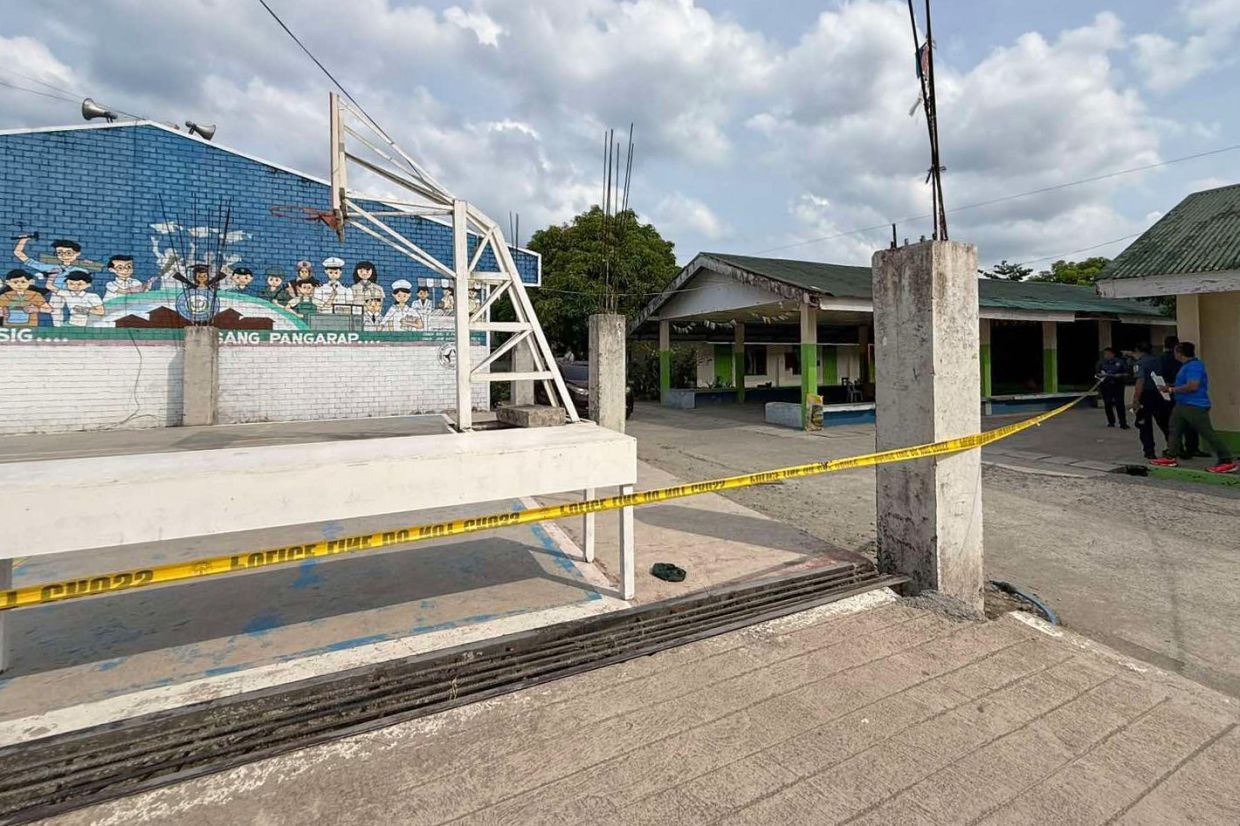
A Grade 10 student in the Philippines was taken into custody this week for allegedly threatening to carry out an attack against her school through inflammatory social media posts, marking another alarming incident in a troubling pattern of school-based violence sweeping the island nation. Interior Secretary Jonvic Remulla disclosed at a press briefing on June 25 that Philippine National Police Criminal Investigation and Detection Group operatives arrested the 14-year-old female student from Tolosa National High School in Leyte following a tip provided by Senator Bam Aquino regarding posts she had made on Wednesday night.
The threatening message, which circulated on social media platforms, contained explicit language indicating intent to harm students and staff at the school. According to Remulla's account, the post declared: "Hello. Send this to your friends. Yo, from Tolosa, prepare yourselves, especially to you, as you owe me. Get ready. I will disrupt the school." The message escalated further with statements suggesting indiscriminate violence: "You won't know me, but you will recognise me. There is no time nor day. Be prepared for whoever gets shot or stabbed. We don't care. Good luck to you at Tolosa National High School."
Investigators uncovered evidence that the teenager had created multiple Facebook accounts to amplify the threatening message to a wider audience. Police conducted social media analysis and gathered corroborating information from concerned individuals to confirm her identity across these different accounts. The rapid identification and location of the suspect demonstrated the effectiveness of monitoring systems employed by Philippine law enforcement, though it also highlighted the ease with which young people can create anonymous online personas to spread violent rhetoric.
However, the case took an unusual turn when authorities were unable to pursue formal charges against the minor. The Philippine National Police transferred custody to the Department of Social Welfare and Development before subsequently releasing the girl, as Republic Act No. 9344, which governs juvenile justice and welfare matters, prevents criminal prosecution of individuals below a certain age threshold. This legislative protection, designed to redirect young offenders toward rehabilitation rather than punishment, created a scenario where authorities could investigate but not incarcerate despite the serious nature of the threat.
The teenager's parents complicated the investigative process by refusing to cooperate with municipal police when approached. Remulla noted that the student herself remained "hesitant and uncooperative due to the fear of repercussions," a psychological response that authorities suggest undermined their ability to fully comprehend her motivations. By the time authorities intervened, the girl had already deleted her accounts and posts, obscuring the complete scope of her online activity and limiting the evidence available for assessment.
Authorities ultimately concluded that personal and family difficulties may have driven the girl to issue the threats online. Remulla stated that following engagement with the family, "the threat appears to be neutralised and inactive." Investigators found no credible evidence of a premeditated plot, no involvement of other individuals, and critically, neither the student nor her parents possessed access to firearms, suggesting the threat, while serious as a statement of intent, lacked practical capacity for immediate execution.
This case emerges directly in the shadow of a far more devastating incident at San Jose National High School in Tacloban City, which unfolded just days earlier. On Monday of that same week, two students aged 14 and 15 opened fire within the campus, killing three fellow students and wounding at least twenty others. The shooting reignited national conversation about school safety, teenage access to weapons, and the psychological factors driving young people toward mass violence in educational settings.
A striking commonality connected the two incidents: investigators determined that the suspects in the Tacloban shooting and the teenage girl who issued threats against Tolosa National High School were all devoted players of GoreBox, a video game featuring graphic violence and brutal mechanics. The discovery prompted the Cybercrime Investigation and Coordinating Centre to temporarily ban the title following the Tacloban shooting, marking a significant intervention by Philippine authorities into gaming content consumed by minors. The move reflects broader Southeast Asian concerns about violent media consumption and its potential influence on adolescent behaviour, though academic consensus on such causal links remains contested.
For Malaysian readers and policymakers, these incidents underscore vulnerabilities that extend across the region's education systems. The Philippines case demonstrates how social media amplification can transform isolated threats into widespread panic, and how age-based legal protections, while protective of juveniles, can create enforcement gaps when addressing serious safety concerns. The GoreBox connection raises questions about content moderation on gaming platforms and the responsibility of distributors to monitor access by minors in countries with less robust regulatory frameworks than Malaysia's.
The apparent influence of violent gaming content on multiple perpetrators suggests a need for coordinated regional approaches to online safety and content regulation. While each jurisdiction maintains different legislative frameworks, the mobility of digital content and the transnational nature of online gaming communities mean that restrictions implemented in one country may be circumvented by users in others. Malaysian authorities monitoring similar threats within schools might benefit from establishing faster communication protocols with their Philippine counterparts and regional partners to identify emerging patterns of coordination or copycat behaviour.
The Tolosa case also exposes the challenge facing law enforcement when minors weaponise social media to threaten violence without immediate capacity or concrete intent to carry out attacks. Distinguishing between genuine threats requiring preventive intervention and expressions of adolescent distress or attention-seeking remains difficult, particularly when suspects are traumatised, uncooperative, or influenced by family dysfunction. The release of the Tolosa student without charges, while legally mandated, leaves unresolved the question of what rehabilitative or preventive measures might redirect such behaviour.
Moving forward, the Philippine government appears committed to addressing what has become a recurring crisis. The involvement of high-level officials including the Interior Secretary in handling individual threat cases signals the national gravity accorded to school safety. However, sustainable solutions likely require investment in mental health services for at-risk adolescents, family counselling programmes, enhanced monitoring of gaming platforms and social media for violent content, and clearer protocols for inter-agency response to credible threats. For Malaysia and other ASEAN nations observing these developments, the cases offer cautionary lessons about the intersection of youth psychology, digital connectivity, and access to lethal weapons in communities where gun regulation remains porous.

