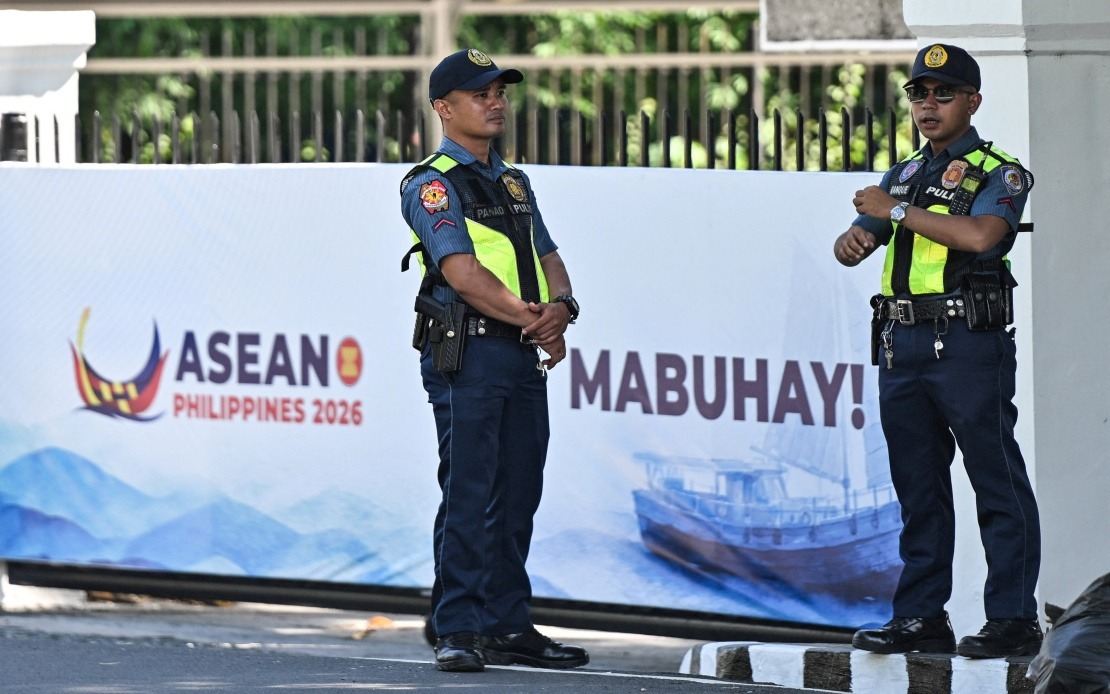
The Philippine government is preparing to lead one of Southeast Asia's most significant diplomatic gatherings as it assumes the chair for the 59th ASEAN Foreign Ministers' Meeting and Related Meetings, running through July 24 in Manila. The week-long series of engagements represents a critical moment for the region, as ASEAN attempts to navigate overlapping crises including the Myanmar conflict, South China Sea territorial disputes, and broader global tensions that increasingly affect Southeast Asian stability. According to Foreign Affairs Assistant Secretary Dominic Xavier Imperial, who serves as ASEAN Spokesperson, the Philippines will use its leadership position to advance the bloc's core development agenda while reinforcing the regional community's cohesion amid external pressures.
The formal proceedings opened with the 16th joint interface between ASEAN Foreign Ministers and the ASEAN Intergovernmental Commission on Human Rights, signalling the region's commitment to elevating human rights dialogue alongside traditional security discussions. This positioning reflects a growing recognition within ASEAN that sustainable regional stability cannot be achieved through security measures alone, and that protecting fundamental freedoms and vulnerable populations must remain central to the bloc's identity. The interface framework has evolved considerably since its inception, allowing for more substantive exchanges between foreign ministries and the AICHR, though civil society observers note that translating these discussions into binding commitments remains a persistent challenge across the region.
Parallel discussions on nuclear non-proliferation underscore Southeast Asia's long-standing commitment to maintaining the region as a weapons-of-mass-destruction-free zone. The Southeast Asia Nuclear Weapon-Free Zone Commission convened to review its 2023–2027 action plan and consider new states seeking accession to its protocol. This institutional framework, established decades ago, continues to represent one of ASEAN's most successful cooperative mechanisms, providing a foundation for confidence-building in an era when great power competition increasingly threatens regional equilibrium. The meeting will evaluate progress toward securing broader international recognition and support for the principle that Southeast Asia should remain entirely free of nuclear arsenals, a position that carries particular weight given nuclear-armed states' expanding presence in adjacent waters.
The formal opening of the 59th AMM on Tuesday will bring together foreign ministers, diplomatic representatives, and resident missions for comprehensive discussions spanning ASEAN's three community pillars—political-security, economic, and socio-cultural. Ministers are expected to review progress across these foundational frameworks and assess how well the bloc's external partnerships are serving regional interests. The agenda encompasses pressing international developments, with particular focus on how global instability translates into concrete challenges for Southeast Asian nations. Two principal documents will emerge from these deliberations: the 59th AMM Joint Communiqué, which will articulate regional consensus on key issues and international positions, and the Guidelines on the Modalities for Engagement of ASEAN with High Contracting Parties to the Treaty of Amity and Cooperation in Southeast Asia.
The engagement guidelines represent a significant deliverable of the Philippine chairmanship, establishing clear protocols for how states without formal ASEAN partnerships can coordinate with the bloc. This framework addresses a practical governance gap that has sometimes created confusion and inconsistency in ASEAN's diplomatic outreach. By formalising the conditions and mechanisms for engagement with non-partner states, the guidelines aim to strengthen ASEAN's capacity to build coalitions while ensuring that cooperation remains anchored to the Treaty of Amity and Cooperation principles—which emphasise mutual respect for sovereignty, non-interference, and peaceful dispute resolution. These foundational principles have become increasingly important as major powers compete for influence within the region.
The week's diplomatic calendar becomes notably more crowded beginning Wednesday, when ASEAN will conduct Post-Ministerial Conferences with its key dialogue partners: India, the United States, Canada, Russia, China, the Republic of Korea, Japan, Australia, New Zealand, the United Kingdom, and the European Union. These bilateral-level meetings allow ASEAN to calibrate its relationship with each major power individually while presenting a unified front on core regional concerns. The format has proven effective for managing competing interests among dialogue partners, though tensions between China and Western partners increasingly strain the consensus-building process. By hosting these discussions, ASEAN members hope to reinforce that the region remains open to balanced engagement across ideological divides, while also pressing dialogue partners to respect ASEAN's autonomy in regional affairs.
Thursday's schedule intensifies the diplomatic engagement with three additional ministerial forums: the 27th ASEAN Plus Three meeting involving China, Japan, and South Korea; the 33rd ASEAN Regional Forum bringing together a broader constellation of security stakeholders; and the 16th East Asia Summit, which includes India, Russia, Japan, South Korea, Australia, and New Zealand alongside ASEAN members. These cascading forums reflect the sophisticated multilayered architecture that ASEAN has constructed to manage complex regional relationships. Each mechanism serves a distinct purpose—APT focuses on economic and functional cooperation among East Asian neighbours, the ARF provides a platform for security dialogue with a wide array of partners, and the EAS increasingly serves as the region's premier strategic gathering. Imperial emphasised that these engagements offer dialogue partners crucial opportunities to address issues affecting both the region and the wider world, from supply chain disruptions to maritime security.
A particularly significant bilateral meeting has been confirmed between Philippine Foreign Affairs Secretary Ma. Theresa Lazaro and Chinese Foreign Minister Wang Yi, highlighting the importance Manila places on managing its relationship with Beijing even as territorial tensions persist. Imperial noted that this engagement addresses not only bilateral issues between the Philippines and China but also the broader regional implications of great power competition. The meeting signals that despite public disputes over South China Sea incidents, ASEAN members continue pursuing diplomatic channels to prevent escalation. This balancing act—maintaining multilateral solidarity on regional principles while preserving bilateral relationships with major powers—represents the central strategic challenge ASEAN faces in the current geopolitical environment.
Two persistent crises will dominate substantive ministerial discussions throughout the week. The Myanmar situation continues to deteriorate, with the State Administration Council resisting international pressure while armed resistance movements and humanitarian needs expand. ASEAN's response has oscillated between pragmatic engagement with Myanmar's military rulers and attempts to coordinate with broader stakeholders, including civil society and armed opposition groups. Imperial confirmed that engagement extends beyond official military channels to encompass a wider spectrum of Myanmar actors, reflecting ASEAN's recognition that sustainable progress requires dialogue with multiple constituencies. The Five-Point Consensus on Myanmar—designed to facilitate dialogue, ceasefire, and humanitarian access—remains on the agenda, though translating consensus into measurable outcomes has proven frustratingly difficult across multiple ministerial cycles.
The South China Sea Code of Conduct negotiations will similarly feature prominently throughout the meetings, representing perhaps ASEAN's most complex diplomatic endeavour. The proposed COC aims to establish rules governing state behaviour in disputed waters while theoretically reducing the risk of military incidents. However, negotiating positions among ASEAN claimant states (the Philippines, Vietnam, Malaysia, and Brunei) and non-claimant members diverge significantly, and China's preferences sometimes conflict with ASEAN consensus-building imperatives. Imperial confirmed that COC discussions will remain a permanent fixture of ASEAN foreign ministers' agendas, reflecting both the issue's importance and the slow pace of progress. These discussions must balance the desire for binding constraints on behaviour with ASEAN's consensus-based decision-making process and sensitivity to Chinese concerns about constraints on its maritime activities.
The week's conclusion on Friday will mark the 50th anniversary of the Treaty of Amity and Cooperation with commemorative activities honouring the foundational agreement that established the principles governing ASEAN relations and its engagement with external parties. The TAC has provided the conceptual framework for regional peace and stability across five decades of tremendous change, from the Cold War through globalisation to the current great power competition era. That ASEAN chooses to celebrate this anniversary at a moment of significant regional tension underscores the bloc's commitment to the principles it enshrines, even as implementation challenges mount. The commemorative activity will provide an opportunity for ASEAN leaders to reaffirm their commitment to these founding principles while acknowledging the evolving challenges they must address.

