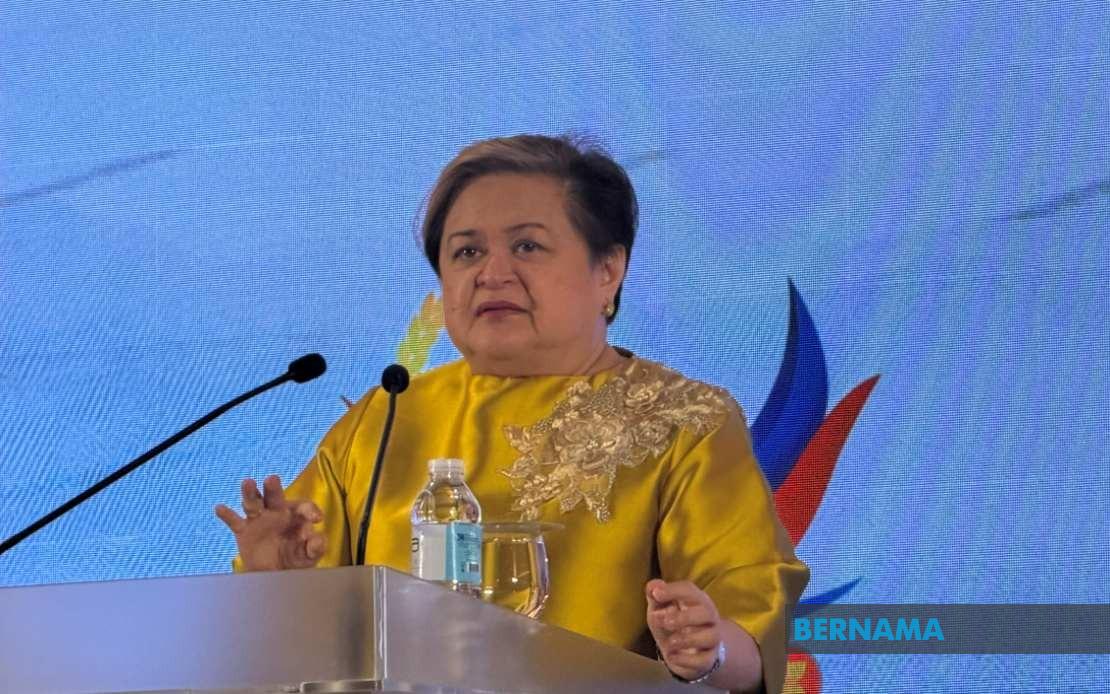
The Philippines is pressing its Southeast Asian neighbours to take decisive action in securing the region's vital maritime arteries, arguing that the stability of the Strait of Malacca, the South China Sea, and related shipping lanes has become essential to ASEAN's collective economic wellbeing. Philippine Foreign Affairs Secretary Ma. Theresa P. Lazaro made the case in discussions with BERNAMA, emphasizing that recent instability in the Strait of Hormuz has provided a cautionary lesson about how disruptions to major international waterways can cascade into inflation, food insecurity, and widespread supply chain failures across interconnected economies.
Lazaro's intervention reflects growing anxiety among ASEAN capitals about the region's vulnerability in an era of volatile geopolitics. The Philippines, which has its own disputes in the South China Sea, is particularly attuned to the risks posed by maritime chokepoints. She pointed out that ASEAN's deep reliance on global trade networks makes the bloc especially susceptible to external shocks. Should significant disruptions occur along key shipping corridors, the consequences would ripple through ASEAN economies in the form of elevated operational expenses, manufacturing slowdowns, and diminished competitiveness in export markets. This structural vulnerability underscores why coordinated regional action has become urgent rather than optional.
The Philippine position calls for a multi-layered approach to maritime resilience that extends well beyond conventional naval or coast guard patrols. Lazaro outlined a framework encompassing not only the preservation of open sea lanes but also the systematic hardening of supply chain networks and coordinated approaches to energy and food security. Trade facilitation and enhanced regional connectivity would complement these measures, creating redundancies and alternative pathways should primary routes face disruption. The philosophy underlying this vision is that resilience stems from diversification, transparency, and the capacity to reroute flows when circumstances demand it.
A critical innovation in the Philippine proposal involves establishing formal crisis communication protocols that would bind ASEAN's foreign ministers and potentially other officials into a unified response mechanism. During the Special ASEAN Foreign Ministers' Meeting convened to address the deteriorating situation in West Asia, Lazaro advocated for these institutional arrangements. The rationale is straightforward: crises unfold rapidly, and slow or uncoordinated regional responses can amplify damage. Pre-agreed communication channels and decision-making frameworks would enable ASEAN to mobilize collective action swiftly, presenting a united diplomatic front and coordinating practical measures in real time.
Information-sharing and early warning systems represent another pillar of the proposed architecture. By pooling intelligence and establishing common indicators that trigger escalated alert levels, ASEAN member states could detect emerging threats before they metastasize into full-blown disruptions. Technical cooperation among maritime authorities, coast guards, and intelligence agencies would deepen the region's capacity to identify piracy, environmental hazards, unusual naval movements, and other anomalies. This preventive dimension is intended to reduce crisis frequency rather than simply managing crises after they occur.
The Philippines views transparency and predictability as foundational to building confidence in ASEAN's ability to maintain open commerce. Lazaro stressed that clear protocols, regular communication, and visible institutional capacity would reassure trading partners and investors that the region is serious about safeguarding their interests. For multinational corporations orchestrating complex global supply chains, confidence that ASEAN can protect against disruption affects decisions about where to source goods, establish manufacturing facilities, and transit cargo. A region perceived as unprepared or fragmented becomes a risk factor that businesses attempt to avoid, with serious economic consequences.
A concrete manifestation of the Philippine commitment to maritime leadership is the proposed ASEAN Maritime Centre, which Manila intends to establish during its 2026 chairship of the bloc. This facility would function as a knowledge hub and operational node for addressing maritime challenges across ASEAN-led frameworks and mechanisms. By centralizing expertise and coordination capacity, the centre could accelerate information-sharing, support capacity-building initiatives among member states with less developed maritime institutions, and facilitate dialogue between ASEAN and external partners on maritime governance. The centre would also enable cross-sectoral collaboration, ensuring that maritime security decisions account for environmental, economic, trade, and broader strategic considerations.
The initiative gains significance against the backdrop of ASEAN's ongoing struggle to maintain unity on contentious issues, particularly those involving great power competition in the South China Sea. By anchoring maritime cooperation around pragmatic concerns—trade flows, energy security, supply chain stability—rather than politically divisive questions of sovereignty, the Philippines is attempting to build consensus around shared interests. This approach acknowledges that all ASEAN members depend on secure maritime commerce and that protection of these interests transcends bilateral disputes or differing alignments with external powers.
For Malaysia specifically, these discussions carry considerable weight. The Strait of Malacca, through which roughly one-third of global maritime trade passes, is a Malaysian responsibility in terms of traffic management and environmental protection. Any regional framework for maritime security inevitably involves coordination with Kuala Lumpur. Malaysian shipping lines and energy importers would benefit from enhanced safety protocols and early warning systems. Similarly, the proposed information-sharing arrangements could improve Malaysia's capacity to detect threats before they affect its interests.
The broader Southeast Asian context reveals how maritime security has evolved from a peripheral concern into a central economic and strategic preoccupation. Rising commodity prices and energy costs have made the region acutely aware of global interdependence. Supply chain disruptions during the COVID-19 pandemic demonstrated that even indirect impacts can devastate local economies. Geopolitical tensions in the Middle East and Eastern Europe have served as vivid reminders that instability thousands of kilometres away can rapidly affect ASEAN. The Philippines is responding to these realities by advocating for ASEAN to move from reactive crisis management to proactive institutional design.
The success of the Philippine proposals will depend on whether ASEAN member states can overcome competing interests and resource constraints to implement them. Establishing comprehensive early warning systems requires investment in technology and trained personnel—not all ASEAN members have comparable capacities. Developing unified communication protocols demands trust and the willingness to share sensitive information. The ASEAN Maritime Centre will require sustained funding and political backing. Nevertheless, the underlying logic is compelling: in an era of interconnected risks and volatile geopolitics, ASEAN's collective resilience depends on the seamless functioning of maritime systems that undergird regional prosperity.

