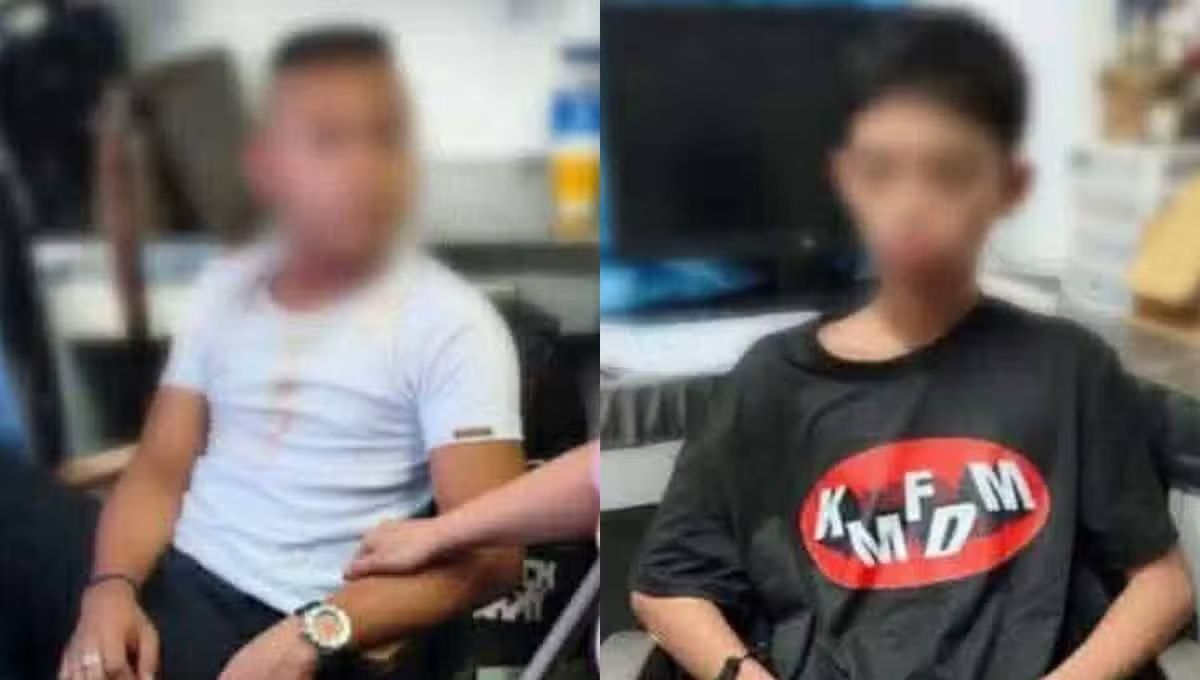
A school shooting in Tacloban City, Leyte on June 22 has ignited one of the most contentious legal disputes in Philippine governance: at what age should children face full criminal accountability. Two Grade 9 students, aged 14 and 15, allegedly carried out the attack at San Jose National High School, firing on their classmates and killing three while injuring 20. The tragedy stands as one of the deadliest school shootings in recent Philippine history, a nation where such incidents remain comparatively uncommon, yet the legal consequences for the perpetrators could scarcely be more different.
The starkest contrast lies in how Philippine law treats the two suspects based solely on their age. The 15-year-old faces multiple murder and frustrated murder charges and will navigate the conventional criminal justice system. His 14-year-old co-perpetrator, however, cannot be criminally charged under the Juvenile Justice and Welfare Act of 2006. Instead, he faces referral to a rehabilitation facility called House of Hope, designed for children in conflict with the law. This legal distinction has sparked anguish among bereaved families who view it as insufficient justice, particularly given allegations that the younger suspect was responsible for the majority of the shooting and directly killed at least one victim.
Erbeah Fabian, mother of 15-year-old victim Chris Lorenz, expressed her frustration with a system that treats juvenile offenders differently regardless of their culpability. She pointed out that while she holds anger toward the older suspect, the legal framework appears to afford the younger shooter greater protection despite evidence he bore greater responsibility for the deaths. Similarly, Jenny Baldoria, whose 16-year-old son Joyancee was killed, questioned how the criminal justice system could expect her to forgive a child who took her son's life. These emotional testimonies from grieving parents have resonated powerfully in Philippine media and public discourse, lending weight to legislative efforts seeking reform.
The Tacloban incident coincides with a broader surge in student-related violence across the Philippines, amplifying concerns that current legal protections for minors may be enabling rather than preventing youth crime. Authorities recently thwarted a potential mass shooting at another Leyte school just days after the Tacloban incident. Additionally, three separate stabbing incidents occurred on different campuses within the same week, suggesting a disturbing trend in school-based violence that traditional juvenile rehabilitation approaches have failed to curtail. This pattern of escalating incidents has emboldened those seeking legislative action.
President Ferdinand Marcos Jr has signalled openness to lowering the minimum age of criminal responsibility, lending significant political momentum to reform proposals. The Philippine National Police have advanced concrete proposals to set the threshold at 12 years old, with spokesperson Allen Rae Co citing instances of children as young as nine committing serious crimes. Interior Secretary Jonvic Remulla expanded this argument, highlighting how criminal syndicates deliberately exploit minors in drug trafficking operations precisely because the current law shields them from prosecution. This exploitation argument resonates particularly in Southeast Asia, where drug trafficking remains a persistent security challenge, suggesting that the juvenile protection framework may inadvertently facilitate organised crime.
Senator Robin Padilla has filed legislation seeking to lower the minimum age to 10 and called upon President Marcos to convene a special congressional session to address the matter urgently. Padilla drew a sobering comparison to the United States school shooting epidemic, warning that if the Philippines continues following America's trajectory of school violence, it must respond with equally serious legislative measures. His appeal for a special session underscored the gravity with which lawmakers view the situation, though Congress remained on recess at the time of his statement, delaying immediate action on reform proposals.
Investigations into the perpetrators' backgrounds have revealed disturbing digital influences that have expanded the debate beyond criminal age thresholds into questions of media regulation and online safety for minors. Police discovered that one suspect had been posting violent videos online before the attack and was heavily influenced by violent internet content. Specifically, the 14-year-old was found to be playing GoreBox, a first-person shooter game featuring brutal combat mechanics, prompting the government to temporarily block access to the application. This discovery has energised calls for legislation restricting minors' access to violent video games and online platforms, adding a technological dimension to discussions about youth violence.
The Philippines currently maintains one of Asia's highest minimum ages of criminal responsibility, a distinction that complicates regional comparisons and international legal harmonisation. Most neighbouring countries have established thresholds of 14 years, while Indonesia sets its at 12 and Singapore at 10. However, international human rights frameworks introduce complicating factors: the United Nations Committee on the Rights of the Child has explicitly urged countries not to lower thresholds above 14 and has deemed any minimum below 12 as internationally unacceptable. In Singapore's model, offenders between 10 and 16 can face charges with cases handled through a Youth Court, suggesting a middle path between full criminal prosecution and complete immunity.
Opponents of lowering the criminal age threshold argue that such reforms address symptoms rather than underlying causes of youth violence. Tricia Clare Oco, executive director of the Juvenile Justice and Welfare Council, contended that reducing the age of responsibility would not automatically prevent children from committing violent crimes. She pointed to American jurisdictions with stricter criminal statutes that have failed to reduce school shooting frequencies, suggesting that legal changes alone cannot solve deeply rooted social problems. Instead, Oco identified family breakdown, bullying, peer pressure, and media normalisation of violence as primary drivers, factors that legislative reform cannot directly address.
Current Philippine law already provides mechanisms for managing serious juvenile offences beyond simple rehabilitation, though families of victims remain unconvinced of their adequacy. Courts can mandate involuntary commitment to House of Hope facilities within 72 hours, with structured rehabilitation programming mandatory and parents exposed to civil liability. These provisions theoretically allow judges to respond proportionately to serious juvenile crimes while maintaining rehabilitative focus. However, the distinction between civil liability for parents and criminal accountability for the child perpetrators has failed to satisfy grieving families who view such measures as insufficient justice for lethal violence.
The investigation into the Tacloban shooting extends beyond police inquiries, with the Philippine Senate and Commission on Human Rights launching their own independent probes. The Commission on Human Rights has called for responses guided by human rights principles and child-sensitive approaches, emphasising that genuine prevention requires understanding the complex factors driving youth violence. This institutional attention underscores the shooting's significance as a potential watershed moment in Philippine juvenile justice policy, though the outcome remains uncertain as competing perspectives advocate starkly different legislative directions. The debate will likely intensify as findings from multiple investigations emerge and parliamentary recess concludes, potentially reshaping decades-old protections for young offenders.

