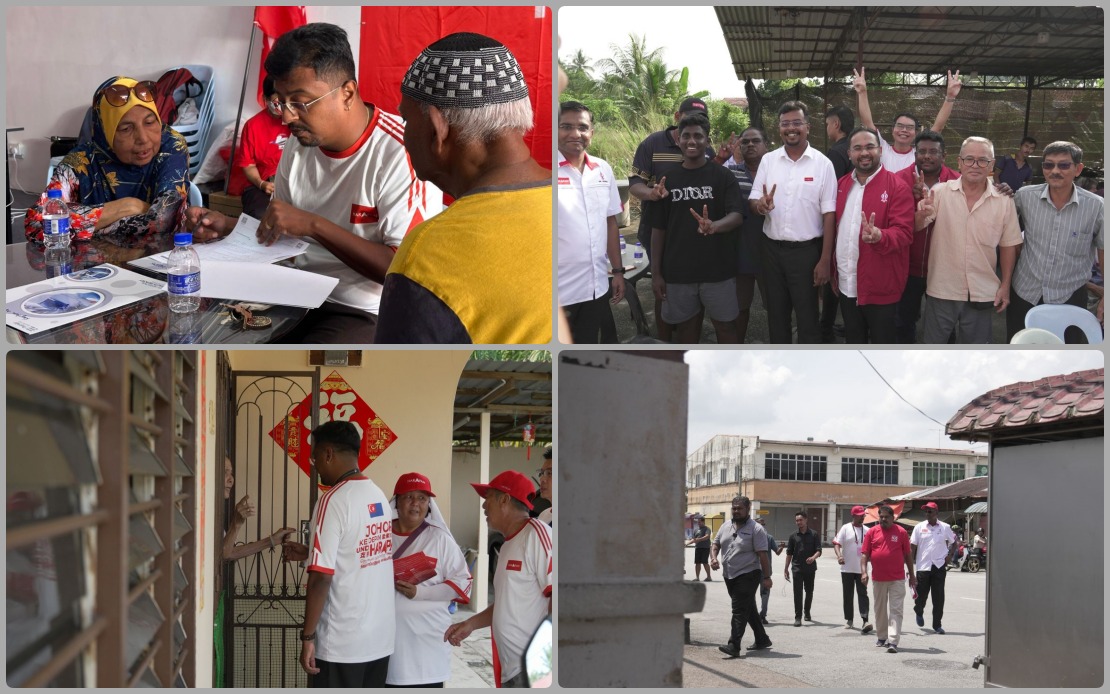
Dr. A. Ruban, the Pakatan Harapan candidate contesting the Paloh state assembly seat in the 16th Johor state election, was admitted to hospital in Batu Pahat on July 7 to address complications from a slipped disc that had worsened throughout the day. His campaign team confirmed the hospitalisation following a medical emergency that left him unable to continue his ground operations, though his condition was not deemed critical at the time of admission.
The underlying cause of his hospitalisation traces to a pre-existing spinal condition that had previously required surgical intervention. Dr. Ruban's campaign manager, Abdul Majid Abd Aziz, explained that whilst the candidate has managed his back problems in the past, the intense physical demands of election campaigning precipitated a fresh episode of pain and mobility restrictions. The rigorous schedule of grassroots engagement, which typically involves extensive door-to-door visits and public gatherings, appears to have exacerbated his chronic lumbar issues, a not uncommon occurrence among politicians undertaking demanding electoral campaigns across sprawling constituencies.
Abdul Majid indicated that medical staff expected Dr. Ruban to recover sufficiently for discharge within one or two days, suggesting the hospitalisation was primarily precautionary rather than indicative of a severe deterioration in his health status. The campaign apparatus nonetheless faced immediate operational challenges with their candidate temporarily sidelined just four days before the scheduled election date of July 11. Early voting had already commenced on the day of his admission, meaning the campaign window was already substantially compressed.
The Paloh contest represents a significant battleground in the Johor state election, with four candidates vying for the seat in what analysts describe as a competitive multi-cornered race. Beyond Dr. Ruban, the field includes D. Jeevakumar from the Perikatan Nasional coalition, independent candidate G. Kamaleswaren, and the incumbent Lee Ting Han from Barisan Nasional. This four-way division of votes presents both opportunities and uncertainties for each camp, as fractured contests often prove difficult to predict.
From a strategic perspective, Dr. Ruban's absence from the campaign trail places Pakatan Harapan in a delicate position. Political momentum in hotly contested seats frequently depends on visible candidate presence and direct voter engagement, particularly in the final days before polling. The coalition's decision to maintain campaign activities through its broader machinery rather than relying solely on the candidate demonstrates awareness of this reality, though substitute campaigners inevitably lack the personal connection and drawing power of the official nominee.
Abdul Majid's assurance that Pakatan Harapan machinery would intensify efforts to disseminate Dr. Ruban's policy platform and electoral message reflects standard practice when candidates face unexpected absences. By mobilising party volunteers, local leaders, and allied groups to maintain momentum on the ground, the party seeks to prevent any perception that the campaign has lost direction or energy. Whether such organisational substitution proves as effective as direct candidate engagement remains an ongoing question in electoral politics, particularly in state-level contests where local reputation and accessibility often weigh heavily in voter calculations.
The timing of the hospitalisation carries additional significance given that July 7 marked the commencement of early voting for the Johor election. This institutional feature allowed some voters to cast ballots immediately, potentially reducing the window during which Dr. Ruban's absence might materially influence undecided electors. Nonetheless, the main polling day three days later would determine the outcome, and any residual sympathy or concern regarding the candidate's health status could theoretically factor into final voting decisions.
The Paloh seat's competitive dynamics illustrate broader trends visible across the Johor state election, where traditional Barisan Nasional dominance faces sustained challenges from both Pakatan Harapan and the increasingly assertive Perikatan Nasional. Perikatan's presence alongside PH and BN creates a genuinely unpredictable electoral environment, particularly in constituencies where ethnic and religious demographics intersect with economic grievances and political loyalty patterns. Three-way and four-way contests of this nature frequently produce outcomes that diverge significantly from pre-election polling or historical patterns.
For Malaysian observers following state-level politics, Dr. Ruban's hospitalization underscores the physical and psychological toll that election campaigning imposes on candidates. Beyond the public-facing rhetoric and policy discussions, candidates endure demanding travel schedules, extended periods of public visibility, and the stress inherent in competitive races where personal reputation and electoral prospects hang in balance. Health complications during campaign periods thus merit consideration not merely as personal misfortune but as occupational hazard within the political process.
The incident also raises questions about campaign intensity and sustainability. As political contests grow more competitive and digital campaigning supplements rather than replaces traditional grassroots efforts, the physical demands on candidates intensify accordingly. Pre-existing health conditions that might previously have remained manageable can suddenly escalate when individuals subject themselves to the punishing schedules characteristic of serious electoral competition. Medical practitioners and campaign strategists increasingly recognise the need to balance electoral ambition with candidate welfare, though the pressures of competition often override such considerations.
For Pakatan Harapan's broader strategic position in the Johor election, maintaining credible campaigns across all contested seats requires managing such disruptions effectively. Party leaders must signal confidence in their candidates' viability whilst simultaneously projecting organisational capacity sufficient to overcome individual absences. The manner in which the PH campaign team responded to Dr. Ruban's hospitalisation—maintaining public composure, assuring voters of continued engagement, and emphasising that treatment is temporary rather than permanent—represents textbook crisis management in electoral contexts.
As the Johor state election approached its culmination with July 11 polling, the Paloh race remained one of several closely watched contests that would ultimately determine the state government's composition and political direction for the coming term. Dr. Ruban's health status and return to active campaigning would potentially influence this outcome, though the final verdict would ultimately rest with Paloh voters themselves.

