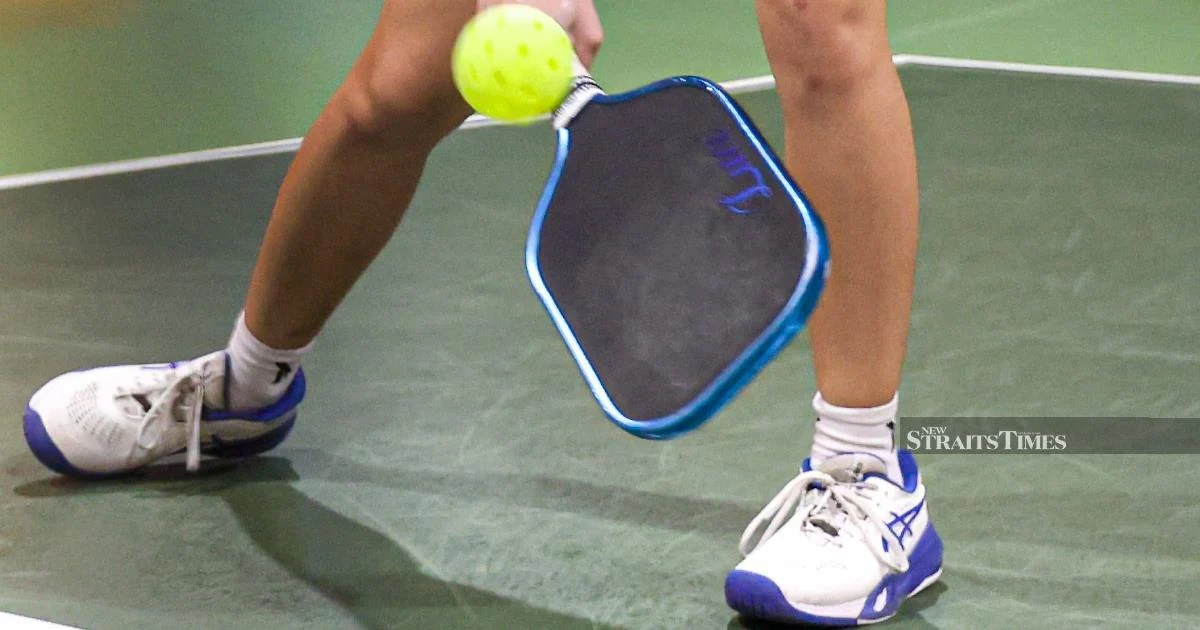
A contentious nocturnal pickleball match in Petaling Jaya has thrust the sport—increasingly popular across Malaysia—into the spotlight for the wrong reasons, prompting residents, officials, and community advocates to question whether local councils possess adequate mechanisms to regulate where recreational courts can be built and when they should operate, particularly in neighbourhoods where noise pollution and disruption have become genuine concerns for families.
The incident, which circulated widely on social media platforms, has catalysed a broader conversation about the regulatory gaps that exist in how Malaysian municipalities handle applications for sports facilities in close proximity to homes. Advocates for stricter oversight argue that the current approval framework relies too heavily on developers and venue operators to self-regulate, with inadequate safeguards to protect residential amenities or enforce reasonable curfew times for activities that generate audible disturbance during sleeping hours.
Pickleball itself has experienced explosive growth throughout Southeast Asia over the past three years, attracting players from diverse age groups and socioeconomic backgrounds with its accessibility compared to tennis and its social dimensions. In Malaysia, the sport has transitioned from niche recreational pursuit to mainstream leisure activity, with courts multiplying across Kuala Lumpur, Selangor, and other urban centres. However, this expansion has proceeded largely without corresponding regulatory evolution, leaving councils struggling to balance entrepreneurial development against residential tranquillity.
Critical questions now dominate discussions among stakeholders: Should councils retain veto power over applications based on proximity to housing blocks? Ought operating hours be capped by municipal ordinance—perhaps prohibiting organised play after 10 pm in residential zones? Who bears responsibility for monitoring compliance and enforcing penalties when regulations are breached? These inquiries reflect fundamental tensions between facilitating recreational opportunity and safeguarding quality of life for established residential communities.
The Petaling Jaya incident illuminates how noise ordinances, though technically present in many municipal bylaws, often lack explicit provisions addressing modern recreational pursuits or specify sufficiently stringent penalties to deter violations. Courts designed for daytime leisure frequently continue operation into evening and night hours to maximise revenue, with operators assuming that ambient noise complaints will remain minor or unenforceable without clear regulations defining maximum decibel levels or designated quiet periods.
Community feedback has intensified demands for councils to establish what amounts to a formal vetting process before approving new court installations. Residents argue that councils should conduct acoustic impact assessments for facilities proposed near residential precincts, requiring soundproofing measures or distance buffers as conditions for approval. Some advocate for tiered classification systems where facilities near homes face stricter operating hour limitations compared to those in commercial or industrial zones, recognising that neighbourhoods with families, elderly residents, and shift workers require different protections than purely commercial districts.
Developers and venue operators, conversely, contend that overly prescriptive regulations could price out smaller operators and concentrate the industry among large corporations, potentially reducing access and affordability. They note that pickleball courts occupy less space than tennis facilities and argue that staggered operating hours—prohibiting late-night open play while permitting private bookings with understanding neighbours—represent reasonable compromise rather than blanket closures. The industry perspective emphasises that municipalities should focus enforcement efforts on genuinely disruptive operators rather than imposing prophylactic restrictions on an entire activity.
Malaysian local government structures vary across states and federal territories, with different councils possessing differing jurisdictional powers and administrative capacities. Selangor's municipal authorities, for instance, operate under distinct regulatory frameworks compared to Kuala Lumpur City Hall or Putrajaya's City Council. This fragmentation means that responses to the pickleball controversy will likely be inconsistent unless a coordinated, state-level or national approach emerges to standardise facility approval criteria and operating hour guidelines across jurisdictions.
Sports ministry officials and local council representatives have begun consulting with residents, operators, and municipal planners to develop clearer standards. Preliminary discussions suggest potential solutions including mandatory community consultation periods before court approvals, graduated operating hour restrictions tied to facility location and proximity to housing, and enhanced complaint mechanisms allowing residents to report violations directly to enforcement officers. Some councils are exploring pilot programs where facilities install noise-monitoring technology, creating objective records of compliance rather than relying on subjective complaint assessment.
The broader implication for Malaysia's urban planning extends beyond pickleball. As recreational activities diversify and leisure investment accelerates, councils increasingly must anticipate potential conflicts between new facilities and existing residential populations. The pickleball dispute serves as a proxy for larger questions about how planning authorities can accommodate economic development and leisure options while preserving neighbourhood character and residential amenity—a balance particularly crucial in densely populated urban areas where green space is limited and recreational venues proliferate rapidly.
International precedents offer potential guidance. Singapore's authorities, for instance, require detailed noise and impact assessments before approving recreational facilities near residential zones, with mandatory sound insulation standards for indoor courts and strict evening operating hour caps. Some Australian councils have implemented similar approaches, distinguishing between activities permitted in different times and locations based on their potential to disturb neighbouring residents.
Looking forward, the Petaling Jaya pickleball row may catalyse Malaysia's local councils to modernise their facility approval processes, recognising that recreational sport is no longer confined to dedicated stadia but increasingly embedded within residential neighbourhoods. Whether councils adopt stricter controls, industry self-regulation intensifies, or hybrid approaches emerge will significantly influence how Malaysia manages the tension between recreational expansion and residential protection in coming years.

