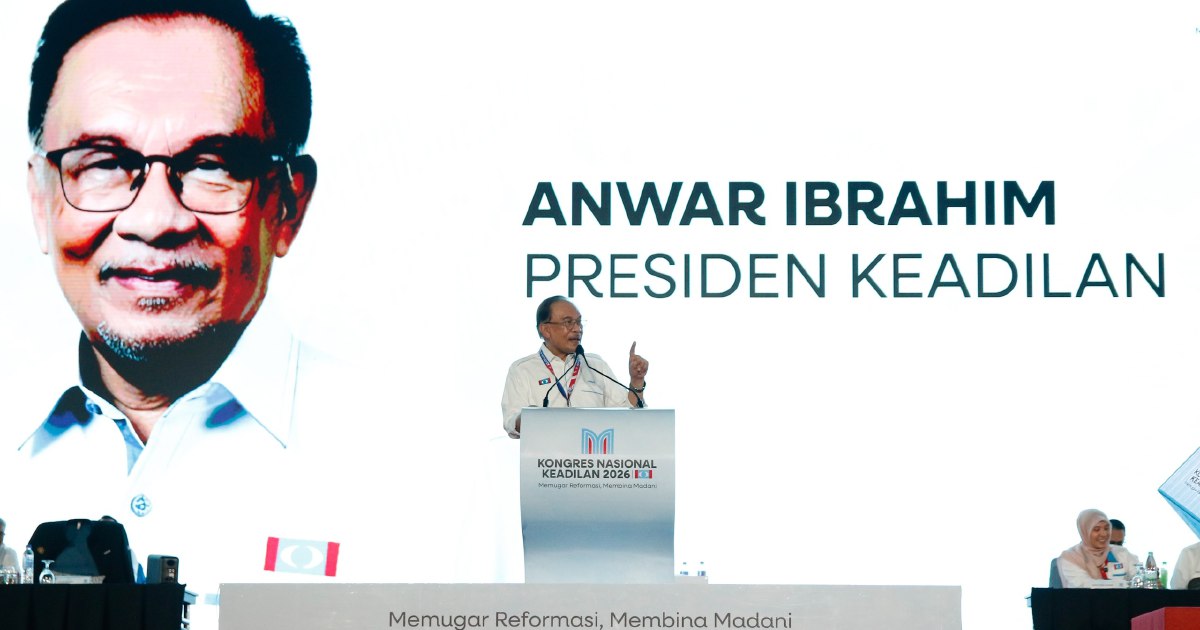
PKR will continue its collaborative arrangement with Barisan Nasional and Umno at the federal level without compromising its allegiance to Pakatan Harapan partners DAP and Amanah, according to Datuk Seri Anwar Ibrahim speaking in Ayer Keroh today. The statement underscores the delicate political balancing act that the PKR party leader and Prime Minister has maintained since Malaysia's shifting political landscape transformed conventional coalition dynamics in recent years.
The commitment to dual-track partnerships reflects the pragmatic realities of Malaysian governance following the 2022 general election and subsequent political realignments. Rather than viewing these relationships as contradictory, Anwar framed the arrangement as complementary, with PKR serving as a bridge between different political entities to ensure governmental stability and continuity of policy implementation at the national level. This nuanced positioning distinguishes PKR's role from other coalition members who have adopted more rigid ideological stances.
The relationship between PKR and its federal partners has evolved considerably since the fall of the Pakatan Harapan government in 2020. What began as a crisis response to political instability has gradually solidified into a structured governance model. The inclusion of BN-Umno within this framework provides crucial parliamentary numbers and geographic representation across Malaysian states, particularly important given the fragmented nature of the current political landscape where no single coalition commands an overwhelming majority.
DAP and Amanah, the other significant components of the original Pakatan Harapan alliance, have maintained their own agendas and territorial strongholds, particularly in Penang and Selangor respectively. Anwar's statement effectively reassures these partners that PKR's working relationship with BN-Umno does not signal abandonment of their shared policy objectives or electoral commitments. This becomes increasingly significant as Malaysia approaches the next general election, where coalition cohesion will determine electoral prospects.
The strategic value of this arrangement extends beyond simple arithmetic of parliamentary seats. BN-Umno brings decades of governmental experience and established administrative networks across federal agencies, whilst DAP contributes urban electoral strength and legislative sophistication, and Amanah provides representation among reform-minded segments traditionally aligned with Pakatan Harapan. PKR's positioning as a mediating force allows it to extract policy concessions from various partners whilst maintaining sufficient flexibility to adjust political arrangements if circumstances demand.
For Malaysian voters and international observers alike, this multi-layered coalition structure represents both a strength and a vulnerability. The strength lies in its capacity to accommodate diverse political constituencies and prevent any single faction from monopolising power. The vulnerability emerges from the potential for conflicting interests to paralyse decision-making or create opportunities for opportunistic defections. Anwar's public reaffirmation of loyalty to all partners appears designed to preempt either scenario.
The statements carry particular weight given ongoing speculation about potential realignments within PKR itself and broader discussions about Umno's long-term political trajectory. Some quarters have questioned whether Umno can sustain cooperation with PKR given their historical rivalries and contrasting voter bases. Similarly, questions persist about whether DAP and Amanah can indefinitely accept an arrangement that grants BN-Umno federal influence. Anwar's comments suggest these tensions are manageable provided all parties recognise the mutual benefits of the current arrangement.
From a regional perspective, Malaysia's current coalition model offers lessons for other Southeast Asian democracies grappling with fragmented party systems and complex power-sharing arrangements. Indonesia, Thailand, and the Philippines have all experimented with coalition governments, though none has achieved the same degree of sustained stability that Malaysia's arrangement has demonstrated. The Malaysian model proves that competing political entities can govern together effectively if properly incentivised and if leadership maintains clear communication about shared red lines and mutual interests.
The economic implications of this political arrangement deserve consideration as well. Business confidence depends partly on governmental stability and predictable policy frameworks. A coalition capable of delivering both provides manufacturers, investors, and financial institutions with the certainty necessary for long-term planning. Malaysia's recent economic performance, whilst mixed, has benefitted from the absence of the political instability that characterised 2020-2021, suggesting that continuity in coalition arrangements correlates with improved investor sentiment.
Anwar's remarks also acknowledge the generational dimension of Malaysian politics. Younger voters increasingly view traditional party loyalties as less determinative of their political choices. The ability to work across traditional divides whilst maintaining coalition coherence appeals to pragmatic voters tired of acrimonious partisan conflict. By emphasising cooperation rather than confrontation, PKR positions itself as a stabilising force attractive to moderate voters across different communities.
Looking forward, the sustainability of this arrangement depends on several factors. State-level politics will increasingly test federal coalition bonds as different parties dominate various state governments. Economic pressures may force difficult budgetary choices that divide coalition partners along traditional ideological lines. Leadership transitions within component parties could alter incentive structures. Anwar's statement essentially commits PKR to managing these challenges through sustained communication and mutual accommodation rather than allowing them to trigger coalition breakdown.
The statement represents not merely a reassurance to political allies but a message to the broader Malaysian electorate that governance stability remains achievable despite superficially contradictory partnerships. Whether this arrangement proves durable beyond the next electoral cycle remains uncertain, yet its current functionality demonstrates that Malaysian democracy can accommodate complexity and cooperation between previously antagonistic forces when necessity and enlightened self-interest align.

