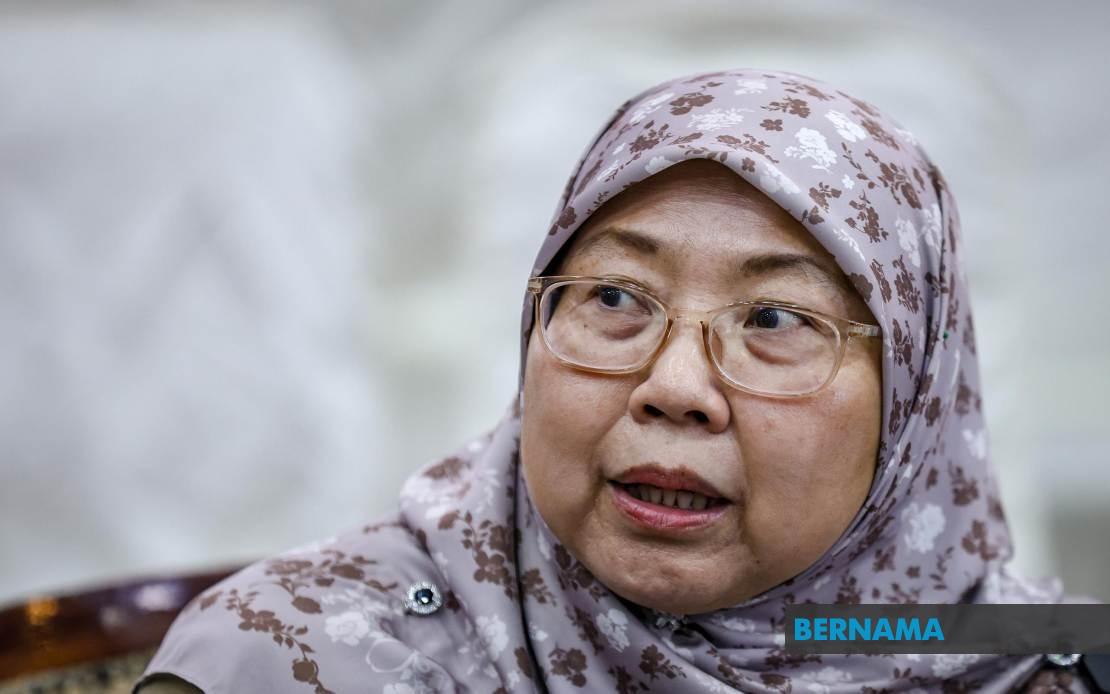
The opposition party Parti Keadilan Rakyat moved swiftly to distance itself from businessman Datuk Seri Nicky Liow Soon Hee after social media users circulated claims linking him to the party, with PKR secretary-general Datuk Dr Fuziah Salleh issuing a definitive statement on July 26 clarifying his non-membership status.
The clarification became necessary after a photograph showing Liow wearing apparel bearing the Angkalan Muda Keadilan logo—the youth wing of PKR—sparked online speculation about his affiliation with the political organisation. In the absence of official confirmation, such imagery can propagate misinformation, particularly in an environment where party membership carries significant reputational implications for both individuals and organisations.
Fuziah stated that PKR had conducted a formal investigation through its KEADILAN Membership System, the party's official registry of enrolled members. This institutional verification process represents standard procedure when allegations or public assumptions about party affiliation surface, ensuring clarity and preventing confusion among party structures and the broader electorate.
Crucially, the PKR secretary-general revealed that not only is Liow absent from the party's current membership rolls, but there exists no historical record of any membership application submitted under his name. This double negative—neither current membership nor past application—provides categorical assurance that the businessman has maintained no formal relationship with the party through its official channels.
The timing of this clarification carries particular significance given Liow's concurrent legal entanglement. Prior to PKR's statement, Liow faced serious criminal charges in the Shah Alam Sessions Court relating to alleged involvement in an organised crime syndicate colloquially known as the "Nicky Gang," alongside separate money laundering allegations. For a political party already subject to scrutiny regarding internal governance and member conduct, any appearance of connection to individuals facing organised crime charges would invite unwanted controversy and fuel accusations of compromised vetting procedures.
The viral photograph scenario illustrates how visual evidence, even when contextually incomplete or misleading, can rapidly generate false narratives across digital platforms. While the presence of an AMK shirt could theoretically indicate nothing more than merchandise ownership or symbolic support without formal membership, social media's algorithmic amplification and the speed of online information dissemination meant that thousands of users encountered the image divorced from explanatory context.
For Malaysian political parties, member verification has become an increasingly important defensive mechanism. As political discourse migrates steadily toward online spaces and as constituencies demand greater transparency about party compositions, organisations maintain sophisticated membership systems to provide rapid response capabilities when membership claims arise. PKR's use of its KEADILAN Membership System demonstrates this institutional preparedness.
The incident also reflects broader anxieties within Malaysian politics regarding the infiltration of criminal elements into political structures. Organised crime syndicates occasionally seek party affiliation to gain legitimacy or protective cover, making it essential for parties to maintain clear boundaries and credible verification procedures. PKR's prompt response serves not only to protect its own reputation but also to signal institutional integrity to members and supporters who increasingly expect accountability.
Moreover, this episode underscores the vulnerability of public figures and organisations to rapid reputational damage through social media amplification. A single photograph, particularly one capable of multiple interpretations, can generate widespread speculation within hours, obligating targeted parties to issue formal rebuttals. For smaller or less-established organisations, such defensive operations might prove resource-intensive, though major political parties possess communications apparatus to respond swiftly.
The distinction between casual supporters, sympathisers, and formal party members represents an important but frequently blurred boundary in Malaysian political discourse. Individuals may wear party colours, attend events, or express ideological alignment without undertaking the formal commitment of registered membership. PKR's clarification essentially notes that Liow, if indeed he wore or possesses AMK merchandise, occupies precisely this liminal space—present in observable associations but absent from institutional structures.
For Malaysian readers assessing the credibility of online political claims, this episode demonstrates the value of seeking official verification before accepting assertions about party membership. The incident also illustrates how social media rumours, despite originating from incomplete information, can necessitate time-consuming institutional responses that might be better deployed toward substantive political activities.
Looking forward, the case may prompt political organisations to communicate more proactively about membership verification processes, reducing the information vacuum that allows speculation to flourish. As Malaysian politics becomes increasingly digital, parties that establish clear, transparent, and publicly accessible frameworks for membership verification may find themselves better insulated against future confusion or weaponised misinformation campaigns targeting their institutional credibility.

