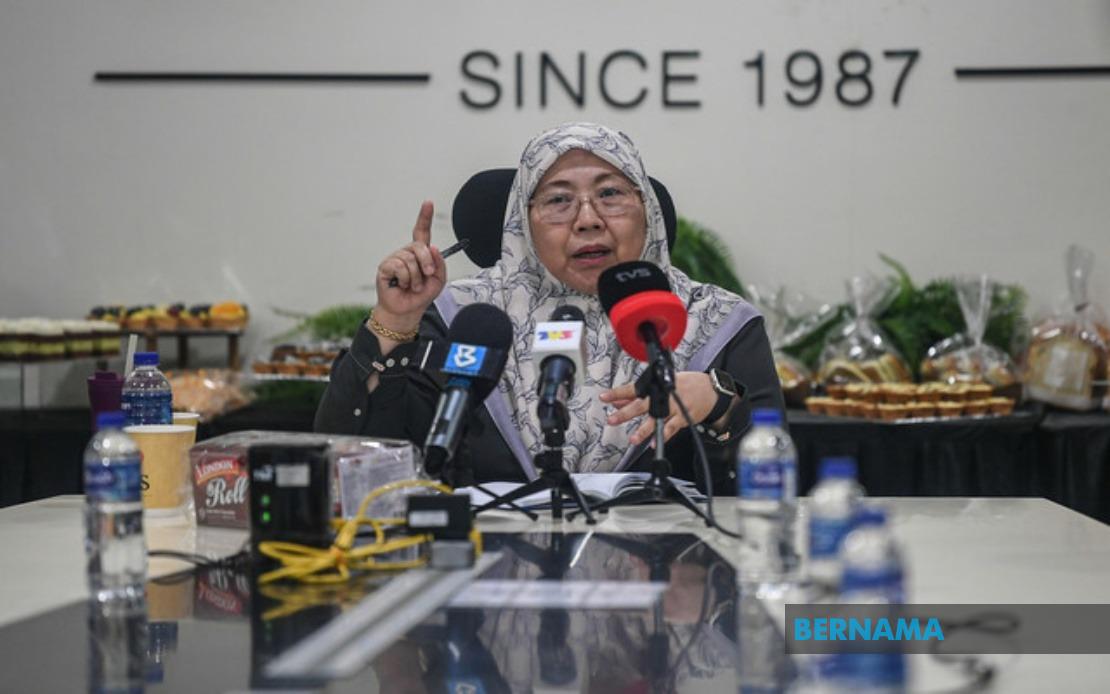
In what PKR's top leadership has deemed an unusual development, a notable contingent of party members and leaders has switched allegiance to the Malaysian Indian Congress, a move that party secretary-general Datuk Dr Fuziah Salleh attributes to internal grievances rather than ideological schism. Speaking at a working visit to Johor Bahru this week, Fuziah suggested the departures reflect a pattern of frustration among those who failed to secure the party appointments or roles they had anticipated. The characterisation offers insight into the personnel dynamics within the party as it prepares for electoral contests across Malaysia, particularly in the critical Johor state election scheduled for mid-July.
The exodus came into sharp focus when M. Murugan, formerly serving as vice-chairman of the Johor PKR State Leadership Council, publicly announced his departure along with approximately 200 supporters to join the MIC's Iskandar Puteri division. This departure carries symbolic weight given Murugan's previous standing within the party hierarchy, suggesting that even mid-level party architects felt inadequately rewarded or recognised by PKR's appointment structures. The timing, occurring just weeks before a significant state election, raises questions about party cohesion during periods of intense political competition, when internal dissent becomes particularly visible to the broader electorate.
Fuziah's public response framed the departures as a reflection of unmet career expectations rather than a governance failure or policy disagreement. By drawing a direct line between the members' statements about position disappointment and their ultimate decision to leave, the PKR secretary-general sought to contain any narrative suggesting broader malaise within the party. Her measured response—wishing the departing members well in finding the positions they sought elsewhere—employed a diplomatic tone that acknowledged their grievance without conceding systemic problems in how the party managed cadre development and career progression.
The broader political context adds layers to this internal party management challenge. As Malaysian political coalitions evolve and realign, questions about how party positions are allocated and what opportunities exist for ambitious members become increasingly consequential. For PKR, particularly as the dominant partner within the Pakatan Harapan coalition, the inability to satisfy the ambitions of its middle-ranking members could signal vulnerabilities in party structure that might encourage further departures. In a competitive electoral environment where parties gain or lose momentum through perceived momentum and unity, even modest defections can compound into narrative challenges.
Simultaneously, PKR faces headwinds from unexpected quarters. PAS president Tan Sri Abdul Hadi Awang issued a public statement urging voters to reject Pakatan Harapan, a development that Fuziah interpreted as signalling potential reconciliation between PAS and the Barisan Nasional coalition. This stance complicates the pre-election landscape in Johor, introducing additional fractionalisation at a moment when Harapan needed consolidated messaging. The possibility of renewed cooperation between traditionally opposed coalitions—particularly one involving an Islamic-oriented party—suggests that political alignments remain fluid and unpredictable, encouraging voters to reassess their choices before balloting.
Fuziah's analysis of the Perikatan Nasional's apparent strategy to attract disaffected Barisan Nasional supporters offers a revealing window into coalition-level tensions. Rather than viewing PN's outreach as a successful recruitment operation, the PKR secretary-general suggested it might instead trigger internal fractures within PN itself, particularly given PAS's apparent distancing from the coalition's interests through its statement urging voters away from Harapan. This observation highlights how competitive dynamics in Malaysian politics increasingly operate at multiple levels simultaneously: inter-coalition competition, intra-coalition friction, and individual party management challenges all intersect during election periods.
The strategic calculation that Fuziah articulated—that PN's internal contradictions ultimately benefit Harapan—reflects confidence in the opposition coalition's structural positioning even amid short-term defections and external pressure. This perspective suggests that PKR leadership views the current election cycle not as an existential threat but rather as a period where underlying coalitional advantages will eventually emerge despite tactical setbacks. However, whether this optimism translates into electoral outcomes remains contingent on voter perceptions and the ability of Harapan to project unity despite ongoing personnel challenges.
The Johor state election itself carries substantial weight within Malaysian politics. With 172 candidates contesting 56 state assembly seats across early voting on July 7 and main polling on July 11, the contest represents one of the most significant sub-national elections in recent years. Johor's economic importance, its strategic location, and its historical significance as a Barisan Nasional stronghold make any shifts in voter preference consequential for national political trajectories. The state's diverse demographic composition—including substantial populations of Indian heritage voters who might traditionally align with MIC, the party benefiting from PKR's departures—adds another dimension to how these internal party dynamics might translate into electoral outcomes.
The mechanics of position allocation within political parties often reflect broader questions about meritocracy, seniority, and factional balance. PKR's structure, like most Malaysian political organisations, likely involves complex negotiations between different power centres, generations of leaders, and community representatives. When internal satisfaction with this process falters, it creates openings for competing parties to recruit disaffected members. For the Indian-origin members departing to MIC, the party offers a specifically communal political vehicle, potentially providing clearer visibility and community recognition than positions within a multiethnic party's more complex hierarchy.
Moving forward, PKR's management of internal appointments and career pathways may require recalibration to prevent further attrition during sensitive political periods. The party's openness to losing members over position disappointment suggests either confidence in replacement recruitment or concern about the costs of retaining those motivated primarily by advancement. Whether this represents deliberate pruning of ambitious but uncommitted members or an oversight in party management remains unclear. What seems certain is that Malaysian voters, particularly in Johor, will be observing whether such internal departures signal systemic weaknesses in Harapan's coalition structures or merely routine personnel turnover inherent to any large political organisation operating across diverse constituencies and competing interest groups.

