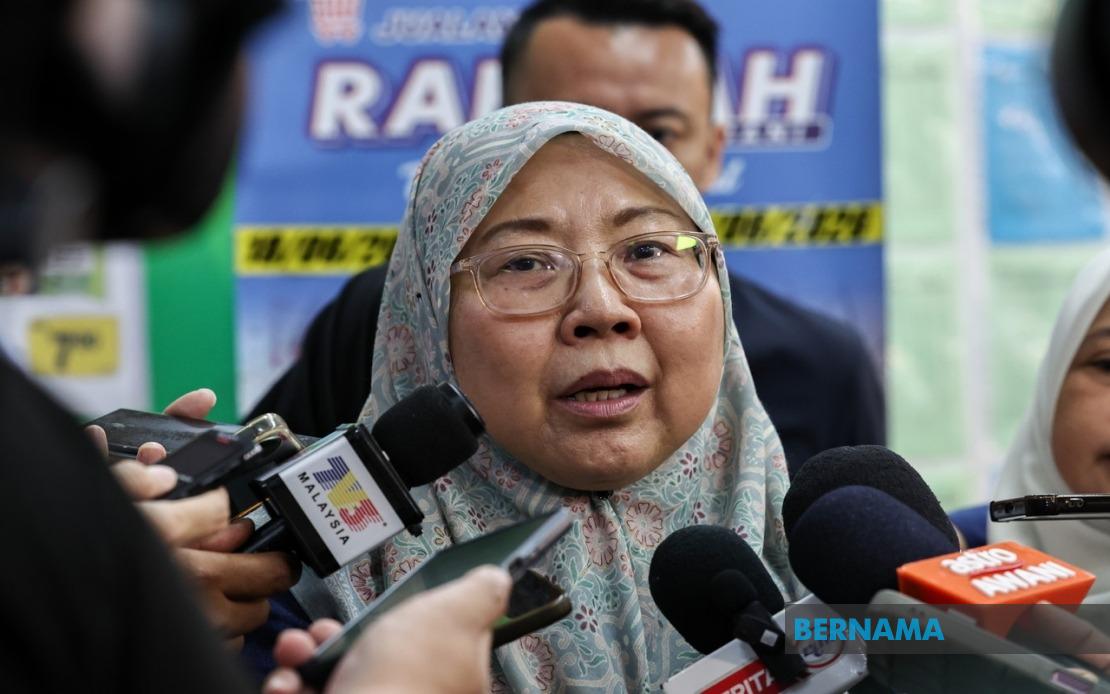
PKR's slate of candidates for the Johor and Negeri Sembilan state elections is now substantially complete, according to party secretary-general Datuk Dr Fuziah Salleh, though official unveiling of names remains imminent. The party intends to contest 20 seats across Johor's 56-member state assembly and 16 seats in Negeri Sembilan's 36-member chamber, with formal candidate announcements expected within days. This positioning reflects PKR's strategic approach to two crucial state contests that will reshape the political landscape in Malaysia's southern and central regions.
The composition of PKR's candidate roster reflects a deliberate philosophy about party renewal and representation. According to Fuziah, the selection process has prioritised what she termed "a balanced combination of old and new faces, including women and young people," though the precise percentage breakdown of newcomers versus established politicians will only be disclosed at the formal announcement. This approach signals PKR's intent to refresh its political bench while retaining institutional knowledge and established electoral machinery—a delicate balance that opposition parties frequently struggle to achieve when contesting multiple constituencies simultaneously.
The Johor state election presents a particularly competitive arena for PKR and its Pakatan Harapan allies. Before the state assembly's dissolution on June 1, Barisan Nasional dominated proceedings with 40 of the 56 seats, while PH held 12, Perikatan Nasional three, and MUDA one. The nomination day for Johor is scheduled for June 27, with polling set for July 11. This timeline compresses campaigning into a roughly two-week window, potentially favouring better-resourced parties with established ground networks. PKR's decision to contest 20 seats represents a significant commitment of resources and suggests confidence in competitive prospects in particular constituencies, though the party faces the challenge of overcoming BN's substantial numerical advantage.
Negeri Sembilan presents a somewhat different political configuration. The state assembly's dissolution occurred on June 5, with elections scheduled for August 1, providing a longer campaign period than Johor. Prior to dissolution, PH controlled 17 of 36 seats, representing a more substantial foothold than in Johor. Barisan Nasional held 14 seats and Perikatan Nasional five. PKR's decision to field 16 candidates across this legislature suggests it will be the primary PH vehicle in the state contest, with the precise nature of seat-sharing arrangements between coalition partners remaining to be clarified. The earlier nomination date of July 18, combined with early voting on July 28, indicates a condensed campaign period relative to Johor despite the later election date.
Complications within the opposition coalition have emerged regarding seat allocation in particular constituencies. Amanah Johor has disputed PKR's claim to the Puteri Wangsa seat, which PKR maintains is rightfully theirs after being loaned to MUDA in the 2022 state election. Amanah's Johor vice chairman Dr Zuhan Zain has publicly objected to this transfer arrangement. Rather than resolve the matter at mid-level party structures, Fuziah indicated that such disagreements have been escalated to the highest echelons of leadership within both component parties. This reflects broader tensions within Pakatan Harapan regarding seat distribution, particularly when constituencies are viewed as recoverable assets by multiple alliance partners.
The Wong Chen controversy adds another layer of internal management complexity for PKR as it enters the campaign phase. The Subang Member of Parliament has faced disciplinary investigation and notably challenged his party to dismiss him should it feel his conduct warranted such action. Fuziah confirmed that this matter has been transferred to PKR's Disciplinary Board for determination, effectively placing the outcome beyond immediate administrative reach during the election campaign. How PKR handles this high-profile case could affect party morale and signalling to both supporters and potential candidates about the boundaries of party discipline and tolerance.
The timing of these two state elections carries particular significance for Malaysian politics. Both contests represent opportunities for PKR and Pakatan Harapan to demonstrate electoral strength outside their traditional strongholds, though both states represent challenging terrain where BN retains considerable institutional advantage. Success in Johor would carry symbolic weight given the state's historical role as a BN bastion, while gains in Negeri Sembilan could solidify PH's position in a state where it already holds a relative majority. Conversely, defeats would reinforce narratives about PH's electoral ceiling and raise questions about the coalition's sustainability beyond its established bases in Penang and Selangor.
The emphasis on candidate diversity within PKR's selection process reflects party calculations about electoral messaging during an era where women's representation and youth engagement have become standard metrics of political legitimacy. Including women and younger candidates addresses demographic expectations among urban and middle-class voters while potentially expanding the party's reach beyond traditional supporter bases. However, translating candidate diversity into actual electoral gains depends on whether these candidates receive adequate campaign resources, organisational support, and positioning in winnable constituencies—factors that remain unclear until formal announcements are made.
The Election Commission's scheduling has created distinct campaign dynamics for each state. Johor's compressed timeline may advantage parties with existing grassroots infrastructure and name recognition, while Negeri Sembilan's longer campaign window provides greater scope for insurgent candidates and newly selected nominees to build profile and establish direct voter contact. PKR's finalisation of candidate lists represents the completion of internal selection processes, but the actual electoral fortunes of these nominees will depend substantially on broader coalition dynamics, campaigning effectiveness, and voter sentiment toward Pakatan Harapan's national and state-level positioning during what remains a highly fluid Malaysian political environment.

