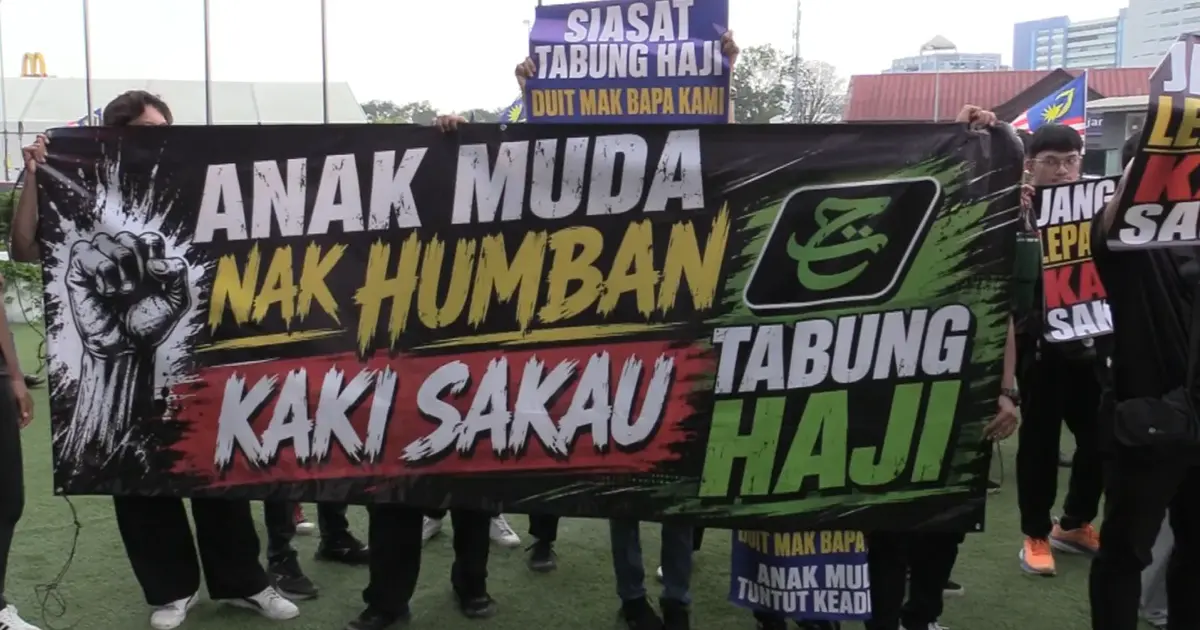
Around 250 members of the People's Justice Party (PKR) gathered outside the venue of the party's congress in Melaka, articulating their concerns about the administration of Tabung Haji and demanding that party leadership move swiftly on initiating a thorough probe. The demonstration underscores mounting pressure within PKR's ranks to address what members view as a pressing issue affecting the interests of their core constituencies.
Tabung Haji, formally known as the Pilgrimage Fund Board, serves as a critical financial institution for Malaysian Muslims. The fund operates savings and investment schemes specifically designed for the faithful saving towards their obligatory Hajj pilgrimage to Mecca, while also managing substantial assets and investments. For many ordinary Malaysians, particularly those from Malay-Muslim communities, participation in Tabung Haji represents both a religious aspiration and a financial commitment spanning years of contributions.
The PKR members framed their intervention as reflecting the legitimate expectations of their communities. In their view, Tabung Haji-related concerns resonate deeply with Malay and Muslim voters because the institution directly manages their savings and holds a position of significant trust within Islam-majority households across the country. Any questions regarding its governance or management practices consequently invite scrutiny and public accountability.
The timing of the protest during a party congress meeting suggests internal divisions or frustrations with the pace at which party mechanisms have addressed the issue. Party congresses represent important platforms where grassroots members can voice dissent and attempt to influence party direction. By staging the rally outside rather than, or in addition to, raising the matter through internal channels, the members sought to amplify their message and signal to party leadership the intensity of their conviction.
For Malaysian political parties, Tabung Haji issues carry particular weight because they intersect with religious governance, financial security, and the trust placed in institutions by conservative constituencies. Any perception of mismanagement or lack of political will to investigate thoroughly can translate into electoral disadvantage, particularly among voters for whom Islamic institutional integrity represents a significant voting consideration.
PKR's positioning on this matter reflects broader strategic calculations within Malaysian politics. As a party that has previously positioned itself as an advocate for reform and transparency, the accusation of insufficient diligence regarding Tabung Haji could complicate its messaging. The rally consequently presents both a challenge and an opportunity—if the party responds decisively, it may reinforce its reform credentials, but delay or perceived indifference risks damaging credibility among target voters.
The demand for investigation reflects a pattern within Malaysian civil society where scrutiny of major institutions, particularly those handling public or community funds, receives increasing attention. Citizens and party members alike have grown more willing to question institutional practices and demand explanations, a shift partly attributable to greater information availability and heightened expectations of accountability across government and quasi-government bodies.
Tabung Haji's financial position and operational governance have periodically attracted public attention and concern. As an institution managing billions of ringgit in assets belonging to millions of individual contributors, questions about investment decisions, administrative costs, or management oversight naturally warrant examination. The PKR members' demand essentially calls for this scrutiny to be conducted through formal channels with political backing.
For regional observers, the incident illustrates how Malaysian political parties navigate issues that simultaneously carry religious, financial, and electoral dimensions. Southeast Asian democracies increasingly grapple with questions about institutional accountability, particularly regarding bodies that operate at the intersection of faith, commerce, and state authority. PKR's response will likely set a precedent for how opposition parties address similar concerns in future.
The Melaka protest also signals the potential for Tabung Haji to emerge as a salient political issue if left unaddressed. In Malaysian electoral politics, issues resonating with Malay-Muslim constituencies can shift voting patterns significantly, particularly among swing voters in key constituencies. Parties ignoring such concerns risk conceding ground to rivals who champion investigation and reform.
Moving forward, PKR faces pressure to translate the protest into concrete action. Whether this means formal parliamentary inquiries, party-initiated investigations, or public commitments to pursue the matter through appropriate channels will shape the party's credibility on accountability issues. The members' presence outside the congress suggests they will continue monitoring the party's commitment to their demands.
The episode underscores persistent tension within Malaysian politics between party leadership and grassroots membership over policy priorities and the pace of institutional reform. As citizens become increasingly engaged with issues affecting their religious institutions and financial interests, political parties must demonstrate responsiveness to avoid the perception of neglecting community concerns for other strategic priorities.

