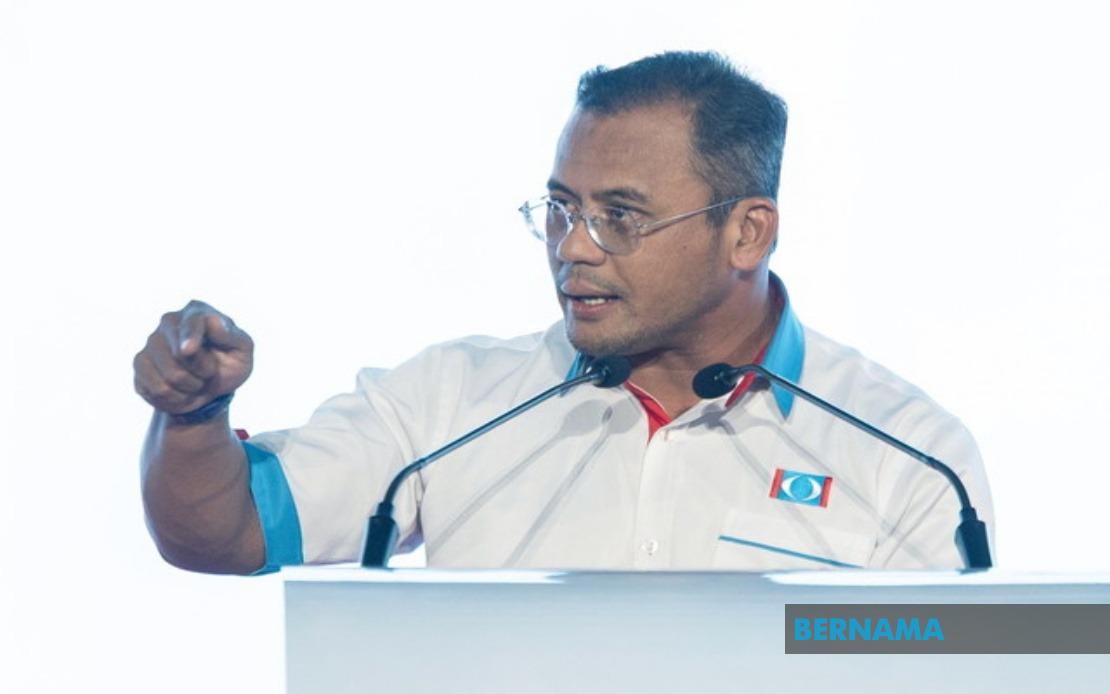
The Malaysian political landscape requires parties willing to walk a careful line between constitutional principles and inclusive governance. At the PKR National Congress in Melaka, party leadership articulated this delicate balance, emphasising that genuine reform demands both respect for founding constitutional arrangements and unwavering commitment to multiracial fairness.
Datak Seri Amirudin Shari, PKR's vice president and Selangor's Menteri Besar, framed the party's core mission as defending a political system that serves all Malaysians equitably. He stressed that acknowledging Islam and the Malays' position in the Federal Constitution represents not contradiction but foundation—a recognition that legitimises the party's broader inclusive agenda. This formulation attempts to position PKR as simultaneously respectful of constitutional traditions and progressive in its multiracial orientation, a posture increasingly important as Malaysian politics becomes more polarised along identity lines.
The Selangor leader traced PKR's reform credentials back to Datuk Seri Anwar Ibrahim's catalytic initiatives in 1998, pointing to subsequent achievements in deepening democratic institutions, strengthening fundamental rights protections, and advancing equitable economic distribution. By anchoring contemporary messaging to this historical narrative, Amirudin situates PKR within a reform continuum rather than as a reactive force, suggesting the party's inclusive approach flows from consistent ideological commitment rather than opportunistic positioning.
Datuk Seri R. Ramanan, serving simultaneously as PKR vice president and Human Resources Minister, sharpened the critique of identity-based political competition. He identified deliberate racial politicking as a strategic tool employed by competitors to fragment national cohesion for narrow electoral advantage—a direct if unnamed reference to strategies employed by opposition parties seeking to mobilise Malay-Muslim sentiment. Ramanan's intervention suggests growing PKR concern that identity politics, increasingly effective in recent state and by-elections, threatens the multiracial coalition model upon which Pakatan Harapan's federal governance depends.
Crucially, Ramanan distinguished between respecting constitutional arrangements and permitting racial division. His warning against parties weaponising ethnicity encapsulates a fundamental challenge for Malaysian coalition politics: how to acknowledge legitimate communal interests while preventing their exploitation as zero-sum political currency. For Southeast Asian observers, this tension mirrors broader regional struggles between inclusive governance frameworks and rising ethno-nationalist movements.
Ramanan's secondary intervention addressed internal party discipline, cautioning leadership against factional disputes that weaken organisational capacity. He drew an explicit causal link between top-level conflict and grassroots demoralisation, arguing that internal cohesion determines competitive effectiveness. This reflects PKR's historical vulnerabilities to leadership succession contests and ideological disputes, suggesting ongoing concern that personality-driven factionalism could undermine the united front necessary against better-organised opposition parties with stronger grassroots machinery.
Datuk Chang Lih Kang, the third vice president contributing to the congress messaging, reframed the debate around empirical electoral outcomes. He pointed to the Chennah state seat result in Negeri Sembilan, where DAP secretary-general Anthony Loke's candidacy attracted measurable Malay voter support despite identity-politics attacks. This example carries particular significance: it suggests that sustained quality governance can transcend identity-based voting patterns, and that communities respond rationally to competent representation irrespective of religious or ethnic background.
The Chennah outcome represents precisely the type of electoral evidence multiracial coalitions require to sustain their model. When Malay voters support non-Malay candidates, or vice versa, it validates claims that governance quality and institutional performance matter more than identity appeals. However, such breakthroughs remain exceptions rather than patterns in Malaysian electoral behaviour, underscoring why PKR leadership continues emphasising them—they represent proof-of-concept for inclusive politics in a polarising environment.
For Malaysian readers, this congress messaging reflects PKR's strategic positioning heading toward eventual electoral competition, whether for state assemblies or ultimately federal parliament. The party faces simultaneous pressures: maintaining coalition cohesion with DAP and Amanah, appealing to Malay-Muslim voters without alienating non-Malay support bases, and defending multiracial frameworks against opposition parties capitalising on identity grievances. These congress speeches attempt to articulate a response satisfying all three imperatives.
The broader implication extends beyond immediate Malaysian politics. As Southeast Asia experiences demographic diversification, urbanisation, and generational turnover, multiple nations grapple with balancing constitutional protections for majority communities with inclusive governance for plural societies. Thailand's constitutional provisions for Buddhism, Indonesia's recognition of Islam alongside religious freedom protections, and Malaysia's federal compact all attempt similar balancing acts. PKR's articulation of this balance—respecting constitutional positions while firmly rejecting identity exploitation—offers a model, however imperfect, of how coalitions navigate these tensions.
Yet structural vulnerabilities remain. Opposition parties control significant state apparatus resources, traditional media, and grassroots networks in rural areas where identity messaging penetrates most effectively. PKR's emphasis on fair governance and inclusive politics, however principled, requires sustained delivery across multiple electoral cycles to overcome incumbent disadvantages and counter-narratives. The party's internal unity, repeatedly stressed by three vice presidents, remains prerequisite rather than guarantee for this ambitious agenda.

