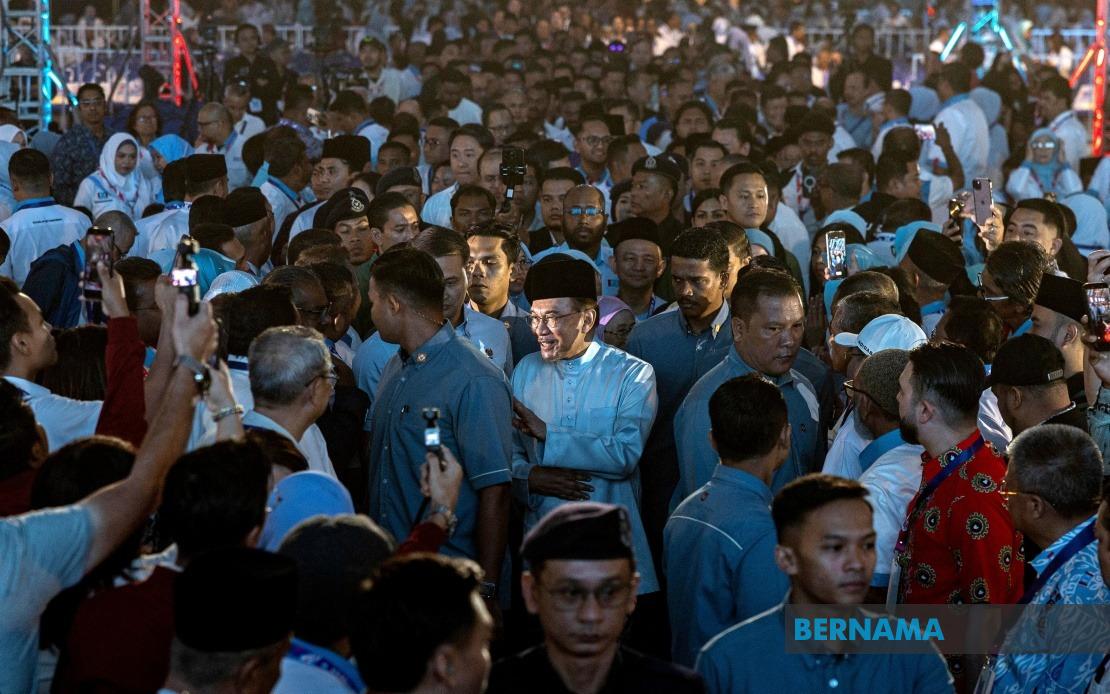
The 2026 PKR National Congress represents a critical juncture for the party to consolidate its position within Malaysia's political landscape, according to Tengku Datuk Seri Zafrul Tengku Abdul Aziz, the Prime Minister's senior political adviser. Speaking in Melaka, Tengku Zafrul framed the upcoming congress not merely as a routine gathering, but as an essential opportunity for the party to rebuild both internal cohesion and public faith in its leadership and policies.
As an ex-officio member of the PKR Political Bureau, Tengku Zafrul carries particular weight within the party's decision-making circles. His intervention suggests that senior party leadership recognises the gravity of recent political developments and the urgent need for remedial action. The remarks were made against the backdrop of electoral disappointments, particularly the outcomes of recent state elections, which appear to have prompted soul-searching at the highest levels of the party organisation.
Tengku Zafrul's diagnosis of the party's challenges centres on systemic weaknesses that span multiple levels of the organisation. He called upon all members to conduct rigorous assessments of where PKR has fallen short, emphasising that this introspection must extend from grassroots structures through to the highest echelons of central leadership. The implication is clear: PKR's problems are not merely leadership issues, but reflect broader structural deficiencies that require comprehensive attention across the entire party apparatus.
Crucially, Tengku Zafrul distinguished between internal party factors and external circumstances beyond PKR's control. While acknowledging potential disappointments with coalition partners in the Unity Government, he deliberately redirected focus inward, arguing that PKR must concentrate its energies on what it can directly influence: the quality of its own party machinery and the effectiveness of its operations. This strategic repositioning suggests recognition that blaming external factors provides convenient cover for internal failings that demand urgent remedy.
The communication dimension of PKR's challenge features prominently in Tengku Zafrul's analysis. He posited that even when the party implements policies and delivers results, those achievements may remain invisible to the electorate if not properly articulated. This observation highlights a critical vulnerability in contemporary politics: the gap between governmental accomplishment and public perception. For a ruling coalition partner, this gap carries particularly acute consequences, as voters may simply not register the benefits that the administration claims to have delivered.
Tengku Zafrul outlined a communications framework centred on listening before speaking. He urged party members to approach the public not with the impulse to defend or explain, but with genuine openness to understanding grievances. This listening-first approach acknowledges that Malaysian voters have substantive concerns that merit serious consideration rather than defensive rhetoric. The emphasis on acknowledging unresolved problems before claiming to solve them suggests a shift toward greater candour and humility in political engagement.
The underlying tension in Tengku Zafrul's message reflects broader challenges facing the ruling coalition. PKR's position within the Unity Government requires it to maintain internal discipline and project stability, yet the recent electoral results indicate that this stability has not translated into enhanced public approval or support. This disconnect between institutional positioning and voter sentiment represents a persistent vulnerability that the 2026 congress must address.
For Malaysian readers observing PKR's trajectory, Tengku Zafrul's comments signal that the party recognises the need for substantive reform rather than cosmetic adjustments. The 2026 congress, should it genuinely embrace this agenda of honest self-assessment and organisational strengthening, could represent a turning point. However, the gap between rhetoric and implementation in Malaysian politics remains notoriously wide, and genuine transformation of party structures and communication practices demands far more than exhortatory statements at public gatherings.
The regional dimension of this party renewal effort warrants consideration. As Malaysia's second-largest political party and a crucial component of the federal government, PKR's capacity to rebuild public trust has implications extending beyond party politics. In Southeast Asia's complex political environment, where coalition governments and multi-party systems predominate, PKR's experience of managing internal cohesion while navigating coalition dynamics offers lessons for other regional parties. Conversely, sustained failure to restore public confidence could undermine the stability of the Unity Government itself, with broader consequences for Malaysia's political architecture.
Tengku Zafrul's emphasis on accountability and transparent self-reflection also carries significance given widespread cynicism toward Malaysian political institutions. By explicitly acknowledging that the party must look inward rather than deflect blame externally, senior PKR figures may be attempting to counter narratives of political entitlement or defensiveness. Whether such statements translate into genuine institutional change remains an open question that the approaching congress will help determine.

