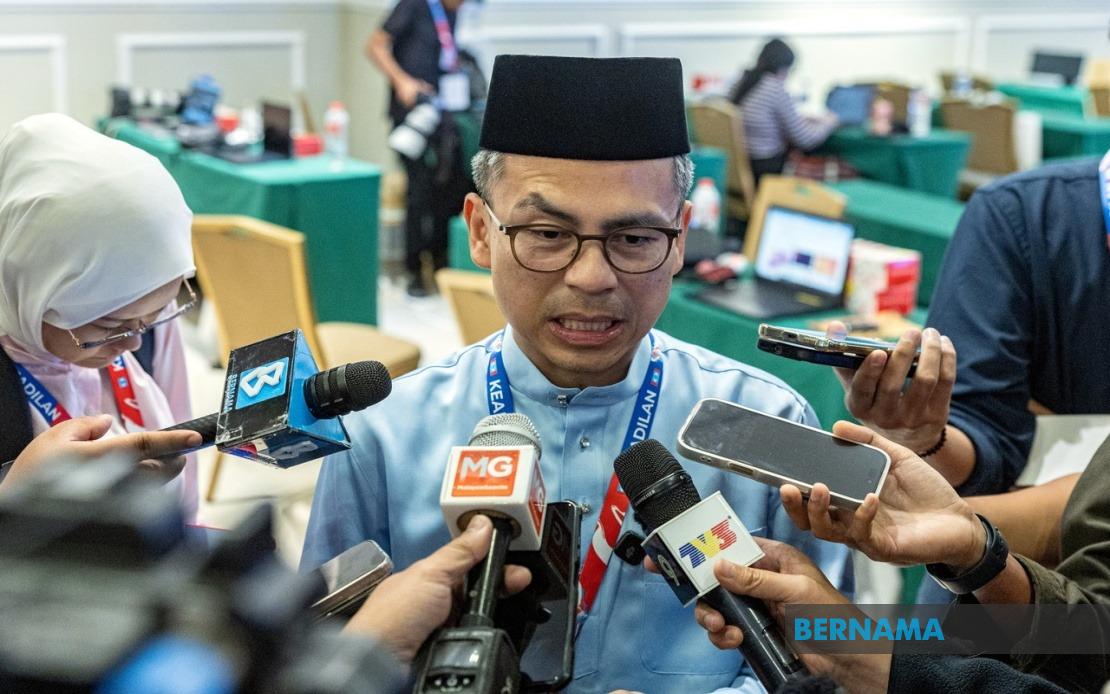
Parti Keadilan Rakyat (PKR) has committed to enhancing its communication infrastructure to bridge a persistent gap between government accomplishments and public awareness, according to remarks made by party leaders during the PKR National Congress 2026 held in Melaka. The initiative emerged from deliberations at the gathering, where delegates raised concerns about the effectiveness of existing information channels in translating macroeconomic gains into tangible benefits at the household level.
Communications Minister Datuk Seri Fahmi Fadzil, who doubles as PKR's Information Chief, acknowledged that despite numerous government initiatives and positive economic indicators, the messaging has failed to resonate with ordinary Malaysians or demonstrate practical improvements in their daily lives. Speaking after visiting the media room at the Melaka International Trade and Exhibition Centre (MITC) in Ayer Keroh on August 15, Fahmi characterised the communication overhaul as essential to rectifying this disconnect. The proposed measures represent PKR's recognition that controlling the narrative around government performance requires more sophisticated and coordinated efforts than current mechanisms provide.
The impetus for reform stems directly from proposals tabled by party delegates throughout the congress proceedings. Rather than dismissing grassroots concerns, PKR's leadership has signalled receptiveness to suggestions for formalising information channels between parliamentary representatives and central government decision-makers in Putrajaya. Fahmi indicated that several recommendations regarding communication strategy and information dissemination would be formally presented during the congress's concluding session, suggesting this marks a deliberate pivot toward institutional change within the party structure.
At its core, the challenge PKR confronts mirrors a broader predicament facing the Pakatan Harapan coalition—the perception that the government has failed to communicate its economic management effectively despite data suggesting fiscal stability and macroeconomic improvements. This perception gap has political consequences, as voters struggle to connect policy achievements with improvements in real wages, employment stability, or cost of living. The party's communication malaise extends beyond simple messaging failures; it reflects structural limitations in how information flows from ministerial levels through party machinery to community organisers capable of reaching voters at the grassroots.
Fahmi's comments underscore that PKR intends to establish more formalised arrangements for information dissemination, recognising that previously existing but informal channels proved inadequate. By bringing greater structure and coordination to how the party relays government initiatives, PKR hopes to ensure that parliamentary-level concerns and constituency feedback reach decision-makers more efficiently. This two-way information flow could theoretically enable rapid policy refinement or targeted communication campaigns addressing specific community grievances before they metastasise into broader political liabilities.
The timing of this commitment carries significance within Malaysia's political context. As the Pakatan Harapan coalition navigates the complex dynamics of managing federal government responsibilities while maintaining coalition unity, effective internal communication becomes increasingly vital. For PKR, the largest component of the coalition, stronger information architecture could translate into greater influence over coalition messaging and policy communication. Additionally, strengthening communication capacity addresses vulnerabilities that opposition parties might otherwise exploit by filling information vacuums with their own narratives.
Fahmi's insistence that the Central Leadership Council (MPP) would demonstrate receptiveness by implementing internal changes first signals an understanding that credibility demands institutional transformation beginning at the top. Rather than simply announcing communication improvements, the party would ostensibly model better information practices within its own governance structures before expanding outward. This approach acknowledges that party members evaluating leadership sincerity need concrete evidence of commitment, not merely rhetorical flourishes about enhanced transparency or better messaging.
For Malaysian voters and Southeast Asian observers, PKR's acknowledgment that macroeconomic achievements have failed to translate into household-level improvements reveals uncomfortable truths about the disconnect between national-level economic indicators and individual welfare perception. Even in growing economies, benefits often accrue unevenly, and without effective communication explaining policy rationales or future benefits, populations become sceptical. PKR's communication challenge thus reflects genuine economic anxieties rather than merely representing a marketing failure amenable to slicker messaging.
The broader implications extend to Pakatan Harapan's coalition governance and electoral prospects. If PKR successfully implements communication reforms and demonstrates improved public messaging around government achievements, other coalition partners may adopt similar strategies, creating a more coordinated narrative apparatus. Conversely, failure to translate these promises into concrete improvements in public perception could reinforce perceptions of a government disconnected from citizen concerns. For Malaysian and regional observers, the outcome will indicate whether coalition governments possess sufficient institutional flexibility to adapt communication strategies in response to performance feedback.
Looking forward, the success of PKR's communication overhaul will depend on translating rhetoric into operational change across multiple levels—from ministerial communications teams through to branch-level party activists. The party must overcome structural inertia and ensure that improved messaging extends beyond urban centres to reach communities in smaller towns and rural areas where government presence feels most distant. Additionally, PKR must navigate the challenge of communicating nuanced economic realities; acknowledging both genuine achievements and persistent challenges requires sophisticated messaging that avoids both triumphalism and defeatism.

