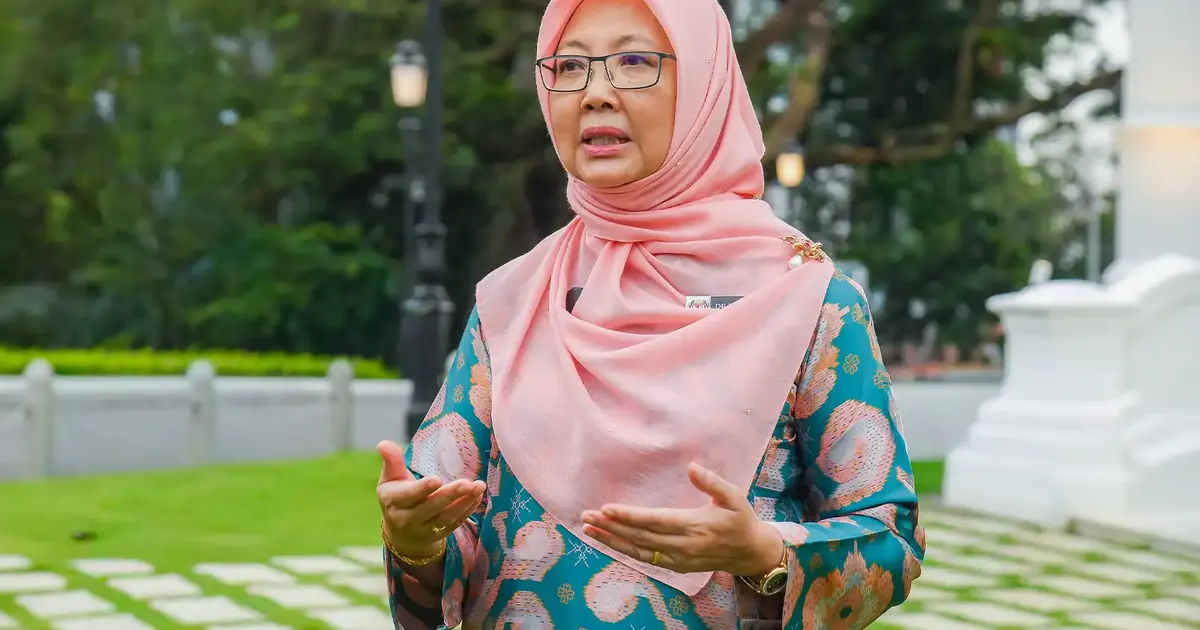
Zaliha, the PKR vice-president, has expressed bewilderment at a recent demand from Onn Hafiz Ghazi, the Johor Barisan Nasional chairman, calling on Pakatan Harapan to publicly name the political figure who would represent the coalition as its top choice for menteri besar. The puzzle lies in the fundamental question of timing and electoral reality: without an election scheduled and no certainty that either coalition will secure the necessary seats to form government, the request appears premature and somewhat disconnected from the actual mechanics of state politics.
Onn Hafiz's appeal for transparency about PH's leadership candidate reflects a particular political strategy, one that seeks to lock the opposition coalition into early commitments while conditions remain fluid. By demanding that Pakatan Harapan publicly declare its poster boy, the Johor BN chief appears to be gambling that such a declaration might create vulnerabilities for the coalition or reveal internal divisions about succession planning. However, Zaliha's confusion underscores a legitimate procedural point: in Malaysian electoral politics, the menteri besar position is not predetermined by public proclamation before voters have cast their votes. The role emerges through a complex negotiation involving the state assembly composition, coalition arithmetic, and the reigning ruler's constitutional discretion.
For Malaysian readers familiar with state-level politics, the significance of this exchange extends beyond mere semantics. Johor represents one of Malaysia's most electorally significant states, and control of its government carries enormous implications for national politics. The state has traditionally been BN-dominated, though Pakatan Harapan made inroads during the 2018 political realignment. Any menteri besar designation carries not only executive authority but also profound influence over patronage networks, business opportunities, and political relationships that ripple throughout the peninsula.
Zaliha's reaction highlights a fundamental asymmetry in political demands. The ruling coalition—in this case Johor BN—operates from a position of governmental incumbency and holds the institutional advantage. By contrast, an opposition coalition making early public commitments about leadership faces greater strategic exposure. If the named candidate becomes unpopular or faces scandal, the coalition cannot easily adjust without appearing chaotic or indecisive. If circumstances change and a different figure proves more electorally viable, the pre-election commitment becomes a political millstone.
The broader context matters here. Johor has experienced significant political turbulence in recent years, with leadership transitions and internal BN rivalries creating uncertainty about the state's political direction. Calls for named candidates may reflect deeper anxieties within the BN apparatus about whether the current establishment retains genuine electoral appeal. By demanding that Pakatan Harapan reveal its hand first, Onn Hafiz may be attempting to position BN as the party of transparency while simultaneously trying to manufacture vulnerabilities for the opposition through premature commitments.
From Pakatan Harapan's perspective, the refusal to name a poster boy before elections materializes reflects prudent political management. The coalition remains a loose alliance of PKR, DAP, and Amanah, with occasional cooperation from other parties. These component parties maintain distinct agendas and regional power bases. Any premature designation of a menteri besar candidate risks unsettling the coalition's delicate internal balance and potentially alienating voter segments who might prefer alternative leadership.
Zaliha's public questioning of Onn Hafiz's demand also serves another function: it frames the BN request as unreasonable and procedurally inappropriate, thereby shifting the narrative away from questions about Pakatan Harapan's preparedness or internal consensus. By calling attention to the peculiarity of the demand itself, PKR's vice-president essentially argues that voters should focus on policy platforms and performance records rather than on which coalition can first name names.
For Southeast Asian observers and international analysts watching Malaysian politics, this exchange illuminates the sophisticated gamesmanship that characterizes state-level contests. Political demands that appear straightforward on the surface often conceal strategic calculations about timing, coalition stability, and electoral positioning. The refusal to declare a poster boy should not be interpreted as organizational weakness but rather as a calculated decision to maintain flexibility until the electoral landscape becomes clearer.
The situation also reflects the evolving maturity of Malaysian electoral politics post-2018. Where once transitions of power seemed predetermined, the contemporary landscape features genuine uncertainty about outcomes. This unpredictability means that both coalitions benefit from maintaining options and avoiding premature commitments that might constrain their ability to respond to electoral realities and voter sentiment on polling day.
Zaliha's puzzlement, when articulated publicly, becomes a form of political counter-attack. Rather than defending her coalition's position, she questions the premise of the demand itself. This rhetorical move—challenging the propriety of the question rather than answering it—represents an increasingly common tactic in Malaysian political discourse, where meta-discussions about fairness and procedure sometimes supersede substantive policy debates.
Ultimately, the exchange between Zaliha and Onn Hafiz reflects the nervous energy that precedes significant electoral contests in Malaysia. Each side seeks to position itself favorably, identify weaknesses in the opposition's armor, and build narratives that resonate with voters. For Johor specifically, this early verbal sparring suggests that when elections do occur, they will be intensely fought and shaped by strategic considerations far beyond simple policy differentiation.

