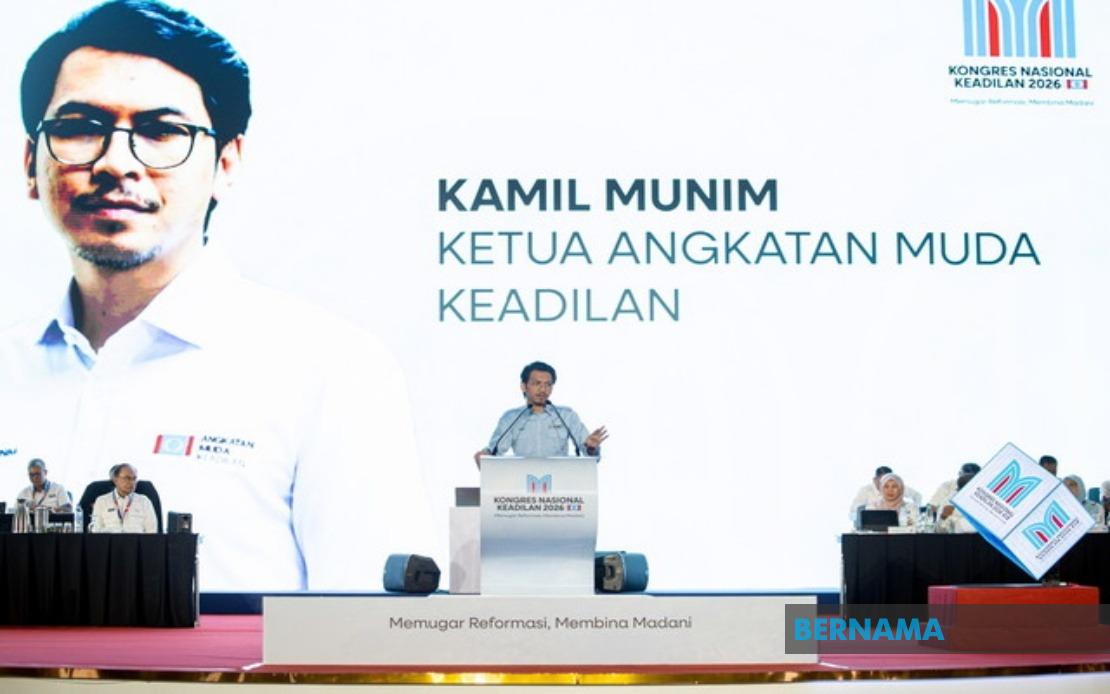
Malaysia's ruling PKR party faces mounting pressure to recalibrate its political messaging and campaign strategies if it hopes to maintain momentum heading into the next general election. At the PKR National Congress in Melaka this week, Youth wing chief Muhammad Kamil Abdul Munim delivered a candid assessment: the party must fundamentally rethink how it engages with voters aged 45 and below, a demographic that represents the largest proportion of the country's electoral roll and will prove decisive in future contests.
The urgency of this recalibration cannot be overstated. Recent setbacks in the Johor and Negeri Sembilan state elections have exposed vulnerabilities in PKR's current approach and forced serious introspection within the party leadership. Rather than attributing losses to external factors, Muhammad Kamil acknowledged that the party machinery itself requires substantial refinement, particularly in how it connects with younger voters whose political preferences are increasingly shaped by different concerns and communication channels than those of older generations. This self-critical stance suggests PKR recognises that maintaining power demands continuous adaptation rather than complacency.
The demographic reality underlying Muhammad Kamil's appeal is striking. Voters under 45 years old constitute the plurality of Malaysia's registered electorate, yet the party's current strategies appear inadequately calibrated to address their specific priorities. Whether the issue involves economic opportunities, climate concerns, digital governance, or social freedoms, younger Malaysians operate from a fundamentally different worldview than their parents' generation. PKR's national leadership appears to have concluded that unless it substantially recasts its messaging and policy emphasis, it risks ceding this crucial bloc to opposition parties or encouraging youth disengagement from electoral politics altogether.
While the MADANI Government's performance has generated relatively positive public sentiment overall, the Johor and Negeri Sembilan results revealed critical gaps between government rhetoric and grassroots perceptions. Muhammad Kamil's language about identifying "gaps" and "voids" suggests the party has collected troubling feedback indicating that its messaging is not translating into voter confidence at the state level. This disconnect between federal-level approval and state-level performance points to a deeper structural problem: the party's ability to build local momentum and community-level trust lags behind its national visibility.
A central element of Muhammad Kamil's diagnosis concerns the focus of grassroots party leaders. He cautioned against allowing local PKR machinery to become consumed by administrative functions and bureaucratic routine, warning that this approach depletes the grassroots movement of its political energy and creative capacity. Instead, he argued that party functionaries must deepen their engagement with popular concerns, demonstrating genuine understanding of community anxieties rather than merely reciting government achievements. This represents a tacit acknowledgment that PKR's grassroots structure may have become somewhat disconnected from the realities facing ordinary Malaysians.
The emphasis on rural engagement is particularly significant for Malaysian politics. Small communities in rural Malaysia have historically been strongholds of opposition parties, and PKR's difficulty in penetrating these areas effectively has been a persistent organisational weakness. Muhammad Kamil's call for direct, intensive engagement with rural populations—particularly through small-group interactions rather than rallies or mass events—suggests the party believes it has lost touch with agricultural workers, smallholders, and other rural constituencies whose political allegiances remain genuinely contested. Building trust in these communities demands sustained presence and careful attention to local grievances, not periodic campaign visits.
Muhammad Kamil invoked PKR's historical capacity for political surprise and regeneration as source of institutional confidence. He highlighted the party's 2008 achievement in denying Barisan Nasional a parliamentary two-thirds majority and its pivotal role in the 2018 federal government formation, arguing that these victories demonstrated PKR's innate ability to mobilise constituencies and create electoral breakthroughs. Yet there is an implicit tension in his remarks: if the party successfully engineered these transformations in 2008 and 2018, why has its capability apparently deteriorated by 2024? The answer likely involves both generational shifts in the electorate and the inevitable organisational challenges that accompany holding federal power.
The question of preparation for the next general election looms large in PKR's internal deliberations. Muhammad Kamil's suggestion that the election is "drawing increasingly near" reflects awareness that Malaysia's political calendar may deliver a new electoral contest sooner than some party members anticipate. Whether triggered by constitutional term limits or political calculations, PKR must ensure its machinery operates at peak efficiency. This requires not simply learning from recent defeats in Johor and Negeri Sembilan but fundamentally upgrading the party's capacity to articulate a compelling reform agenda that resonates with the electorate PKR needs to reach.
For Malaysian voters and observers of Southeast Asian politics more broadly, PKR's current trajectory raises important questions about how ruling coalitions sustain electoral competitiveness over multiple electoral cycles. The federal government's policy achievements, while appreciated, appear insufficient to guarantee electoral success without corresponding grassroots mobilisation and community-level trust-building. The transition from opposition movement to ruling party imposes distinct challenges, requiring that political organisations maintain revolutionary energy and grassroots connectivity even as they manage state bureaucracies and navigate complex coalition politics.
Muhammad Kamil's remarks essentially challenge PKR's entire party structure to undergo intensive self-examination and strategic renewal. The coming months will reveal whether the party can translate these rhetorical commitments into genuine organisational change, whether grassroots leaders internalize the need for deeper community engagement, and whether party strategists successfully recalibrate messaging to appeal to Malaysia's younger electoral demographic. The stakes extend beyond PKR's electoral fortunes; they involve fundamental questions about democratic renewal and generational political transition in contemporary Malaysia.

