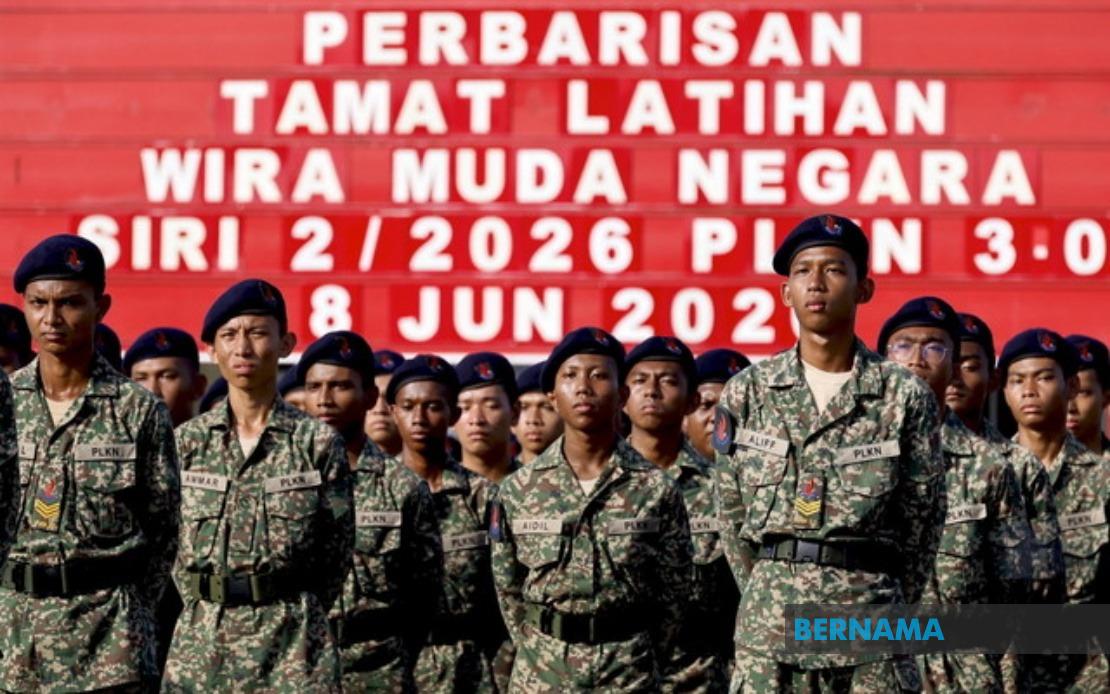
The National Service Training Programme 3.0 has successfully achieved all its designated performance indicators, according to impact assessments presented to Parliament this week. Deputy Defence Minister Adly Zahari revealed that trainees demonstrated measurable progress across six critical dimensions of human capital development, signalling that the restructured national service initiative is delivering tangible benefits to Malaysian youths.
The evaluation framework required participants to reach a minimum threshold of 80 per cent in patriotism, national unity, discipline and personal transformation, mental resilience and readiness, military knowledge, and community service orientation. These benchmarks were selected to address specific developmental gaps identified in earlier iterations of the programme, reflecting a strategic shift toward outcomes-based assessment rather than participation alone.
Colaborative research conducted with Universiti Malaysia Sabah and the National Defence University of Malaysia established baseline measurements before training commenced, then tracked participant progress through post-training assessments. This rigorous methodology enables policymakers to distinguish between genuine skill acquisition and procedural completion, providing evidence-based justification for continued investment in the initiative.
The most striking improvement occurred in military knowledge, where achievement levels jumped from 56 per cent to 84 per cent—a 28-percentage-point gain that underscores the programme's effectiveness in transmitting technical and strategic competencies. Volunteerism showed more modest but still meaningful growth, rising from 75 per cent to 83 per cent, suggesting that exposure to structured service-oriented environments cultivates longer-term civic engagement habits. Patriotism measurements climbed from 82 per cent to nearly 89 per cent, while national unity scores increased by nine percentage points overall. Discipline and self-transformation emerged as one of the strongest performance areas, improving from approximately 77 per cent to 92.6 per cent—a reflection of the intensive regimental training environment and peer-reinforcement mechanisms embedded in the programme.
Mental resilience, a dimension increasingly recognised as critical for young adults navigating economic uncertainty and social fragmentation, registered gains from 71 per cent to 83 per cent. This improvement holds particular significance for a generation facing elevated stress from education competition, employment precarity, and digitalisation-driven social pressures. The documented enhancement suggests that structured challenges within a supportive institutional framework can meaningfully strengthen psychological fortitude.
Since its redesign, PLKN 3.0 has enlisted 3,404 trainees across two annual series, with 1,202 participating in the inaugural year and 2,202 in the second cohort. The ministry is pursuing an aggressive expansion strategy, aiming to accommodate 4,200 trainees by year-end using existing infrastructure at three operational camps. This scaling-up is intended as an intermediate step toward a substantially enlarged capacity of 9,200 trainees annually once nine additional facilities become operational next year—a fivefold expansion that reflects confidence in the programme's viability and governmental commitment to universal youth exposure to national service.
Accessing disadvantaged demographic segments remains a stated priority within the PLKN 3.0 framework. Programme designers have integrated Technical and Vocational Education and Training content into curriculum modules to ensure relevance and applicability for youths from lower-income and rural backgrounds who may otherwise perceive military-style training as disconnected from economic livelihood pathways. This curricular integration acknowledges that young people from B40 households face distinct pressures and require tangible skills-building alongside nation-building objectives.
Recognising that national service alone cannot guarantee employment, five public sector recruiting authorities have agreed to award supplementary merit points to eligible PLKN 3.0 graduates during their recruitment and interview processes. This incentive mechanism, though modest, provides a measurable return on investment for participants and signals to wider employment ecosystems that the programme produces demonstrable value-add to candidate profiles. Such institutional recognition helps justify the time and opportunity costs borne by trainees and their families.
Absenteeism following selection presents an ongoing administrative challenge, with health constraints and continuing educational commitments cited as primary reasons for non-participation among selected individuals. This attrition dynamic warrants closer investigation, particularly regarding whether certain demographics face disproportionate barriers to attendance. Understanding these dropout patterns would enable targeted interventions—such as flexible scheduling, medical exemption pathways, or educational institution coordination—to maximise inclusive participation.
The PLKN 3.0 outcomes data represents meaningful progress in a country grappling with fragmented national identity, youth disengagement, and the need to build cohesive social bonds across ethnic and socioeconomic divides. By demonstrating that intensive structured programmes can meaningfully shift attitudes toward patriotism, discipline, and civic responsibility, the impact studies provide empirical validation for large-scale investment in youth development infrastructure. For Malaysian policymakers, the results justify continued resource allocation while also suggesting potential for replication or adaptation of successful pedagogical approaches elsewhere in the education and civic engagement systems.

