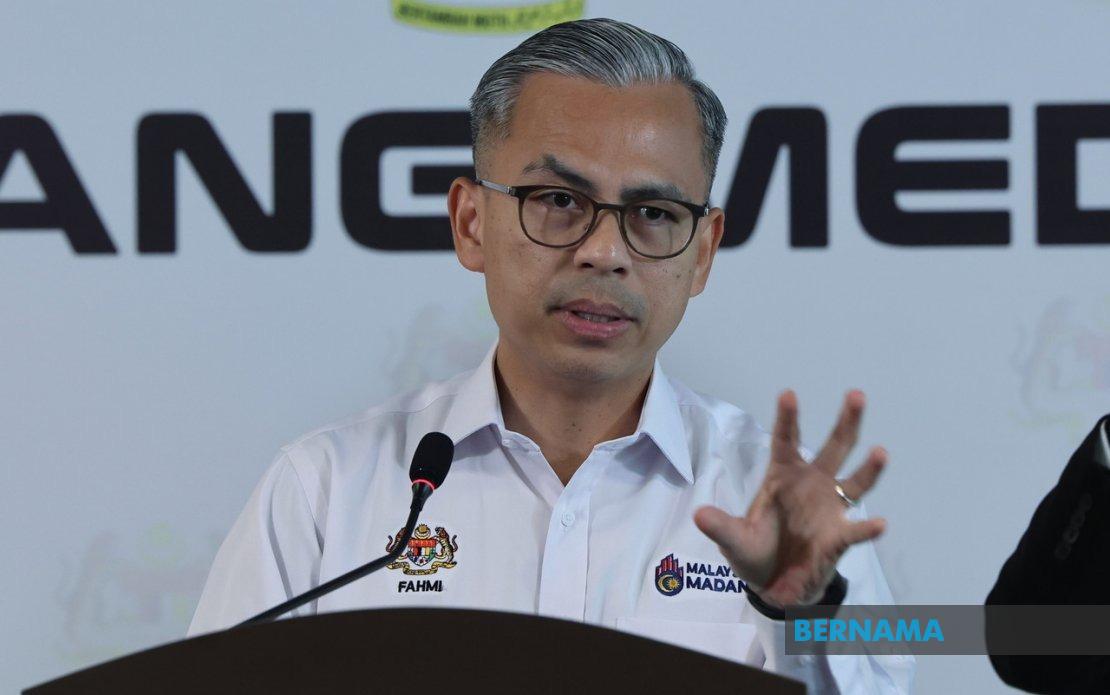
Prime Minister Datuk Seri Anwar Ibrahim has instructed the Ministry of Human Resources (KESUMA) to expedite the processing of the first 15,000 foreign worker applications as part of a comprehensive strategy to ease persistent labour shortages across Malaysia's critical economic sectors. The directive, announced by Communications Minister Datuk Seri Fahmi Fadzil following today's Cabinet session in Putrajaya, underscores the government's recognition that workforce constraints are limiting growth potential in key industries essential to the nation's economic expansion.
Fahmi explained that the accelerated processing initiative responds directly to workforce deficits affecting multiple sectors simultaneously. The timing of this announcement reflects mounting pressure from Malaysian businesses struggling to maintain productivity and output levels amid staffing challenges. By prioritising the clearance of these 15,000 applications, the government hopes to inject much-needed labour capacity into industries operating below optimal efficiency due to recruitment bottlenecks.
The decision builds upon a broader restructuring of Malaysia's foreign worker management framework. Human Resources Minister Datuk Seri R. Ramanan previously confirmed that KESUMA has assumed consolidated authority over the One-Stop Centre (OSC) for Foreign Worker Management, a consolidation that became effective immediately following Cabinet approval on July 1. This structural shift centralises foreign worker recruitment administration under a single ministry, eliminating the fragmented oversight that previously characterised the process across multiple agencies.
The consolidation under KESUMA represents a significant administrative reform designed to streamline the worker recruitment pipeline. Previously, responsibility for foreign worker management was distributed across various government entities, creating inefficiencies, inconsistent processing timelines, and bottlenecks that delayed approvals. By concentrating authority within KESUMA, the government aims to establish standardised procedures, accelerate decision-making, and provide employers with clearer pathways for securing international talent.
This restructuring initiative originated from a Cabinet Committee on Foreign Workers meeting held on June 30, where government officials acknowledged systemic deficiencies in the existing framework. The committee determined that centralised management would strengthen oversight of recruitment practices while simultaneously improving responsiveness to industry labour demands. The decision reflects official recognition that Malaysia's current approach to foreign worker integration requires modernisation to remain competitive within the region.
For Malaysian businesses, particularly those in manufacturing, construction, hospitality, and agricultural sectors, the accelerated processing represents relief from prolonged hiring delays. Many enterprises have reported operational constraints and reduced productivity resulting from unfilled vacancies. The 15,000-application target, whilst substantial, indicates the government's acknowledgement that labour demand exceeds currently available domestic workforce supplies across multiple industries.
The push to fast-track applications also carries implications for Malaysia's economic growth trajectory. Sustained labour shortages constrain corporate expansion plans, reduce competitiveness relative to neighbouring economies, and potentially drive investment capital toward countries with less restrictive labour markets. By demonstrating commitment to timely worker approvals, the government signals to both domestic and foreign investors that Malaysia remains capable of supporting business growth despite demographic constraints.
Regional context underscores the significance of this initiative. Throughout Southeast Asia, countries including Thailand, Singapore, and Vietnam have implemented various strategies to address similar labour challenges, ranging from bilateral worker-sharing agreements to streamlined temporary visa systems. Malaysia's move to centralise and accelerate foreign worker processing reflects an attempt to keep pace with regional competitors whilst maintaining government oversight and ensuring worker protections.
The One-Stop Centre model, now operating exclusively under KESUMA supervision, theoretically enables employers to navigate the entire approval process through a single institutional contact rather than navigating multiple agencies with differing requirements and processing speeds. This consolidation should reduce administrative friction, minimise opportunities for delays, and provide employers with transparent timelines for approval outcomes.
However, the initiative raises considerations regarding worker welfare and labour standards enforcement. Rapid processing of foreign worker applications must be balanced against rigorous vetting to prevent exploitation, ensure compliance with Malaysian employment law, and protect both foreign employees and domestic workers from unfair labour practices. The government must ensure that accelerating approval timelines does not compromise comprehensive background checks or workplace safety compliance assessments.
The broader policy direction suggests Malaysia is positioning itself to remain attractive to both labour-intensive industries and capital-intensive enterprises requiring specialised overseas expertise. By reducing friction in foreign worker recruitment, the government addresses a persistent complaint from the business community whilst attempting to maintain the structural safeguards necessary to protect Malaysia's labour market integrity.
As the Ministry of Human Resources begins processing the first batch of 15,000 applications, observers will monitor whether the centralised approach delivers the efficiency improvements promised. Sustained tracking of approval timelines, rejection rates, and employer satisfaction will indicate whether the restructuring achieves its intended outcomes or merely relocates bottlenecks rather than eliminating them. The success of this initiative may well influence future government policy regarding labour market flexibility and Malaysia's competitive positioning within Southeast Asia.

