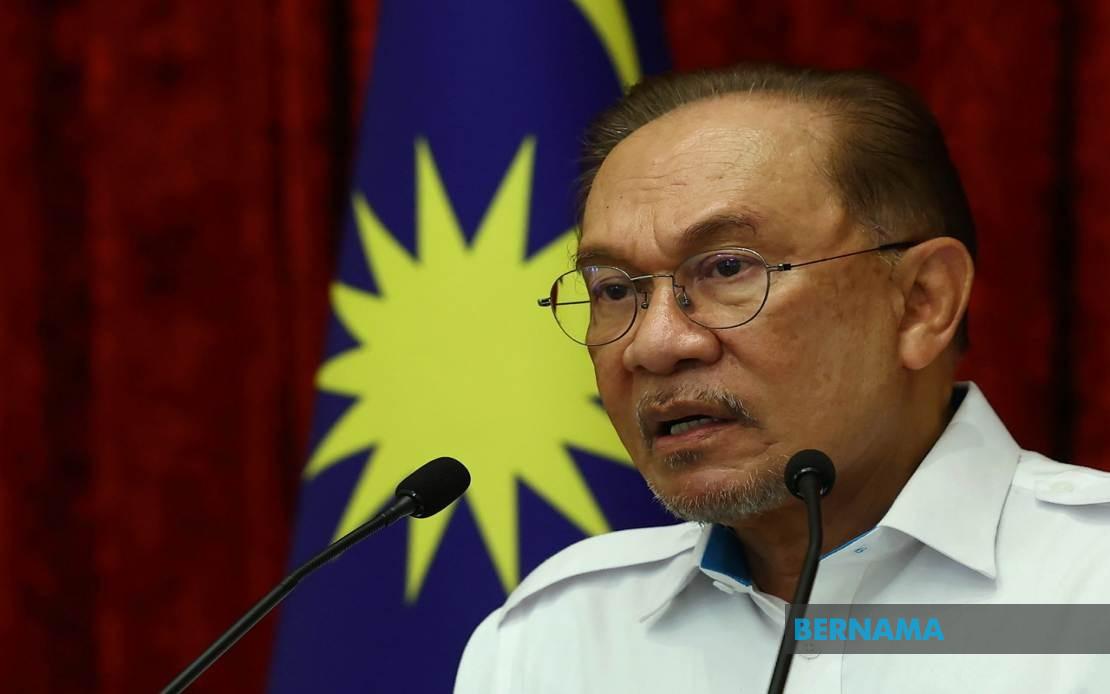
Prime Minister Datuk Seri Anwar Ibrahim has conveyed his apologies for being unable to participate in today's special Dewan Rakyat session convened to deliberate on the Royal Commission of Inquiry findings concerning Tabung Haji, Malaysia's pilgrimage savings institution. His absence marks a notable development as the government prepares to address significant governance and financial oversight matters affecting millions of Muslim account holders nationwide.
Through his senior press secretary Tunku Nashrul Abaidah, the Prime Minister communicated that he remains medically indisposed and currently receiving therapeutic intervention. Despite his physical absence from the chamber, Anwar has committed to maintaining attentive oversight of the parliamentary proceedings, underscoring the government's determination to preserve public confidence in the institution that manages hajj savings for Malaysian Muslims. His statement emphasised that safeguarding the trust vested in Tabung Haji constitutes a matter of considerable importance to his administration.
The timing of the special sitting coincides with Anwar's recovery period following an elective laparoscopic surgical procedure. According to Datuk Dr Asri Ranga Abdullah Ramaiah, who heads the Prime Minister's medical team, the operation targeted treatment of a para-umbilical hernia, a common abdominal condition. The laparoscopic approach, which utilises minimally invasive techniques, typically permits faster recuperation compared to conventional open surgery, though it necessarily requires a supervised recovery phase.
The medical team has indicated that Anwar's health trajectory remains positive, with physiotherapy sessions continuing under specialist supervision. His medical advisers have released reassurances to the public and political establishment regarding his recovery progress, a gesture designed to maintain stability and confidence in the government's leadership structure. The Prime Minister, who turned 79 years old on the previous day, has also acknowledged the well-wishes and prayers extended by the public and political figures during this period.
The Tabung Haji RCI investigation itself carries substantial implications for Malaysia's governance framework and Muslim community trust. The Royal Commission's mandate has centred on examining the fund's management, investment decisions, and adherence to fiduciary standards that protect account holders' savings designated for the Islamic pilgrimage. Previous controversies surrounding the institution's financial performance and operational transparency have necessitated comprehensive institutional review, making the parliamentary debate a consequential discussion for regulatory reform and accountability mechanisms.
Parliament's decision to convene a special sitting for this matter underscores the legislative branch's commitment to addressing Tabung Haji's governance challenges directly and publicly. The proceedings will permit lawmakers across political divisions to scrutinise the RCI's findings and deliberate potential remedial measures, legislative amendments, or organisational restructuring. Such parliamentary engagement serves to reassure stakeholders—particularly the millions of Malaysian workers and their families who maintain accounts with the institution—that institutional reform receives sustained political attention.
Anwar's inability to attend, while necessitated by medical requirements, introduces a distinctive dynamic to the debate. The Prime Minister's personal commitment to following proceedings remotely demonstrates governmental priority attached to the matter, yet simultaneously highlights the operational challenges posed when senior leadership faces unavoidable physical limitations. Government legislators and opposition members alike will proceed with the substantive discussion, aware that their Prime Minister maintains real-time engagement with the debate's trajectory.
From a broader institutional perspective, Anwar's recuperation underscores considerations of succession and continuity within Malaysia's executive structure. While the condition he addresses through surgery represents routine medical intervention rather than acute illness, his temporary absence necessitates that other ministerial figures assume heightened responsibilities. Deputy Prime Minister and other senior cabinet members implicitly shoulder expanded roles during such periods, a mechanism that tests governmental stability and administrative resilience.
The special sitting itself reflects evolving parliamentary practices concerning institutional accountability. By dedicating dedicated session time to examining a specific institution's governance through the lens of RCI findings, Parliament signals that comprehensive institutional review receives serious legislative consideration beyond routine question-and-answer exchanges. This procedural choice may establish precedent for future Parliament approaches to major institutional investigations, potentially strengthening Malaysia's governance oversight mechanisms.
For Malaysian observers and international stakeholders monitoring domestic political developments, today's proceedings carry significance extending beyond Tabung Haji specifics. The session demonstrates that despite leadership absences necessitated by medical circumstances, governmental and parliamentary functions continue with substantive engagement. Anwar's commitment to following the debate—despite physical incapacity to attend—illustrates that Malaysian political leadership remains operationally engaged with critical institutional matters even during periods of medical requirement.
Looking ahead, Anwar's recovery trajectory and timeline for resuming full ceremonial and executive duties remain matters of administrative importance. The government has established clear communication channels through official medical and press statements, maintaining transparency regarding the Prime Minister's medical status. This approach contrasts with historical instances where political leadership health matters received limited public disclosure, reflecting contemporary expectations for governmental openness regarding senior officials' wellbeing.

