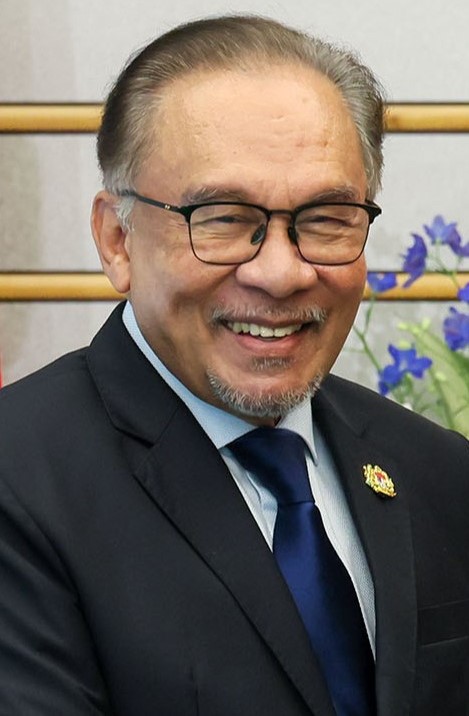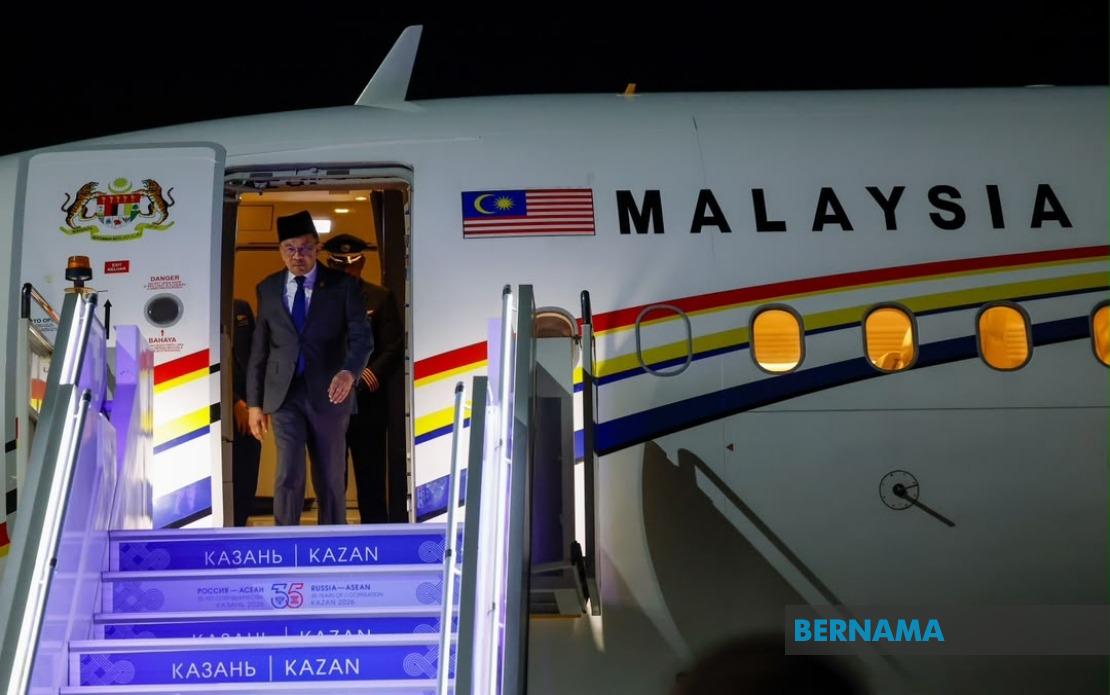
Prime Minister Datuk Seri Anwar Ibrahim touched down in Kazan on Tuesday evening, beginning a two-day engagement that underscores Malaysia's continued commitment to deepening ties with Russia during a period of geopolitical realignment. The aircraft carrying the premier landed at Kazan International Airport at 10:20 pm local time, marking the start of high-level consultations scheduled to run through June 18. His delegation comprised several senior cabinet members, including Minister of Investment, Trade and Industry Datuk Seri Johari Abdul Ghani and Minister of Economy Akmal Nasrullah Mohd Nasir, signalling the economic importance Kuala Lumpur attaches to these discussions.
The timing of Anwar's visit coincides with celebrations of a significant diplomatic milestone: the ASEAN-Russia relationship has endured for 35 years since its formal establishment in Kuala Lumpur in 1991. For Malaysia, hosting that inaugural engagement made the relationship particularly consequential, and the current summit provides an opportune moment to assess what both sides have achieved and where mutual interests converge in an increasingly multipolar world. Upon arrival, Anwar was received by Malaysia's Ambassador to Russia Datuk Cheong Loon Lai, while Russian officials including the Minister of Digital Development of Tatarstan Ilya Nachvin and Kazan Mayor Ilsur Metshin represented the host nation's diplomatic hierarchy.
The summit agenda reflects a pragmatic recognition that the ASEAN-Russia partnership must evolve beyond traditional state-to-state protocol to address contemporary challenges. Discussions will centre on a broad array of sectors ranging from conventional trade and investment frameworks to emerging domains such as digital economy innovation and food security resilience. Energy cooperation holds particular salience given global supply chain vulnerabilities and the region's reliance on diversified energy sources. Additionally, the agenda encompasses cultural and educational exchanges, tourism promotion, and people-to-people contact initiatives—dimensions that strengthen understanding beyond governmental channels and create durable social foundations for cooperation.
The commemorative summit is expected to generate four outcome documents that will institutionalise cooperation trajectories through the remainder of this decade. The Kazan Declaration on the 35th Anniversary of ASEAN-Russia Relations will serve as the symbolic anchor, while three accompanying joint statements on energy cooperation, cultural cooperation, and a comprehensive action plan for 2026-2030 will provide operational guidance. These instruments reflect an intention by both parties to move beyond rhetorical endorsements toward concrete, measurable commitments that can withstand shifts in individual leadership or short-term diplomatic friction.
For Malaysia specifically, this engagement represents a strategic investment in ASEAN Centrality—the principle that Southeast Asian nations must remain arbiters of their own regional affairs rather than passive subjects of great power competition. By hosting and participating actively in ASEAN-Russia dialogue forums, Malaysia reinforces the bloc's claim to indispensable mediating authority in regional and global affairs. Wisma Putra's statement emphasised this framing, noting that Malaysia's participation demonstrates commitment to advancing practical cooperation with major dialogue partners amid intensifying global complexity. This positioning becomes particularly relevant as Southeast Asian nations navigate competing pressures from multiple strategic powers.
During his stay in Kazan, Anwar is scheduled to meet with Russian President Vladimir Putin and Republic of Tatarstan officials, along with bilateral consultations with counterparts from other ASEAN member states. These conversations will likely traverse several thematic areas that Malaysia considers foundational to regional stability: advocacy for dialogue-based conflict resolution, support for economic resilience amid external shocks, advancement of energy and food security frameworks, and strengthening of interpersonal connections across societies. The emphasis on dialogue and peace particularly resonates given ongoing geopolitical tensions and Malaysia's historical preference for non-aligned positioning.
This constitutes Anwar's third visit to the Russian Federation since he assumed the premiership in November 2022, reflecting a deliberate diplomatic cadence designed to sustain institutional relationships at the highest levels. His September 2024 attendance at the Eastern Economic Forum in Vladivostok allowed him to engage with Russian economic and political elites in a commercial context, while his May 2025 official visit to Moscow produced substantive bilateral discussions spanning trade, investment, agriculture, aerospace, education, and energy cooperation. These successive engagements demonstrate that Malaysia regards Russia not as a peripheral actor but as a consequential partner with whom sustained dialogue yields mutual benefit.
The broader strategic context surrounding this summit involves Russia's pivot toward Asia-Pacific engagement as Western relations remain strained by geopolitical divisions. For ASEAN, maintaining pragmatic working relationships with all major powers serves multiple objectives: it preserves diplomatic flexibility, ensures market diversification, and prevents the region from becoming a proxy battleground for distant rivalries. Malaysia's consistent participation in ASEAN-Russia forums exemplifies this balancing act, allowing the country to derive economic benefits, security assurances, and political leverage without sacrificing relationships with other strategic partners.
Energy cooperation warrants particular attention given Southeast Asia's growing demand for diversified energy sources and Russia's substantial hydrocarbon reserves. Food security discussions reflect genuine vulnerabilities across the region, particularly given climate change impacts on agricultural productivity and supply chain interdependencies exposed during recent global crises. The digital economy focus acknowledges that technological advancement has become inseparable from competitive advantage and that cooperation in this domain can yield innovation benefits for all parties involved.
The appointment of a comprehensive action plan through 2030 signals that both ASEAN and Russia envision their partnership extending well beyond ceremonial engagement. Such long-term frameworks provide institutional stability that can absorb individual diplomatic fluctuations and create momentum for deepening integration across multiple sectors. For Malaysian policymakers, participating in designing this roadmap allows them to shape cooperation parameters that serve national interests while demonstrating ASEAN's capacity for collective strategic planning.
As regional dynamics continue shifting, Malaysia's engagement in high-level forums such as this Kazan summit serves multiple constituencies simultaneously. Domestically, it signals to Malaysian business communities that Russian markets and partnerships warrant sustained attention. Regionally, it reinforces ASEAN's claim to independent strategic agency. Internationally, it demonstrates Malaysia's commitment to non-aligned principles and dialogue-based approaches to managing great power competition. The tangible outcomes—trade agreements, energy contracts, educational exchanges—will ultimately determine whether this diplomatic investment yields enduring benefits.