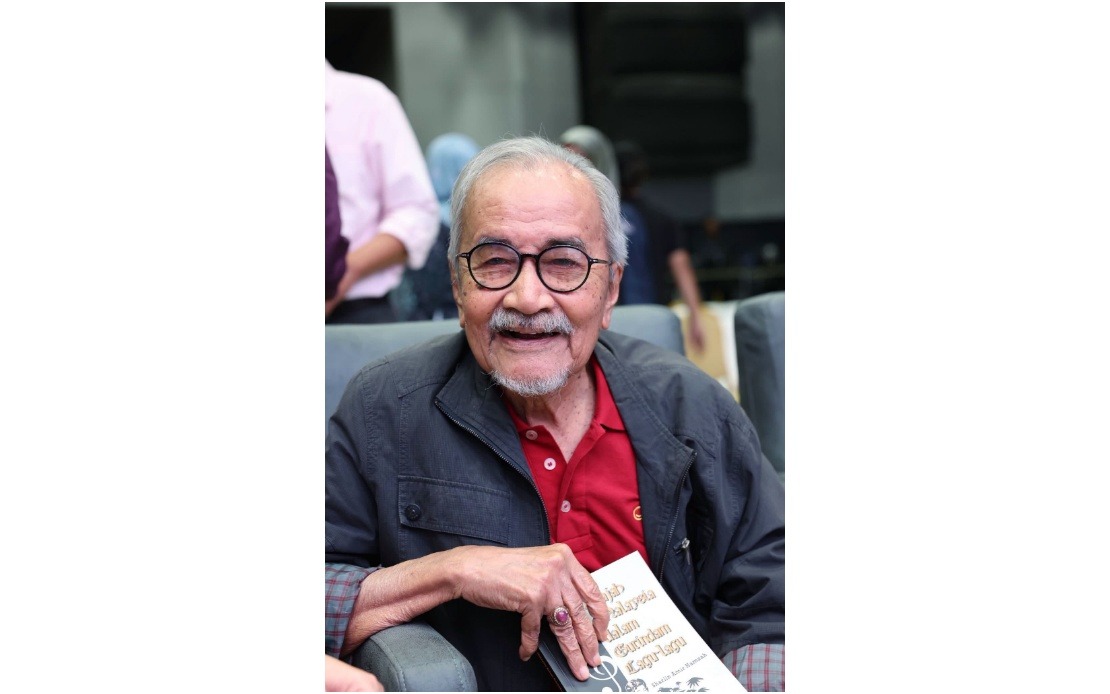
Prime Minister Datuk Seri Anwar Ibrahim has extended warm birthday greetings to Datuk Rahim Razali, one of Malaysia's most respected figures in cinema and the arts, as the legendary personality turned 87 today. The greeting, shared via social media, underscores the continued significance that Malaysia's political leadership places on recognising the contributions of cultural custodians who have shaped the nation's artistic heritage.
In his Facebook tribute, Anwar positioned Rahim Razali as a cornerstone figure whose influence extends far beyond the silver screen into the broader landscape of Malaysian cultural identity. The Prime Minister emphasised that Rahim's body of work has consistently centred on themes of human dignity, cultural preservation, and national pride—values that resonate deeply within Malaysia's multicultural society. This recognition reflects a deliberate effort by the current administration to spotlight how artists serve as custodians of national values during periods of social and political transition.
Rahim Razali's career trajectory exemplifies the evolving nature of Malaysian creative talent across multiple generations. Born on July 3, 1939, in Batu Gajah, Perak, he has navigated a six-decade span in the entertainment industry marked by remarkable versatility. His contributions encompass acting, film direction, screenwriting, and broadcasting—a breadth of expertise that few creative professionals in the region have achieved. This multidimensional career path reflects both personal ambition and the demands of Malaysia's mid-century entertainment industry, which often required artists to wear multiple professional hats.
The filmmaker's directorial and acting work has earned him significant recognition at Malaysia's premier film awards institution. His victories at the Malaysian Film Festival, including accolades for Best Director and Best Male Actor, validate his standing among peers and industry gatekeepers. These achievements place him alongside other celebrated figures in Southeast Asian cinema, a region where Malaysian film has gradually expanded its footprint in regional and international circuits. His awards demonstrate that recognition within Malaysia's cultural establishment is not merely ceremonial but reflects technical mastery and artistic innovation.
One of Rahim's most celebrated works, Matinya Seorang Patriot (The Death of a Patriot), showcases his commitment to exploring profound social themes through cinema. This film and others in his catalogue have consistently engaged with questions of national consciousness, personal sacrifice, and moral clarity—subjects that remain compelling across generational divides. Such thematic consistency suggests that Rahim's work serves a function beyond entertainment, operating as a form of cultural dialogue that helps Malaysians interrogate their own values and historical trajectories.
Anwar's public acknowledgment carries subtle but significant political implications. By elevating the profile of veteran cultural figures, the Prime Minister positions arts and cultural heritage as central to national discourse rather than peripheral to economic or political priorities. This messaging becomes particularly relevant in contemporary Malaysia, where younger cohorts increasingly consume content through digital and international platforms. The gesture implicitly argues that indigenous creative traditions deserve sustained investment and public recognition.
The greeting also reflects broader regional patterns regarding how Southeast Asian governments engage with their cultural sectors. Nations across the region have increasingly recognised that cultural soft power contributes meaningfully to national branding and regional influence. By celebrating figures like Rahim Razali, Malaysia reinforces the idea that its creative industries represent genuine intellectual and artistic achievement rather than mere entertainment commodities. This positioning becomes relevant as Malaysia competes with other regional economies for cultural prestige and creative talent retention.
Rahim Razali's seven-decade span of professional activity coincides with transformative periods in Malaysian history—from the early post-independence era through rapid urbanisation and technological change. His sustained career across these transitions suggests that quality creative work can maintain relevance even as production technologies, distribution methods, and audience demographics shift dramatically. This persistence holds lessons for contemporary Malaysian artists navigating the digital content revolution.
Anwar's expressed confidence that Rahim's works will continue inspiring future generations of artists indicates a view of culture as cumulative rather than ephemeral. This perspective contrasts with market-driven approaches that treat cultural products as disposable commodities. By framing Rahim's legacy as inspirational rather than merely historical, the Prime Minister suggests that Malaysian cinema and arts possess enduring value worthy of study, preservation, and emulation.
The birthday tribute also serves a softer diplomatic function within Malaysia's diverse society. Rahim Razali's films, crafted across multiple decades and addressing universal human themes, exemplify how Malaysian creative work can bridge communal and regional divides. In a nation where cultural expression remains occasionally contentious, celebrating an artist whose work has transcended sectarian boundaries reinforces the potential of shared artistic appreciation to strengthen national cohesion.
Beyond the immediate occasion, Anwar's remarks position the Malaysian government as an institutional supporter of creative longevity. By publicly honouring an 87-year-old artist still capable of contributing to cultural discourse, the administration implicitly endorses a vision where creative professionals can sustain meaningful careers across their entire lifespans. This contrasts with some regional patterns where artists face pressure to retire or transition to different sectors as they age.
The Prime Minister's invocation of Rahim Razali's health and continued strength contains an implicit recognition that cultural production requires not merely talent but sustained physical and mental capacity. This humanising acknowledgment suggests government awareness that artists operate as embodied practitioners rather than abstract creative forces. Such recognition, however modest, contributes to broader conversations about how societies value and support cultural workers throughout their careers.

