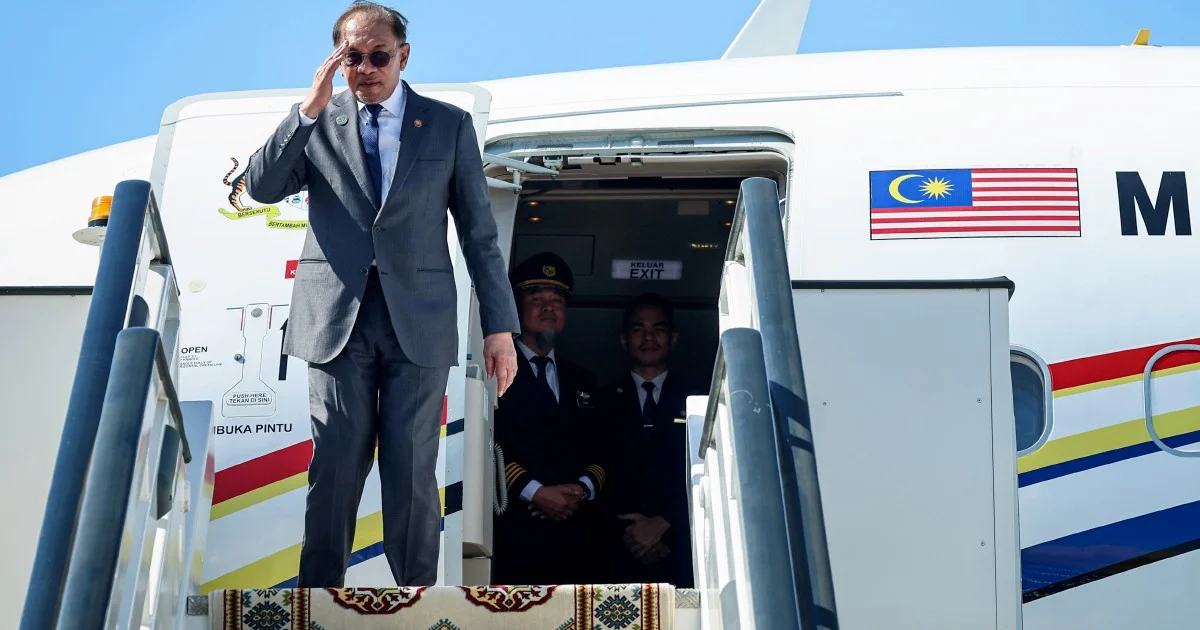
Prime Minister Datuk Seri Anwar Ibrahim touched down in Penang today, immediately transitioning from his official state visit to Turkmenistan into a packed domestic agenda centred on media engagement and economic development. The rapid shift from high-level Central Asian diplomacy to regional engagement underscores the government's dual commitment to expanding Malaysia's international footprint while maintaining robust domestic institutional connections.
Anwar's attendance at the National Journalists' Day (Hawana) 2026 grand finale marks a significant moment for Malaysia's press community. The event carries symbolic weight in a nation where press freedom and government relations have historically oscillated, and the Prime Minister's participation signals continued efforts to build constructive engagement between the political establishment and the fourth estate. Hawana, the annual celebration of Malaysian journalism, provides a platform for recognising the contributions of reporters, editors, and media professionals across the country.
The timing of the Penang visit carries additional strategic implications for Malaysia's regional development agenda. Penang, as one of the nation's most economically vibrant states and a historically significant business hub, regularly hosts high-profile investment forums and policy discussions. The concurrent investment events scheduled alongside Hawana suggest the government is leveraging the Prime Minister's presence to attract capital and strengthen commercial ties with potential partners, both domestic and international.
Anwar's Turkmenistan sojourn precedes this Penang leg, reflecting Malaysia's broader engagement strategy in Central Asia. Turkmenistan, a resource-rich nation and strategic player in the region, represents untapped opportunities for Malaysian businesses and diplomatic cooperation. Such official visits typically involve substantive discussions on trade partnerships, energy cooperation, and infrastructure collaboration—dimensions that inform Malaysia's positioning within the broader Indo-Pacific economic architecture.
The sequential nature of these engagements—international diplomacy followed immediately by domestic institutional and economic gatherings—illustrates how modern Malaysian governance attempts to balance competing demands. Prime ministers must simultaneously nurture international relationships essential for economic growth and security while attending to domestic political and institutional imperatives.
For Malaysian media professionals gathered at Hawana 2026, the Prime Minister's presence represents an opportunity to engage directly with government leadership on issues affecting journalism's operational environment. These occasions frequently yield discussions about press freedom safeguards, the relationship between government and media institutions, and the evolving challenges facing journalism in the digital age.
Penang's role as a venue for these events underscores the state's continued importance in Malaysia's economic ecosystem. The northern state has positioned itself as a competitive alternative to traditional commercial hubs, attracting tech companies, manufacturing firms, and international investors. Investment forums held during high-profile government visits often yield concrete commercial outcomes, with companies eager to secure policy clarity and regulatory certainty for their regional operations.
The condensed timeline of Anwar's movements reflects the intensity expected of contemporary political leadership. International relations require sustained personal engagement, yet domestic political and economic responsibilities demand equally substantial attention. The ability to maintain momentum across these different spheres—from Ashgabat to Butterworth—demonstrates the logistical and diplomatic capacity required to manage a nation's competing interests.
Malaysia's engagement with Central Asian nations like Turkmenistan has grown more deliberate in recent years, as policymakers recognise the region's importance for energy security, transport corridors, and emerging technology partnerships. These official visits serve dual purposes: they communicate Malaysian seriousness about regional partnership to Central Asian governments while simultaneously signalling to domestic stakeholders and international observers that Malaysia remains actively engaged in shaping broader geopolitical dynamics.
The investment dimension accompanying the Penang visit responds to Malaysia's ongoing imperative to attract quality foreign direct investment and foster domestic entrepreneurship. In an increasingly competitive regional landscape where Vietnam, Indonesia, and Thailand aggressively pursue similar opportunities, hosting investment forums during Prime Ministerial engagements helps project stability, strategic direction, and openness to commercial partnerships.
Stakeholders in Malaysia's media, business, and diplomatic sectors will watch these Penang events for signals regarding government priorities. Anwar's direct engagement with journalists provides an opportunity to address concerns about media operating conditions, while concurrent investment forums offer potential partners concrete evidence of policy direction and sectoral opportunity. Such multi-faceted engagements have become standard practice for Malaysian leadership seeking to maximise the value of major state occasions.
The broader pattern of Anwar's movements—integrating international diplomatic obligations with domestic institutional and economic responsibilities—reflects how Malaysia positions itself within competing regional and global frameworks. Neither Central Asian partnerships nor domestic consensus-building can be neglected; successful governance requires simultaneous attention to both domains, even when this demands exhausting schedules and rapid geographical transitions.

