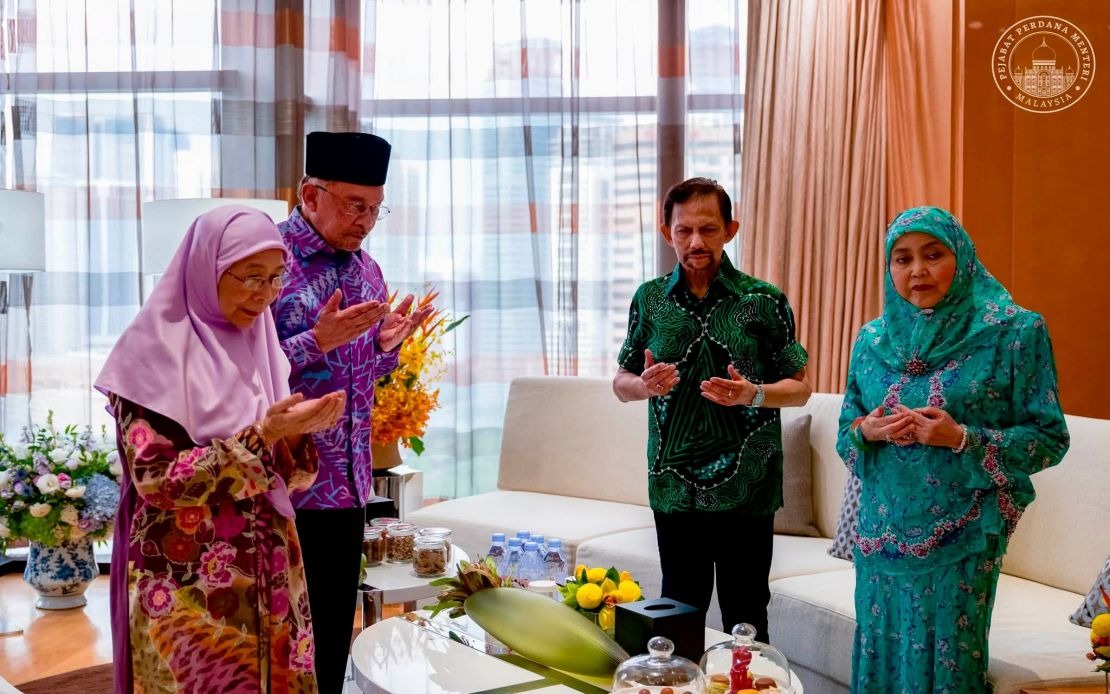
Prime Minister Datuk Seri Anwar Ibrahim marked Sultan Hassanal Bolkiah's 80th birthday by extending official congratulations to the Brunei monarch on behalf of the Malaysian Government and its citizens. The gesture, made public through a Facebook post on July 15, underscores the diplomatic warmth that characterizes bilateral relations between Malaysia and its neighbour across the South China Sea.
In his message, Anwar expressed his prayer that the Sultan would continue to guide Brunei Darussalam with the wisdom and foresight that have defined his lengthy reign. The Prime Minister's words reflect the deep respect accorded to a leader whose decades of stewardship have shaped the trajectory of a small but strategically significant Southeast Asian nation. Such ceremonial acknowledgments, while customary among regional leaders, carry particular significance in the context of Malaysia's ongoing efforts to strengthen bonds with fellow ASEAN members.
An equally important dimension of Anwar's message centred on the relationship between the two nations themselves. He voiced optimism that the existing ties and cooperative frameworks binding Malaysia and Brunei Darussalam would continue to deepen and expand, ultimately serving the shared interests of both populations. This emphasis on mutual benefit reflects a broader recognition that regional stability and prosperity depend on sustained dialogue and collaborative mechanisms among neighbouring states.
Sultan Hassanal Bolkiah's life has spanned transformative decades in Southeast Asian history. Born on July 15, 1946, in Bandar Brunei—now known as Bandar Seri Begawan—he entered the world during a period of significant change across the region. His ascension to the throne in 1967 as the 29th Sultan of Brunei marked the beginning of a reign that would outlast virtually all his contemporaries among global monarchs.
The Sultan's position as the world's longest-reigning living monarch became formalized following the death of Queen Elizabeth II in September 2022. This distinction carries historical weight, positioning him as a living bridge to earlier eras of Southeast Asian politics and a repository of institutional memory spanning the rise of ASEAN itself. His tenure has witnessed the evolution of Brunei from a British protectorate to a fully independent nation with significant hydrocarbon wealth and regional influence.
For Malaysia, maintaining robust relations with Brunei carries practical and strategic dimensions. The two nations share maritime boundaries, overlapping economic interests, and a commitment to regional frameworks including ASEAN, the ASEAN Regional Forum, and the East Asia Summit. Brunei's role as chair of ASEAN in 2013 demonstrated its capacity to shape regional agendas, while its oil and gas reserves give it considerable economic leverage within the bloc.
The timing of Anwar's public congratulations also reflects broader diplomatic norms within Southeast Asia, where senior leaders routinely acknowledge significant milestones in the lives of fellow monarchs and heads of state. Such gestures, though often ceremonial in nature, serve important functions in maintaining the personal relationships that underpin official channels of communication and cooperation. They signal continuity and stability at moments when leadership transitions or major anniversaries occur.
From a Malaysian perspective, the emphasis on strengthened ties carries particular resonance given the complexities of managing a multi-ethnic, multi-religious state that shares borders and maritime zones with multiple neighbours. Sultan Hassanal Bolkiah's long reign has itself been characterized by careful stewardship of a nation with its own intricate demographic and religious composition. The implicit acknowledgment of his leadership success carries subtle lessons for Malaysia's own ongoing journey of national consolidation and development.
Looking forward, the messages of cooperation articulated by Anwar suggest that Malaysia views Brunei as a valued partner in addressing shared regional challenges. These might encompass security matters, maritime safety, climate change, economic integration, and cultural exchange. The Sultan's advancing age and unparalleled length of reign make him a unique figure whose counsel and experience remain valuable to younger leaders navigating an increasingly complex geopolitical landscape.
The exchange also reflects evolving patterns in how Southeast Asian leaders conduct diplomacy in the modern era. The use of social media platforms like Facebook by the Prime Minister demonstrates how traditional courtesies are now layered with contemporary communication methods, allowing messages to reach broader audiences while maintaining their ceremonial significance. This blend of the formal and the accessible characterizes much of contemporary ASEAN diplomacy.
For ordinary Malaysians, Anwar's message serves as a reminder of the nation's place within a broader Southeast Asian community. The emphasis on mutual benefit and continued cooperation reinforces the principle that prosperity and security are best achieved through regional solidarity rather than isolation. As both nations face global challenges ranging from climate change to economic restructuring, the institutional relationships and personal goodwill cultivated through such diplomatic gestures become increasingly valuable.
The occasion of Sultan Hassanal Bolkiah's 80th birthday thus becomes more than a personal milestone. It represents a moment for reflection on three decades of ASEAN cooperation, the evolution of Malaysia-Brunei relations, and the continued importance of stable leadership in a region still navigating profound transformations. Anwar's words encapsulate a vision of neighbouring nations working in concert toward shared prosperity, a principle that remains as relevant today as when ASEAN was founded.

