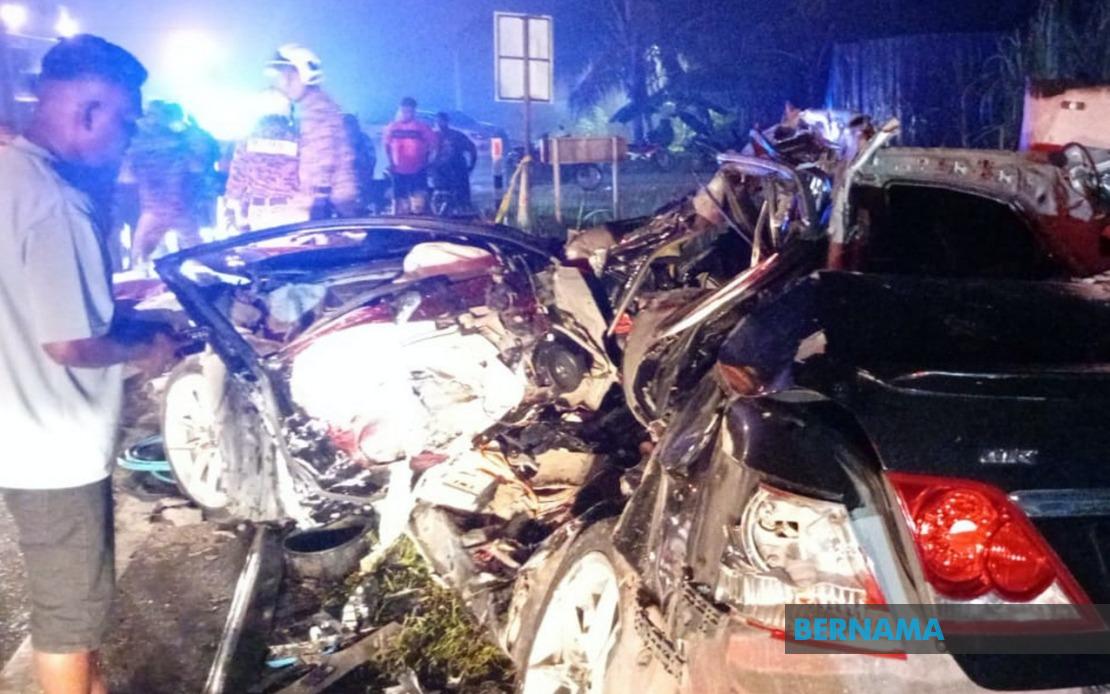
Prime Minister Datuk Seri Anwar Ibrahim has expressed profound sorrow over the deaths of six individuals in a tragic vehicular collision that unfolded in the early hours of July 25 along Jalan Karak Lama in Bentong, Pahang. Through a statement posted on X, the Prime Minister and his wife, Datuk Seri Dr Wan Azizah Wan Ismail, conveyed their heartfelt condolences to the bereaved families, underscoring the nation's collective grief over the incident.
The crash, which occurred at approximately 4 am near Klink Desa Jambu Rias, resulted in the immediate death of all six occupants of a Toyota Vios sedan. The victims, all males ranging in age from 16 to 25 years old, were travelling from Kuantan towards Kuala Lumpur when the collision took place. The deceased have been identified as driver V. Mugilan, 25, and passengers K. Dineshvaran, 22, K. Alaganathan, 21, A. Kanabati Raja, 19, S. Kiisven, 17, and M. Paranthaman, 16. The loss of life concentrated among younger individuals underscores the particular vulnerability of Malaysia's youth on the nation's increasingly congested roadways.
The collision involved the Vios and a one-tonne commercial lorry, the latter being operated by a 31-year-old driver who sustained serious injuries in the impact. Preliminary investigations conducted by police have established that the passenger vehicle, whilst descending a hill on Jalan Karak Lama while heading towards Temerloh, veered into the opposing traffic lane before colliding with the oncoming lorry. The precise circumstances leading to the lane deviation—whether attributable to driver fatigue, mechanical failure, or weather conditions—remain subject to ongoing forensic examination.
In his statement, Prime Minister Anwar emphasised the imperative of road safety, characterising the tragedy as a sobering reminder that transportation safety cannot be approached with complacency. He expressed wishes for the injured lorry driver's swift recuperation and extended prayers for divine strength and patience for the grieving families. The PM's invocation of road safety resonates against a backdrop of persistent fatality rates on Malaysian highways, particularly along critical arteries like the Karak Highway that connect Pahang to the Klang Valley.
Jalan Karak Lama, the road on which this tragedy occurred, represents a vital transportation corridor linking the eastern seaboard states with the central Klang Valley region. The highway has long been identified in safety analyses as a stretch prone to accidents, partly due to its hilly terrain, varying road conditions, and the mix of commercial and private vehicles utilising the route during different hours. The incident near Bentong reflects broader challenges facing Malaysian road administrators in enhancing safety infrastructure whilst managing the volume of traffic that traverses these critical routes daily.
The loss of six individuals, each in the prime of their youth, carries particular significance for Malaysian society grappling with concerns over road safety awareness among younger drivers and passengers. Statistics consistently demonstrate that younger age groups experience disproportionately higher accident rates, frequently attributed to inexperience, overconfidence, and risk-taking behaviours behind the wheel. This incident exemplifies the human cost associated with lapses in concentration, judgment, or vehicle maintenance that often precede fatal collisions on high-speed routes.
The Prime Minister's public acknowledgement of this tragedy through a formal statement underscores the government's recognition of road safety as a matter of national concern warranting high-level political attention. Such statements serve multiple functions within Malaysia's political and social landscape, demonstrating executive responsiveness to public tragedies whilst reinforcing messaging around collective responsibility for safer driving practices. The positioning of road safety as a shared national obligation, requiring vigilance from all road users, reflects a growing governmental emphasis on preventative approaches rather than purely reactive measures.
The incident also raises questions regarding enforcement of existing traffic regulations along the Karak corridor, including speed limits, vehicle maintenance standards, and driver fatigue protocols. Commercial vehicles like the lorry involved in this collision are subject to specific regulatory frameworks governing operating hours and driver rest periods, though enforcement consistency remains a challenge across Malaysia's vast road network. The serious injuries sustained by the lorry operator suggest the violence of the impact, indicating that both vehicles were likely travelling at substantial speeds at the moment of collision.
As investigations proceed, the focus will extend to determining whether mechanical factors, such as brake failure or tyre defects, contributed to the accident. The concentration of fatalities within a single vehicle raises considerations about passenger safety features, vehicle specifications, and the protective capabilities of the Vios model under high-impact collision scenarios. These findings may inform future discussions regarding vehicle safety standards and the adequacy of existing regulations governing passenger vehicle design in the Malaysian market.
For families of the deceased young men, the tragedy represents not merely loss of individual family members but the obliteration of future possibilities and potential. The youngest victim, M. Paranthaman at 16 years old, had likely not yet completed secondary education, whilst others were presumably at the threshold of tertiary education or early career development. Such incidents resonate throughout communities and trigger broader societal conversations regarding mortality, risk perception, and the fragility of life on Malaysia's roads.
The Prime Minister's response, coupled with ongoing police investigations, will contribute to the post-incident narrative and potentially inform policy discussions regarding enhanced road safety measures. Whether this incident catalyses legislative or enforcement changes remains uncertain, though the visibility of such tragedies in political discourse occasionally accelerates governmental action on transportation safety. Road users throughout Malaysia, particularly those regularly traversing the Karak corridor, may find this incident serving as a personal reminder of the constant dangers present during vehicular travel, irrespective of precautions undertaken.

