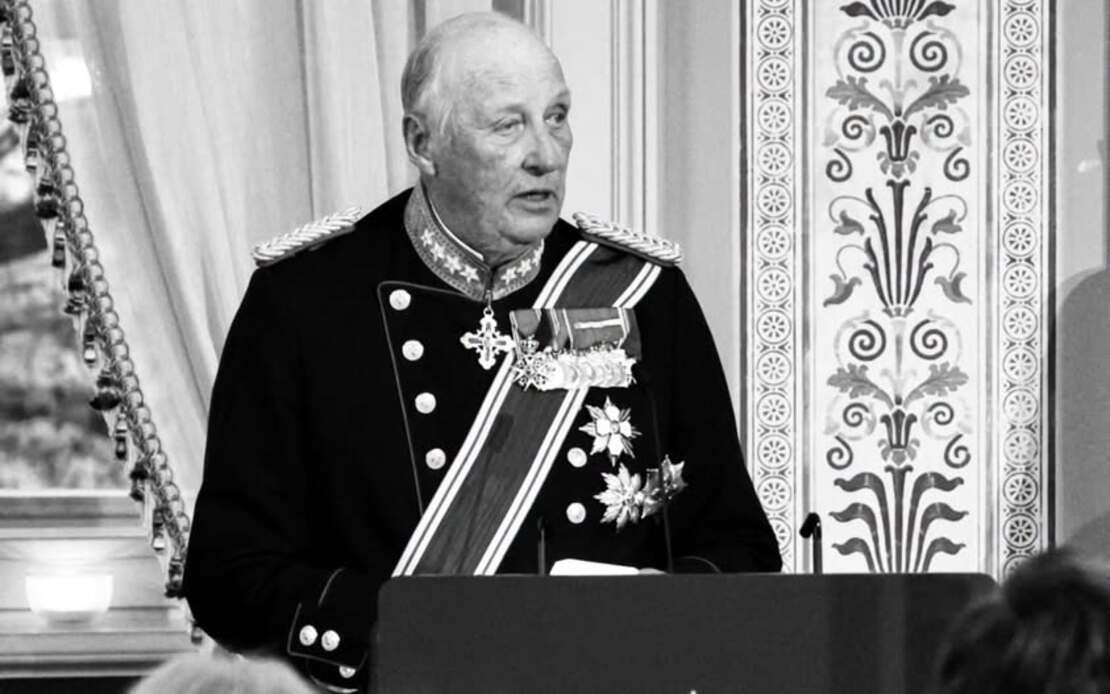
Prime Minister Datuk Seri Anwar Ibrahim has conveyed Malaysia's official condolences to Norway following the death of King Harald V, expressing the nation's respects for the Scandinavian monarch who passed away on Friday at the age of 89. The Norwegian king's death marks the end of a reign that shaped modern Europe during a period of significant geopolitical transformation, and Anwar's statement reflects the diplomatic importance Malaysia places on its relations with Nordic countries.
King Harald V died at the National Hospital in Oslo after a brief illness that began when he was admitted on August 17. He had been undergoing cortisone treatment for hemolytic anemia, a blood disorder that ultimately contributed to his passing. His death represents the conclusion of a remarkable chapter in Scandinavian history, as Harald had become one of Europe's longest-serving monarchs and a deeply respected figure across the continent.
In his statement issued via Facebook, Anwar highlighted dimensions of King Harald's character and leadership that resonate beyond Norway's borders. The Prime Minister particularly emphasised the late king's progressive vision of Norwegian national identity, noting how Harald consistently articulated an inclusive conception of what it meant to be Norwegian—one that deliberately embraced citizens whose families originated from Afghanistan, Pakistan, Poland, and numerous other nations. This perspective represented a deliberate counter-narrative to narrow ethnic or cultural nationalism, positioning Norway as a multicultural society strengthened by its diversity.
Anwar's emphasis on this aspect of Harald's legacy holds particular significance for Malaysian audiences. As a nation with its own complex tapestry of ethnic and religious communities, Malaysia has long grappled with questions of national identity and social cohesion. The Prime Minister's decision to highlight King Harald's inclusive approach suggests an alignment with his own stated vision of a united Malaysia where citizens of all backgrounds enjoy equal dignity and rights. By invoking the Norwegian king's words about immigrant families becoming truly Norwegian, Anwar implicitly affirms similar principles applicable to Malaysia's pluralistic context.
The Prime Minister further noted King Harald's profound understanding of constitutional duty and the sacred nature of oath-taking. This dimension of the tribute speaks to the serious obligations that bind monarchs and heads of government to their nations and peoples. In the Malaysian context, where constitutional monarchy remains a foundational institution, such observations about fidelity to one's solemn commitments carry institutional weight and philosophical importance.
Anwar's framing of a nation's strength as deriving fundamentally from the dignity accorded to all its people represents a deliberate articulation of values that extend beyond ceremonial condolences. This statement essentially endorses a governance philosophy grounded in respect for human dignity and recognition of diverse identities within a unified national framework. For Malaysia, where national unity and social harmony remain perennial policy concerns, such public endorsements of inclusive governance principles help shape the ideological landscape surrounding contemporary political discourse.
King Harald V's reign, which began in 1991 following the death of King Olav V, coincided with Norway's emergence as a major oil-producing nation and its complex relationship with European integration. Though Norway remained outside the European Union, Harald presided over a period of unprecedented Norwegian prosperity and global influence. His death therefore marks a turning point in Scandinavian geopolitics and European affairs more broadly, even as it represents a natural succession within Norway's stable constitutional system.
The Malaysian government's formal expression of condolences reflects the importance placed on diplomatic relations with Nordic countries. Norway, despite its geographical distance from Malaysia, maintains significant commercial ties with Southeast Asia and plays an active role in various international forums. Norway's development assistance programmes and commitment to international humanitarian law align with Malaysia's own participation in global governance structures, creating multiple points of engagement between the two nations.
King Harald's passing also symbolically closes one of Europe's longest chapters of individual political leadership. His successor, King Harald's son Crown Prince Haakon, will inherit a nation with deep democratic traditions and a constitutional monarchy that has earned widespread respect across the continent. The smooth and expected succession underscores the institutional stability that characterised Harald's reign and the enduring strength of Norway's democratic and constitutional frameworks.
Malaysia's official mourning reflects broader recognition within Southeast Asian diplomatic circles of King Harald's significant contributions to global affairs. Throughout his reign, he championed environmental protection, humanitarian causes, and peaceful conflict resolution—issues that command attention within Malaysia's own foreign policy agenda. His reputation as a thoughtful and principled leader who remained genuinely engaged with his people contributed to the deep affection Norwegians held for their king.
The timing of Anwar's statement, issued promptly after Harald's death, demonstrates Malaysia's attentiveness to significant international developments and its readiness to engage in diplomatic courtesy. Such gestures, while often appearing ceremonial, serve important functions in maintaining and reinforcing bilateral relationships. For Malaysian observers interested in comparative governance and constitutional monarchy, King Harald's life and reign offer instructive examples of how institutional roles can be exercised with dedication, dignity, and genuine concern for national cohesion and social justice across generational change.

