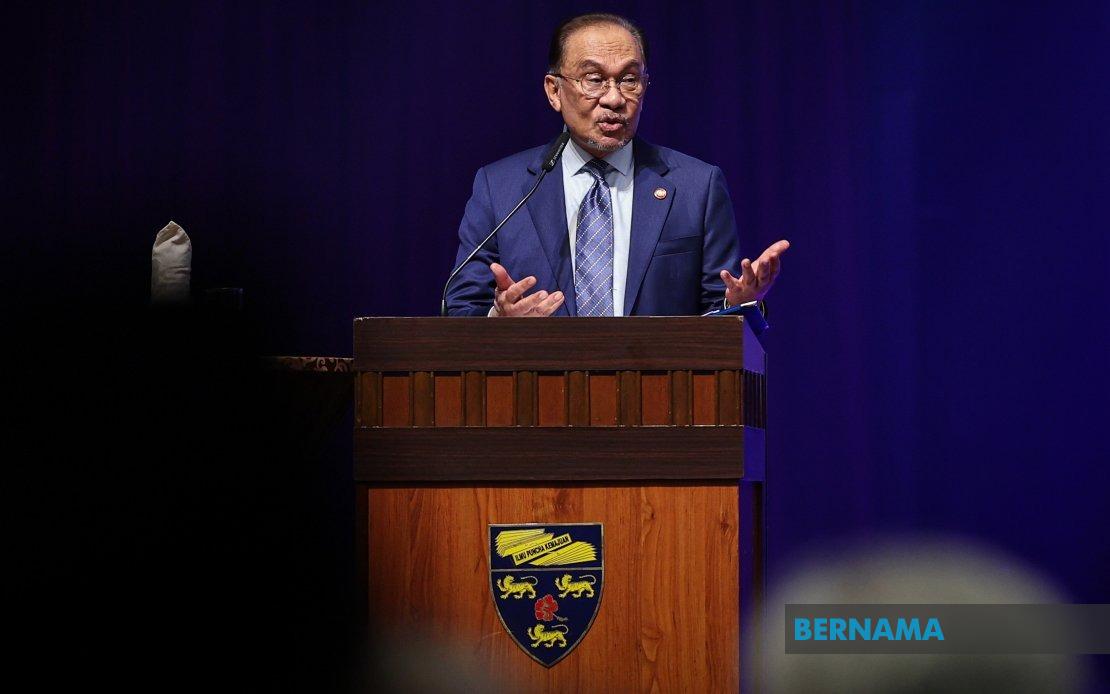
Prime Minister Datuk Seri Anwar Ibrahim has extended financial assistance to Rosli Abdullah, a 52-year-old gravedigger in Kuala Terengganu who has been waging a three-year battle against mouth cancer. The RM2,000 donation, presented on July 9 through the Prime Minister's Implementation Coordination Unit (ICU), represents a direct intervention by the federal government to ease the treatment burden of a low-income worker facing mounting medical expenses.
The contribution was handed over by Azhar Abd Hamid, deputy director of the Terengganu Federal Development Department's ICU at the Prime Minister's Department, during a ceremony at the Flat Batas Baru surau. According to Azhar, the donation was specifically intended to help cover the costs of urgent surgery that Rosli requires in the coming weeks. Beyond the immediate cash assistance, Azhar indicated that the government would expedite Rosli's registration into the e-Kasih social welfare system—a critical step that should unlock additional ongoing support from the state.
Rosli's medical situation has deteriorated sharply over recent months, presenting a humanitarian crisis that extends beyond financial hardship. For the past month, he has been unable to speak due to severe swelling in his mouth and right cheek, a side effect of the advancing cancer. The condition has progressed to the point where conventional eating is no longer possible; for the past two weeks, he has survived solely on liquid nutrition delivered through a feeding tube. This represents a dramatic loss of independence and dignity for a man whose livelihood once depended on physical labour.
The gravedigger's case highlights the precarious position of informal workers in Malaysia who lack stable employment contracts or employer-sponsored healthcare. According to Mohd Radzali Mohamad, deputy chairman of the Flat Batas Baru surau, Rosli has resided at the facility for more than three decades, working not only as a gravedigger but also performing maintenance and cleaning duties. His deteriorating health has rendered him unable to perform these tasks, eliminating his ability to generate any income whatsoever. The surau management has become his primary support system, providing shelter and basic care as his illness progresses.
Rosli's medical journey has already involved two surgical interventions, but the cancer has returned, necessitating referral to a more specialized facility. The Sultanah Nur Zahirah Hospital has transferred his case to the Universiti Sains Malaysia Hospital in Kubang Kerian, Kelantan, indicating that the complexity of his condition requires expertise available only at a teaching hospital. This referral underscores the severity of his illness and suggests that upcoming treatment may involve aggressive interventions.
The surau management has taken the initiative to launch a community fundraising campaign to supplement public assistance and cover the full spectrum of medical and surgical costs. However, donations collected thus far remain insufficient to meet the anticipated expenses. This gap between available resources and actual needs reflects a broader challenge in Malaysia's healthcare system, where even subsidized treatment at government hospitals can impose significant financial strain on vulnerable populations lacking savings or family support networks.
Rosli's isolation compounds his vulnerability. As an unmarried man living alone, he possesses no family safety net and depends entirely on institutional charity and government intervention for survival. The surau community has essentially become his extended family, providing what shelter and sustenance they can manage with their own limited resources. This dependency underscores the importance of social welfare programmes like e-Kasih, which are designed precisely to prevent citizens from falling into destitution during medical crises.
The Prime Minister's personal attention to Rosli's case reflects a broader government emphasis on identifying and assisting vulnerable individuals within local communities. The fact that Azhar noted Rosli's absence from the e-Kasih registry suggests that administrative gaps can prevent eligible individuals from accessing assistance they qualify for—a systemic issue that requires proactive identification and correction. By fast-tracking his registration, the government aims to ensure that ongoing support mechanisms engage automatically once his initial eligibility is confirmed.
This incident also raises questions about healthcare accessibility for Malaysia's informal workforce. Gravediggers and similar manual labourers typically operate outside formal employment structures, meaning they carry no health insurance and must navigate the public healthcare system independently. While subsidized treatment is available, transportation costs, ancillary expenses, and loss of income during recovery can still prove catastrophic for families already living at subsistence levels.
For Terengganu and other Malaysian states, Rosli's case exemplifies how localized intervention at the federal level can complement state-level welfare efforts. The coordination between the surau management, the Terengganu Federal Development Department, and the Prime Minister's office demonstrates that addressing poverty-related health crises requires participation across multiple institutional levels. The willingness of senior government officials to engage personally with such cases sends a signal that no citizen's suffering should go unnoticed, regardless of socioeconomic status.
Moving forward, Rosli's situation provides a potential model for identifying and assisting other vulnerable individuals within religious and community institutions across the country. Suraus, mosques, temples, and community centres often serve as informal social safety nets where vulnerable individuals congregate. Greater coordination between these grassroots institutions and government welfare agencies could enable more systematic identification of those requiring assistance, reducing the element of chance that currently determines who receives help and when.

