%22%2F%3E%3C%2Fpattern%3E%3C%2Fdefs%3E%3Crect%20width%3D%22100%25%22%20height%3D%22100%25%22%20fill%3D%22url(%23phdmbbg)%22%2F%3E%3Crect%20width%3D%22100%25%22%20height%3D%22100%25%22%20fill%3D%22url(%23phdmbbp)%22%2F%3E%3Ctext%20x%3D%2250%25%22%20y%3D%2250%25%22%20text-anchor%3D%22middle%22%20dominant-baseline%3D%22central%22%20fill%3D%22rgba(255%2C255%2C255%2C0.95)%22%20font-family%3D%22Georgia%2C%20'Times%20New%20Roman'%2C%20serif%22%20font-weight%3D%22700%22%20font-size%3D%22320%22%20letter-spacing%3D%22-0.02em%22%3EPM%3C%2Ftext%3E%3C%2Fsvg%3E)
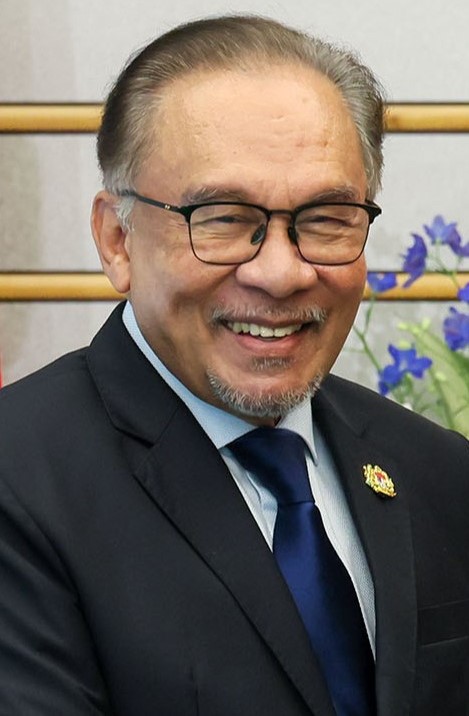
Prime Minister Datuk Seri Anwar Ibrahim left Subang Air Base on June 16 to attend the ASEAN-Russia Commemorative Summit in Kazan, an important diplomatic engagement that underscores Malaysia's commitment to strengthening ties with Moscow at a time of shifting geopolitical dynamics in the region. The summit carries particular significance as it marks the 35th anniversary of formal ASEAN-Russia relations, a partnership originally established in Kuala Lumpur in 1991 that has evolved considerably over three decades of interaction.
During his visit to the Russian city from June 17 to 18, Anwar will undertake a series of high-level engagements aimed at deepening bilateral and multilateral cooperation. The centrepiece of his trip will be a direct meeting with Russian President Vladimir Putin, providing an opportunity for Malaysia to articulate its strategic interests while engaging with one of the world's major powers. Beyond the presidential audience, the Prime Minister will also participate in the Russia-ASEAN Business Forum, a venue designed to foster commercial relationships and explore investment opportunities between Malaysian enterprises and their Russian counterparts.
The Malaysian delegation accompanying Anwar reflects the multifaceted nature of the engagement, combining diplomatic expertise with economic focus. Minister of Investment, Trade and Industry Datuk Seri Johari Abdul Ghani and Minister of Economy Akmal Nasrullah Mohd Nasir will travel alongside the Prime Minister, signalling that economic cooperation and trade facilitation feature prominently in Malaysia's agenda. Supporting officials from the Prime Minister's Office and the Foreign Ministry round out the team, ensuring comprehensive coordination across government departments.
For Malaysia and other ASEAN member states, this summit represents a moment to take stock of what has been accomplished since 1991 and to chart a more ambitious course for future cooperation. The framework of ASEAN-Russia Strategic Partnership provides the institutional foundation for deepening engagement, yet the contemporary context—marked by supply chain realignment, energy security concerns, and technological competition—demands fresh thinking about where mutual benefit lies. Southeast Asia's significance as a region of economic dynamism and strategic importance makes it imperative that ASEAN engage Russia constructively rather than allow geopolitical friction to diminish practical collaboration.
The agenda for discussions is expansive, reflecting the breadth of potential cooperation between a major Eurasian power and a dynamic regional bloc. Trade and investment naturally feature at the forefront, as businesses and governments seek to navigate post-pandemic recovery and identify new commercial pathways. Energy cooperation remains strategically vital, particularly as Malaysia and other ASEAN nations grapple with balancing economic growth, energy independence, and climate commitments. Russia's position as a major energy exporter positions it as a significant player in these discussions, even as global energy markets undergo fundamental transformation.
Food security has emerged as an increasingly pressing concern across Southeast Asia, and Russia's substantial agricultural production and role as a grain exporter make it a partner of consequence in addressing regional vulnerabilities. The disruption to global food systems caused by geopolitical tensions in Eastern Europe has heightened awareness of the need for diversified, reliable supply sources. Digital economy cooperation opens yet another frontier, as both ASEAN and Russia seek to develop technological capabilities and establish standards that might eventually influence regional digital governance frameworks. These conversations, while appearing technical, carry significant implications for how Southeast Asian economies position themselves within global digital ecosystems.
Beyond the economic dimensions, the summit agenda encompasses collaboration in science, technology, culture, education, tourism, and people-to-people exchanges. These softer elements of statecraft prove essential for building sustained relationships that transcend transactional interactions. Educational partnerships, for instance, can cultivate generations of professionals with experience of both societies, creating networks that persist across decades. Cultural and tourism initiatives foster mutual understanding and generate economic benefits for local communities on both sides.
Following the conclusion of his programme in Kazan, Anwar will proceed to Ashgabat, Turkmenistan, for an official visit at the invitation of President Serdar Berdimuhamedow. This extension of his Central Asian journey underscores Malaysia's broader engagement strategy in the wider Eurasian region. Turkmenistan, sitting at the crossroads of ancient trade routes and possessing substantial energy resources, represents another arena for Malaysian diplomatic and economic outreach. The sequencing of these visits—Russia followed by Turkmenistan—suggests a coordinated approach to strengthening Malaysia's footprint across Central Asia.
For Malaysian readers and stakeholders, understanding these high-level diplomatic missions requires recognising that behind ceremonial protocols and formal speeches lie concrete national interests. Malaysia benefits from diversified international partnerships that reduce dependence on any single power bloc and create multiple channels for advancing Malaysian interests. The ASEAN-Russia summit, though commemorative in nature, serves as a platform for Malaysia to influence the direction of regional-bloc partnerships while simultaneously positioning itself as a bridge between different parts of the world.
The visit also occurs within a broader context of ASEAN's efforts to maintain strategic autonomy and centrality in regional affairs. By engaging Russia directly through this summit, ASEAN demonstrates its commitment to inclusive engagement rather than alignment with competing power blocs. For Malaysia, which holds significant responsibilities within ASEAN and maintains a tradition of diplomatic activism, such missions carry weight beyond their immediate outcomes.
As geopolitical competition intensifies and strategic alignments shift, Malaysia's capacity to maintain productive relationships with multiple major powers—including Russia—contributes to the country's foreign policy flexibility and influence. The Prime Minister's journey to Kazan and Ashgabat exemplifies this pragmatic approach, seeking tangible benefits in trade, investment, and technology transfer while avoiding being drawn into ideological or military competition between rivals.