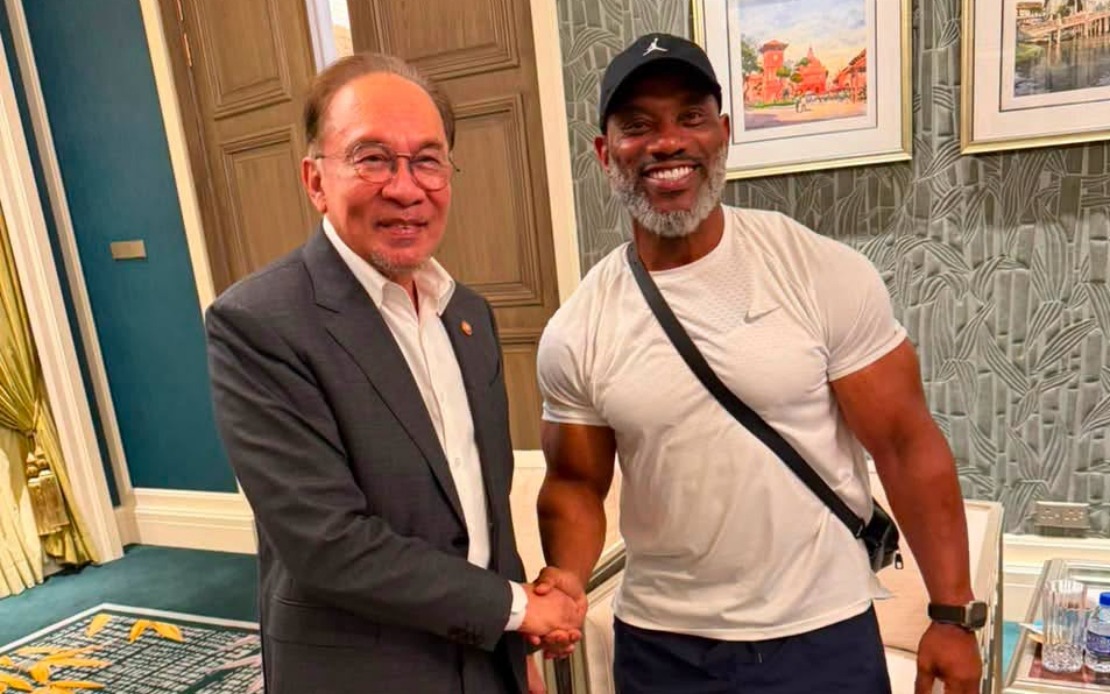
Prime Minister Datuk Seri Anwar Ibrahim expressed his enthusiasm after encountering Dexter Jackson, one of the world's most decorated bodybuilding champions, sharing the moment through a Facebook post that included a photograph of the two shaking hands. The informal diplomatic exchange highlighted the Prime Minister's accessible approach to public engagement, even in unexpected quarters, demonstrating how senior Malaysian leadership occasionally intersects with global sporting figures across diverse disciplines.
Jackson, now 56 years old, represents a rare apex in competitive bodybuilding history. His most celebrated achievement came in 2008 when he claimed the Mr Olympia title, bodybuilding's most prestigious championship. Four years later, in 2012, he added another significant crown by winning the Masters Mr Olympia competition, which recognises elite athletes competing in age-restricted categories. These victories underscore the longevity required to remain competitive at the highest echelons of the sport across different career phases.
Beyond these marquee titles, Jackson's competitive résumé reveals an even more impressive statistic: he holds the record for the most Arnold Classic championships in bodybuilding history, with nine victories to his name. The Arnold Classic, named after former California Governor and action film star Arnold Schwarzenegger, ranks as the second-most important bodybuilding competition globally after Mr Olympia. Jackson's nine-title haul demonstrates sustained excellence and consistency over multiple decades, a rare combination in a sport where physical peak performance windows are notoriously narrow.
In his social media commentary, Anwar employed characteristic self-deprecating humour, suggesting that meeting Jackson had inspired him to consider more intensive gymnasium activities. The remark reflects a broader pattern in the Prime Minister's public communications style, which often combines formality with relatable, conversational touches designed to foster connection with ordinary Malaysians. Such moments, though seemingly inconsequential, serve to humanise high-level political figures and present them as individuals capable of engaging with popular culture and sporting achievement.
The meeting itself, while undocumented in terms of specific context or venue, represents the kind of informal encounter that frequently occurs during international visits or events. Malaysia, as a developing nation with growing soft power ambitions in the Asia-Pacific region, occasionally hosts or facilitates meetings between domestic political leadership and internationally recognised figures across entertainment, sport, and other sectors. These interactions, however brief, contribute to the nation's cultural profile and demonstrate openness to engagement with global influencers.
Bodybuilding, though sometimes perceived as a niche pursuit in Southeast Asia, has been gradually gaining mainstream recognition and participation across Malaysia and the broader region. The sport attracts dedicated enthusiasts and competitive athletes, with various national and regional championships held annually. Figures like Jackson, who have achieved legendary status and longevity in the field, command respect beyond their immediate sporting community and often serve as motivational symbols for fitness enthusiasts worldwide.
Anwar's post-parliamentary approach to social media engagement has become a defining characteristic of his tenure as Prime Minister. Rather than limiting his communications to official government channels or formal press releases, he frequently shares personal observations, photographs, and reactions to everyday encounters. This strategy has proven effective in maintaining public relatability while simultaneously ensuring continued media visibility for his activities and perspectives. The Dexter Jackson encounter exemplifies this approach, transforming what could have been a forgettable handshake into a moment of public engagement.
The accessibility that Anwar's social media presence conveys carries particular significance in Malaysia's current political landscape, where rebuilding public confidence in political institutions remains an ongoing endeavour. By presenting himself as someone who maintains interest in diverse topics—from international sporting achievements to fitness—he projects an image of a leader engaged with contemporary global culture rather than isolated within institutional hierarchies. Such positioning, whether calculated or genuine, resonates with younger demographics and urban voters who value perceived authenticity and relatability in their leaders.
Jackson's enduring prominence in bodybuilding circles, despite retiring from competitive professional competition, testifies to the lasting impact of significant athletic achievement. His presence at events, appearances, and informal encounters like the one with Anwar Ibrahim keeps him visible within global sporting conversations and maintains his status as a brand ambassador for the sport itself. The cross-generational and cross-cultural nature of Jackson's recognition—from dedicated bodybuilding aficionados to casual observers who merely appreciate his historical accomplishments—has afforded him a unique position within the wider landscape of international sports celebrity.

