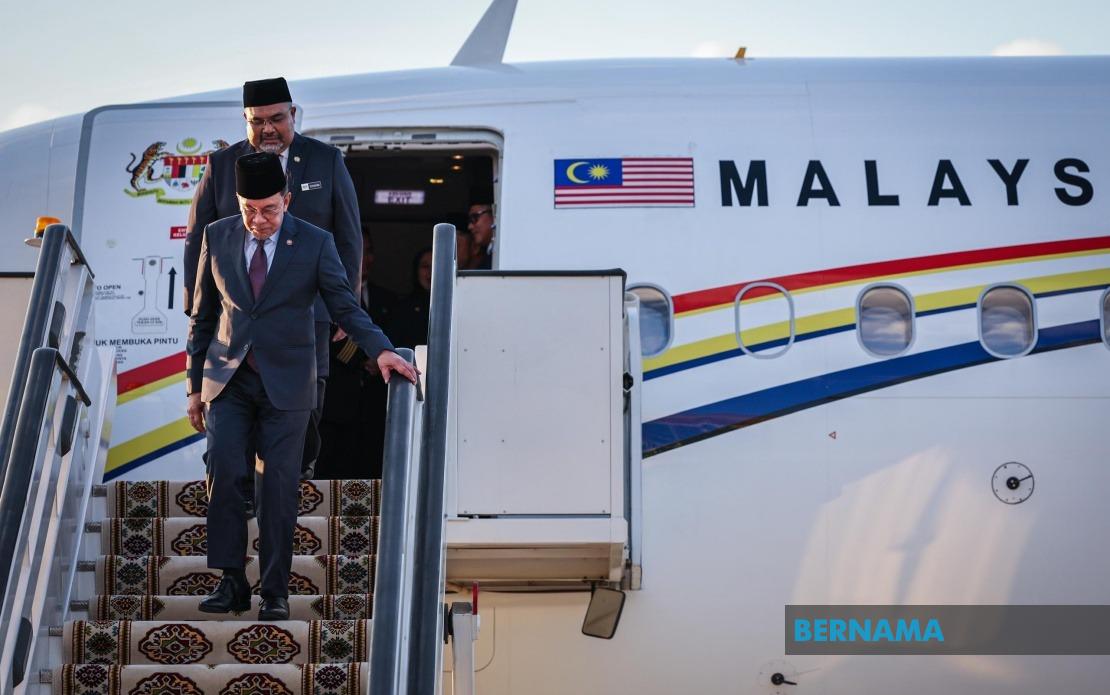
Prime Minister Datuk Seri Anwar Ibrahim touched down in Ashgabat on the evening of June 18, concluding the first leg of his multi-nation Central Asian tour. The aircraft carrying the Malaysian delegation landed at Ashgabat International Airport at 8 pm local time, signalling the commencement of a carefully choreographed two-day official visit to Turkmenistan. This journey represents a continuation of high-level diplomatic momentum in the region, coming immediately after Anwar's working visit to Kazan in Russia's Republic of Tatarstan, underscoring Malaysia's strategic pivot towards deeper engagement with Central Asia's resource-rich economies.
The delegation accompanying Anwar reflects the economic and investment dimensions of the trip. Minister of Investment, Trade and Industry Datuk Seri Johari Abdul Ghani and Minister of Economy Akmal Nasrullah Mohd Nasir travelled alongside the prime minister, signalling that commercial partnerships and trade facilitation sit at the core of Malaysia's diplomatic mission. This composition suggests that discussions will extend beyond ceremonial courtesy exchanges to encompass substantive matters affecting Malaysia's economic interests in the region, particularly in energy security and investment opportunities.
Upon landing, Anwar was received by Malaysia's Ambassador to Turkmenistan Mohd Suhaimi Ahmad Tajuddin, while Turkmenistan's side was represented by Deputy Chairman of the Cabinet of Ministers for Oil and Gas Guvanch Agajanov. The participation of the oil and gas deputy chairman on the Turkmenistan side underscores the energy-centric nature of bilateral relations, a theme that will likely dominate formal discussions over the coming days. The welcoming protocols observed during the reception set the tone for what officials characterise as a reciprocal state visit, responding to President Serdar Berdimuhamedov's official journey to Malaysia in December 2024.
This visit carries significant historical weight within Malaysia's diplomatic engagement with Central Asia. The trip marks Anwar's inaugural official visit to Turkmenistan, positioning him within a select circle of Malaysian prime ministers—only four predecessors have made official visits to this Central Asian nation. The relatively small number of such high-level missions underscores the magnitude of the current diplomatic initiative and Malaysia's deliberate effort to elevate relations with Turkmenistan beyond routine government-to-government interactions. The timing and personal involvement of the prime minister suggest that Kuala Lumpur views Turkmenistan as a strategically important partner whose economic potential and geopolitical positioning warrant sustained attention at the highest levels.
The scheduled itinerary for June 19 reveals an ambitious agenda designed to cement bilateral relations across multiple dimensions. The day begins with a formal welcoming ceremony at the Presidential Palace, followed by bilateral negotiations and the signing of a joint statement. This succession of formal events indicates that both governments have prepared substantial groundwork for dialogue, with agreements and memoranda of understanding already drafted and ready for signature. Such preparation suggests that the visit is not merely symbolic but represents the culmination of months of preparatory work by diplomatic and technical teams from both capitals.
Beyond the official governmental engagements, the prime minister's schedule incorporates elements designed to showcase Malaysia's cultural and religious dimensions. Anwar is scheduled to perform Friday prayers at the Turkmenbashi Ruhy Mosque, also known as the Gypjak Mosque, providing a tangible demonstration of Malaysia's Islamic heritage and the common spiritual ground shared between the two Muslim-majority nations. This component of the visit addresses dimensions of soft power and people-to-people connections that complement the economic and political aspects of bilateral relations. Additionally, a dinner with Malaysia's diaspora community in Ashgabat affords the prime minister an opportunity to engage directly with Malaysian expatriates whose presence in Turkmenistan may be linked to Petronas operations or other Malaysian business interests in the country.
Trading patterns between Malaysia and Turkmenistan reveal an asymmetrical but growing economic relationship that merits closer examination. In 2025, Turkmenistan ranked as Malaysia's fourth-largest trading partner among Central Asian nations, with bilateral trade reaching RM75.80 million. Malaysian exports accounted for RM75.50 million of this figure, demonstrating Malaysia's capacity to supply goods and services that Turkmenistan seeks to import. The nine percent year-on-year growth in Malaysian exports suggests expanding commercial momentum, though the overall trade volumes remain modest in global terms. For Malaysia, penetrating Central Asian markets represents a diversification strategy that reduces reliance on traditional Asian trade routes and provides access to emerging consumer bases with growing purchasing power.
The investment dimension of bilateral relations assumes proportions far exceeding trade flows, revealing where Malaysia's true economic stakes lie in Turkmenistan. Petronas, Malaysia's national oil and gas company, has maintained a substantial presence in Turkmenistan since 1996, accumulating RM52.73 billion in cumulative investments over nearly three decades. These investments anchor Malaysia's economic presence in the country and position Petronas as a significant stakeholder in Turkmenistan's hydrocarbon sector. The long-term commitment represented by such capital deployment reflects confidence in Turkmenistan's energy resources and Malaysia's strategic interest in securing reliable hydrocarbon supplies and investment returns from Central Asian upstream operations. Given global energy transitions and the volatility of international oil markets, Turkmenistan's position as a substantial gas exporter remains strategically valuable to energy-hungry Asian economies including Malaysia.
From a broader Southeast Asian perspective, this visit demonstrates how individual ASEAN members pursue independent great power and regional strategies that extend beyond the Association's collective frameworks. Malaysia's engagement with Central Asia through high-level state visits complements efforts to strengthen ties with other regions, diversifying the country's diplomatic portfolio and reducing strategic dependence on any single bilateral or multilateral relationship. The visit reflects a confidence that Malaysia can punch above its weight diplomatically, leveraging its position as a significant Muslim-majority economy and energy consumer to cultivate relationships with resource-rich Central Asian partners. For Malaysian readers, the visit signals that government attention extends beyond the immediate region, pursuing opportunities in promising emerging markets and consolidating Malaysia's role as a bridge between Asia and other parts of the world.
The implications of this diplomatic engagement ripple across multiple policy domains including energy security, foreign direct investment, and Malaysia's positioning within emerging Asian geopolitical alignments. By strengthening relations with Turkmenistan, Malaysia enhances its energy security profile by deepening ties with a major gas producer and securing additional investment opportunities for Malaysian capital. Simultaneously, the visit demonstrates Malaysia's capacity to engage independently with Central Asian partners, enhancing the country's diplomatic flexibility and international standing. The formal mechanisms established during this visit—joint statements, memoranda of understanding, and bilateral forums—create institutional scaffolding supporting long-term collaboration that transcends individual political cycles or economic fluctuations, establishing a foundation upon which both nations can build sustained partnership.

