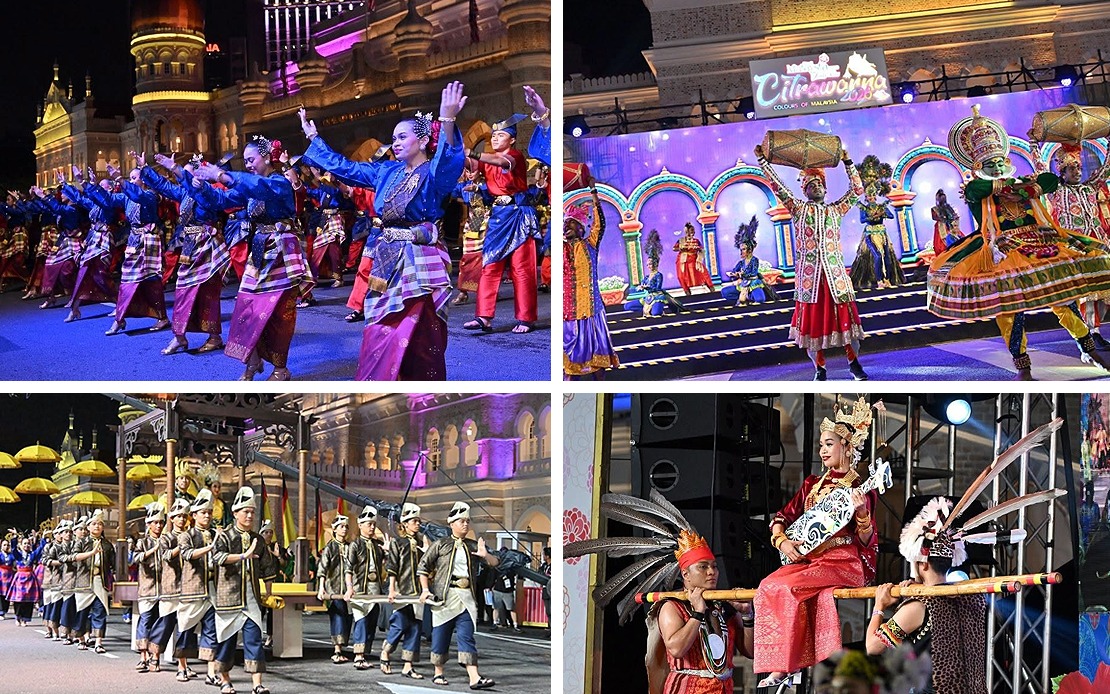
Prime Minister Datuk Seri Anwar Ibrahim formally opened Citrawarna 2026 at Dataran Merdeka on July 25, marking a significant milestone for Tourism Malaysia's ambitious Visit Malaysia 2026 campaign. The three-day festival serves as a centrepiece initiative designed to position Malaysia's cultural and heritage offerings on the international stage while deepening domestic appreciation for the nation's artistic traditions. The inaugural ceremony brought together a high-level delegation, including Tourism, Arts and Culture Minister Datuk Seri Tiong King Sing, Deputy Minister Chiew Choon Man, Chief Secretary to the Government Tan Sri Shamsul Azri Abu Bakar and Tourism Malaysia director-general Mohd Amirul Rizal Abdul Rahim, underscoring the government's commitment to elevating the tourism and cultural sectors.
The festival's centrepiece attraction, the Colours of Parade, mobilised an impressive 3,500 dancers representing all 13 states, three Federal Territories and Malaysia's diverse ethnic communities. This scale of participation reflects a deliberate strategy to present Malaysia's multicultural identity as a cohesive narrative rather than fragmented regional attractions. The parade format allows both domestic and international audiences to witness the visual richness of Malaysia's cultural tapestry in a single, unified presentation—a particularly effective approach for attracting visitors who may have limited time to explore the country's various regions and communities.
Beyond the ceremonial parade, Citrawarna 2026 encompasses four distinct thematic pillars designed to create multiple engagement points. The Colours of Flavour segment showcases Malaysia's renowned culinary heritage through over 70 food and beverage stalls, tapping into the growing global interest in Asian gastronomy and authentic food experiences. The Colours of Culture strand features 20 interactive activity booths offering hands-on experiences and heritage demonstrations, while the Colours of Arts component includes 10 dedicated stalls for traditional arts and crafts. This segmented approach allows visitors to navigate their own cultural journey, whether they are seeking passive entertainment, interactive learning, or direct participation in artistic traditions.
International uptake has already exceeded initial expectations, with Tourism Malaysia reporting that over 700 international visitors attended the festival through specially curated tourism packages. The geographic diversity of these visitors—encompassing arrivals from China, India, Mauritius, Japan, Vietnam, Indonesia, Singapore, Kazakhstan, Italy, the Netherlands, Switzerland and France—indicates strong appeal across multiple source markets and demographic segments. The presence of substantial numbers from both Asian neighbours and European countries suggests that Malaysia's cultural positioning successfully competes with other regional heritage attractions, a crucial indicator for the broader VM2026 campaign's commercial viability.
The institutional collaboration supporting Citrawarna 2026 demonstrates the interconnected nature of Malaysia's cultural ecosystem. Kuala Lumpur City Hall (DBKL) provided administrative and logistical support, while Warisan Kuala Lumpur contributed historical expertise and community networks. The involvement of the National Department for Culture and Arts (JKKN), Istana Budaya and the National Textile Museum elevated the festival beyond a tourism marketing exercise into a genuine cultural institution, lending curatorial credibility and ensuring content quality. This multi-stakeholder approach mitigates the risk of cultural commodification that can undermine authenticity when tourism initiatives lack deep institutional grounding.
For Malaysia's tourism industry, Citrawarna 2026 arrives at a strategically significant moment. Following the COVID-19 pandemic's devastating impact on international travel, cultural tourism has emerged as a particularly resilient and growing segment of the global travel market. Affluent travellers increasingly prioritise experiences that offer cultural immersion and authentic community connection over conventional beach and resort holidays. By positioning cultural heritage as a primary attraction rather than supplementary activity, Malaysia can capture higher-spending visitor segments and extend average length of stay through interconnected cultural experiences across multiple locations.
The festival's emphasis on participatory experiences rather than passive observation reflects evolving consumer preferences in experiential travel. Visitors engaging with traditional games, hands-on craft activities and live performances develop stronger emotional connections to destinations and generate more substantive memories than spectator-only formats. Such engagement also naturally encourages social media documentation and organic word-of-mouth promotion, extending the festival's reach far beyond physical attendance and creating viral marketing opportunities with minimal additional investment.
For Malaysia's states and Federal Territories, participation in Citrawarna 2026 provides valuable exposure to both domestic and international visitor markets. Many regional governments possess rich cultural assets that remain underutilised in tourism promotion, constrained by limited marketing budgets and geographic distance from major visitor hubs. The centralised festival format removes these barriers, allowing smaller states to showcase distinctive traditions to audiences they would struggle to reach independently. This exposure frequently catalyses subsequent independent travel to regions featured in the festival, extending economic benefits across the entire national tourism ecosystem.
The timing of Citrawarna 2026 within the Visit Malaysia 2026 campaign suggests a carefully sequenced rollout of major tourism initiatives throughout the year. Rather than concentrating promotional efforts at single peak periods, Tourism Malaysia appears to be developing a distributed calendar of signature events spanning different seasons and cultural themes. This strategy sustains international visitor interest throughout the year, smoothing demand fluctuations and enabling more efficient utilisation of tourism infrastructure and hospitality services. For hotels, restaurants, transportation providers and cultural institutions, such calendar predictability facilitates workforce planning, inventory management and capital investment decisions.
The involvement of international visitors from Southeast Asian neighbours like Vietnam, Indonesia and Singapore holds particular significance for regional tourism cooperation. Cultural festivals that successfully attract cross-border visitation can strengthen people-to-people connections and build mutual understanding between ASEAN nations. When Vietnamese or Indonesian visitors return home and share positive experiences, they become informal ambassadors amplifying Malaysia's cultural positioning within their own markets. Conversely, Malaysia's successful cultural tourism can inspire emulation by neighbouring countries, elevating the entire region's competitive position in global cultural tourism markets.
Looking forward, the data generated from Citrawarna 2026 will inform Tourism Malaysia's strategic planning for subsequent years. Attendance figures, visitor origin patterns, spending behaviour and satisfaction metrics will reveal which cultural presentations, culinary offerings and interactive experiences most effectively engage different demographic and geographic segments. This evidence-based approach to cultural tourism development contrasts sharply with purely intuition-driven festival planning and substantially improves the probability of sustaining visitor interest through repeated iterations and expanded programming.

