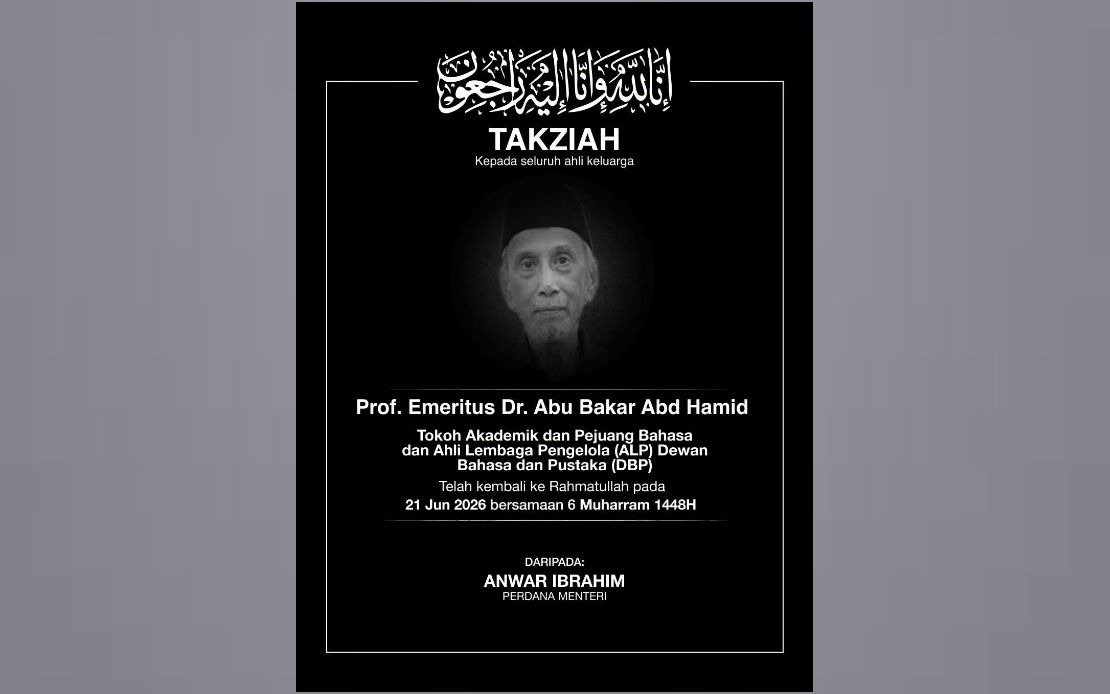
Prime Minister Datuk Seri Anwar Ibrahim has publicly expressed his deep sorrow at the loss of Professor Emeritus Datuk Abu Bakar Abd Hamid, one of Malaysia's most respected literary scholars and academic figures. The distinguished academic passed away on June 21 at his residence in Petaling Jaya, Selangor, following a sudden respiratory episode that claimed his life around 10:30 pm that evening. In a statement shared on his official Facebook page, Anwar reflected on the profound impact Abu Bakar had on his own educational journey and intellectual development.
As a former student of Abu Bakar, Anwar drew on personal experience to characterize the late professor as an exceptional educator whose influence extended far beyond the classroom. He recalled Abu Bakar not merely as a transmitter of academic knowledge, but as someone whose infectious passion for learning motivated generations of students to pursue intellectual excellence with dedication and purpose. This perspective offered a window into how Abu Bakar had shaped the minds of Malaysia's future leaders, establishing standards of scholarly rigor that would define his legacy.
Beyond his teaching responsibilities, Abu Bakar carved out a distinctive place in Malaysia's institutional landscape through his instrumental role in establishing Universiti Kebangsaan Malaysia. Serving as joint secretary of the committee tasked with founding UKM in 1968, Abu Bakar helped lay the conceptual and administrative groundwork for what would become one of the nation's flagship universities. This pioneering work represented a pivotal moment in Malaysia's higher education development, with UKM eventually becoming a centre for Malay language and literature studies.
At Universiti Malaya, Abu Bakar ascended to the position of deputy vice-chancellor in 1987, a role that placed him at the institutional helm during a critical period of university expansion and academic growth. His tenure coincided with increasing recognition of the need to strengthen Malaysian higher education infrastructure and broaden access to quality tertiary learning across the nation. His administrative contributions complemented his scholarly work, enabling him to shape institutional policy while maintaining his commitment to literary studies.
Abu Bakar's influence in Malaysian public life extended into the media sphere, where he served as chairman of the Board of Governors of the Malaysian National News Agency, Bernama, between 1996 and 2000. This position reflected the esteem in which he was held across multiple sectors of society, from academia to government administration to media governance. His stewardship of Bernama during this four-year period coincided with significant developments in Malaysian journalism and the country's evolving media landscape.
Throughout his multifaceted career, Abu Bakar accumulated numerous prestigious awards and accolades that testified to his outstanding contributions to Malaysian literature and academic life. These honours recognized not only his scholarly publications and critical insights into Malay letters, but also his broader impact on institutional development and intellectual discourse within Malaysia. His recognition at the highest levels underscored the significance of his work in shaping how Malaysian society understood and valued its own literary traditions.
The late academic was a native of Johor, a state with its own rich literary heritage and intellectual traditions. This regional connection added another dimension to his scholarly work, as he helped bridge local Johor perspectives with national and international academic conversations about Malay literature and language studies. His career trajectory from Johor to the highest echelons of Malaysian academia illustrated the possibilities for regional talent to achieve national prominence through scholarly excellence.
In his Facebook tribute, Anwar emphasized the personal dimension of Abu Bakar's legacy, speaking to his warmth and approachability as a mentor and guide. The Prime Minister's characterization of Abu Bakar as someone "deeply loved and cherished" suggested that his influence operated on emotional and relational levels alongside his intellectual contributions. This humanistic dimension often goes unrecognized in formal tributes but proved essential to understanding how Abu Bakar had shaped multiple generations of Malaysian intellectuals and leaders.
Abu Bakar was interred at the Bukit Kiara Muslim Cemetery on Monday, following Islamic funeral rites. His passing marked the end of a chapter in Malaysian literary and academic history, closing the book on a distinguished career that had spanned several decades and touched numerous institutions and individuals. The loss was felt across multiple communities—academic colleagues, former students, media professionals, and public figures—each of whom had been touched by different aspects of his multifaceted contributions.
For Malaysia's academic and literary communities, Abu Bakar's death represents a moment for reflection on the foundations of contemporary Malay literary studies and the scholars who established those intellectual frameworks. His generation of academics helped institutionalize the study of Malay language and literature within universities, ensuring that cultural and linguistic heritage received sustained scholarly attention and rigorous academic treatment. As Malaysian higher education continues to evolve, the pioneering work Abu Bakar championed remains relevant to ongoing discussions about preserving and advancing national literary traditions in an increasingly globalized academic environment.
Anwar's public mourning also highlighted the interconnected nature of Malaysia's intellectual elite, where academic pathways often intersect with political and institutional leadership. The Prime Minister's recollection of Abu Bakar as a formative influence in his own development suggested broader patterns about how Malaysian leaders have been shaped by the scholarly environment and mentorship traditions established by figures like Abu Bakar. Such personal connections underscore the enduring importance of academic excellence and intellectual mentorship in Malaysian public life and institutional development.

