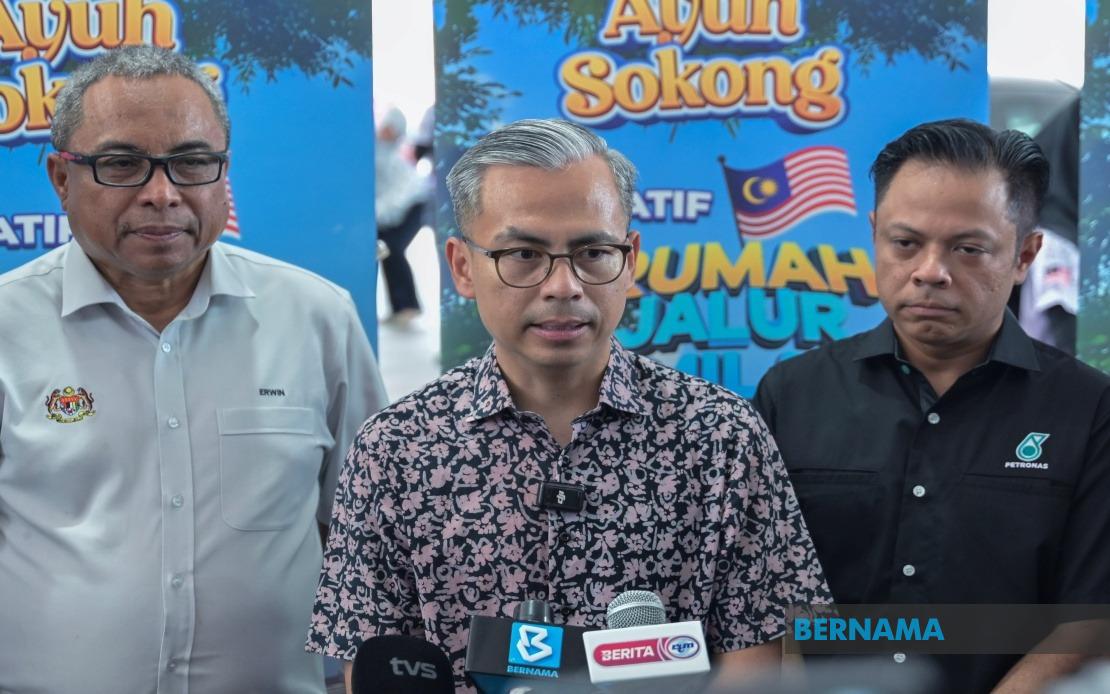
Prime Minister Datuk Seri Anwar Ibrahim has tasked the Election Commission with delivering an updated assessment of a significant constitutional redistribution exercise aimed at increasing the number of seats in the Sarawak State Legislative Assembly. The directive emerged from discussions during a recent Cabinet meeting, where government spokesman Datuk Seri Fahmi Fadzil confirmed that the PM had reaffirmed his administration's resolve to proceed with the initiative once logistical and procedural requirements are fulfilled.
The Sarawak redelineation proposal represents an ambitious expansion of the state legislature, with plans to introduce 17 additional constituencies and raise the total representation from 82 to 99 seats. This constitutional amendment, formally titled the Sarawak State Legislative Assembly (Composition of Membership) Bill 2025, would substantially reshape the political landscape of Malaysia's largest state by geographic area. The expansion addresses demographic shifts and population growth across Sarawak's diverse regions, where traditional boundaries no longer accurately reflect current settlement patterns and constituent populations.
Fahmi, who simultaneously serves as Minister of Communications, explained during a media interaction that while the Prime Minister has committed unequivocally to implementation, specific timelines remain subject to ongoing coordination with the Election Commission. He noted that the Cabinet has not yet received concrete scheduling details because several preparatory steps remain pending from the electoral authority. This measured approach reflects the complexity inherent in boundary delimitation exercises, which require exhaustive consultation, demographic analysis, and public feedback processes before they can be finalized.
The initiative gained momentum after two senior ministers, Datuk Seri Nancy Shukri of the Women, Family and Community Development Ministry and Datuk Seri Alexander Nanta Linggi of the Works Ministry, formally escalated the matter during Cabinet proceedings. Their intervention suggests broad consensus within the government regarding the necessity of the redistribution, though coordination with the Election Commission demonstrates awareness that such constitutional changes demand institutional buy-in and technical groundwork. The dual ministerial push underscores how Sarawak state affairs command attention from multiple portfolio holders in federal government.
For Malaysian observers and political analysts, the timing and emphasis carry implications extending beyond Sarawak's borders. The redelineation effort reflects the MADANI Government's broader commitment to electoral modernization and constitutional refinement following years of political turbulence. By prioritizing an institutional approach through the Election Commission rather than pursuing unilateral legislative action, the administration signals preference for consensus-building and procedural legitimacy—qualities that have become especially valued in Malaysian governance since 2022.
Sarawak's demographic evolution justifies such redistribution. The state has experienced significant internal migration, urbanization particularly around Kuching, Sibu, and other major centres, and economic development creating new population concentrations. The current 82-seat framework, unchanged since prior delimitation cycles, leaves some constituencies vastly larger than others in terms of voter populations. The proposed 17-seat addition would provide room to equilibrate these disparities and ensure fairer representation across the state's 12 divisions.
Parallel developments in the electoral preparation domain also occupied Fahmi's attention. With Melaka approaching its state election, the government is executing detailed logistical preparations informed by recent experiences in Johor and Negeri Sembilan. The communications minister emphasized coordination between the Malaysian Communications and Multimedia Commission and the Election Commission regarding internet infrastructure at polling centres—a consideration reflecting post-pandemic assumptions about information access and digital connectivity during electoral operations.
The identification and management of media facilities at Melaka polling stations demonstrates how modern state elections now incorporate technological and communications dimensions beyond traditional ballot-casting arrangements. By leveraging lessons from preceding state contests, federal authorities are attempting to standardize polling centre specifications and ensure consistent service delivery across jurisdictions. This institutional learning approach reduces administrative friction and enhances operational efficiency when multiple state elections occur within compressed timeframes.
The interconnection between Sarawak's redelineation and broader electoral machinery improvements illustrates how Malaysia's electoral institutions continue evolving in response to practical governance demands. The Sarawak expansion, once approved, would establish an important precedent for state legislative sizing, potentially influencing future delimitation discussions in Peninsular Malaysia and other East Malaysian states. Sabah, similarly positioned as a geographically vast state with dispersed populations, may face comparable pressure to examine its own electoral boundaries.
From a federal-state relations perspective, the proactive engagement by Fahmi and his cabinet colleagues reflects the administration's engagement strategy with Sarawak, historically significant as a MADANI coalition partner and holder of substantial parliamentary seats. Advancing the state's constitutional development agenda demonstrates responsiveness to state government concerns and reinforces the partnership framework that underpins federal stability. Such attentiveness proves particularly valuable given Sarawak's historical experience with state autonomy assertions and distinctive political dynamics.
The waiting period for the Election Commission's report also underscores realistic timelines in constitutional amendment work. Unlike legislative business that may move swiftly through parliament, boundary delimitations require meticulous data gathering, cartographic precision, and often public consultation phases. Premature announcement of implementation dates might generate expectation management problems, whereas the current cautious framing allows flexibility as technical work progresses.
Looking ahead, the convergence of Sarawak's redelineation project with improved electoral logistics in West Malaysian states suggests a government attempting systematic modernization of its electoral machinery. Whether pursued through constitutional amendment or administrative standardization, these developments indicate recognition that Malaysian electoral institutions require periodic renewal to remain effective, representative, and operationally sound. The Sarawak expansion thus represents both a specific state issue and a marker of broader institutional evolution within Malaysian governance.

