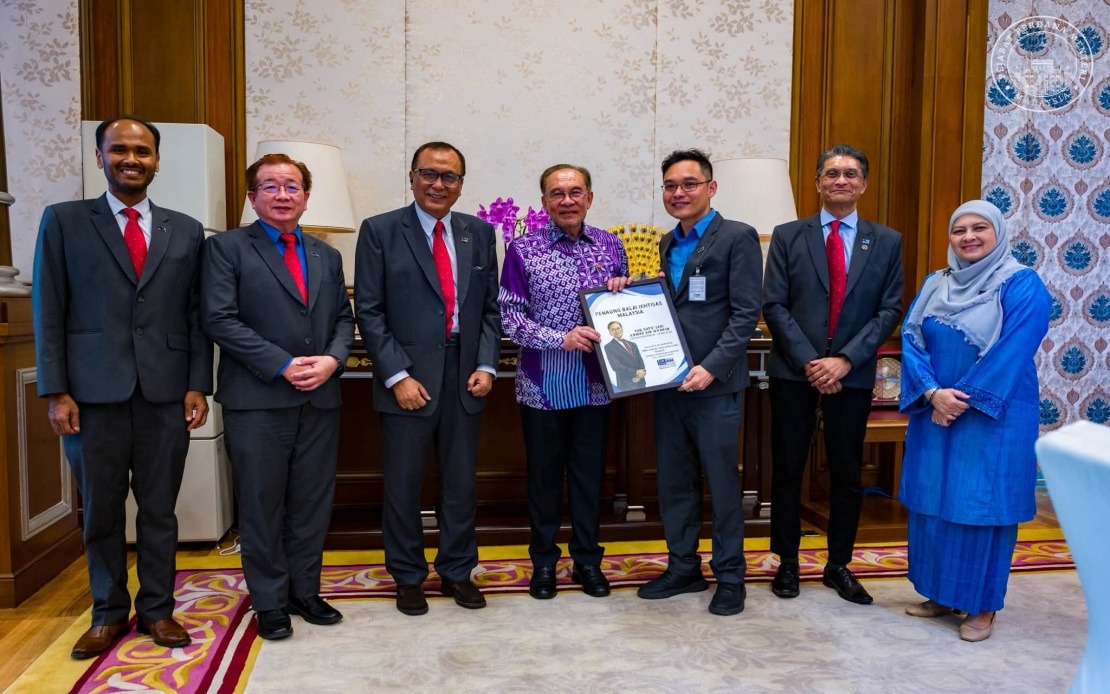
Prime Minister Datuk Seri Anwar Ibrahim has placed artificial intelligence readiness and professional talent development at the centre of the government's economic strategy, signalling their importance during formal talks with Balai Ikhtisas Malaysia (BIM), the Malaysian Professional Centre. The meeting, which featured a courtesy visit from a BIM delegation led by President Prof ChM Dr Juan Joon Ching, underscores the administration's recognition that Malaysia's competitive edge in the region depends increasingly on how well it equips its workforce with emerging technological capabilities and advanced professional skills.
The emphasis on AI readiness reflects broader regional trends. Across Southeast Asia, governments are racing to position their economies as innovation hubs capable of attracting multinational investment and fostering homegrown technology enterprises. Malaysia faces particular pressure to differentiate itself in this landscape, given intense competition from Singapore, Thailand, and Vietnam. By elevating AI development to the prime ministerial level and framing it as a partnership issue with the professional community, the government signals that this is not merely a technical matter delegated to junior officials but a matter of strategic national importance requiring collaboration across sectors.
Talent development, the second pillar of these discussions, carries equally significant implications for Malaysia's trajectory. The professional class—comprising engineers, architects, accountants, management consultants, lawyers, and other specialised practitioners—forms the backbone of knowledge-intensive industries that the country must nurture to transition away from commodities-dependent growth. These professionals serve as multipliers of innovation and quality, influencing standards across their respective fields and sectors. Their capacity to adopt new technologies, adapt to market changes, and lead organisational transformation directly determines whether Malaysian enterprises can compete globally or remain confined to lower-value domestic markets.
Anwar's framing of professionals as strategic partners in advancing national competitiveness reveals a deliberate pivot in how the government conceptualises economic development. Rather than viewing them as service providers subject to regulation, the Prime Minister's language acknowledges their agency and autonomy as drivers of progress. This distinction matters because professional bodies, when treated as genuine partners, become more invested in implementing government priorities and can offer candid advice about implementation challenges that bureaucrats might overlook. The BIM delegation's visit and Anwar's formal acceptance of their concerns suggest an administration willing to listen to the concerns and aspirations of Malaysia's skilled workforce.
The connection to the MADANI agenda—the government's broader framework for people-centric development—indicates how AI and talent initiatives fit into wider policy objectives. MADANI prioritises prosperity, empowerment, and the general welfare of ordinary Malaysians, not merely aggregate GDP growth. When professionals are equipped with cutting-edge AI skills and positioned to lead innovation, the theory goes, their work generates higher-quality employment, better wages, and more fulfilling careers for the broader professional class. It also creates spillover benefits through knowledge transfer and the establishment of standards that elevate entire industries.
The government's courtship of the professional community also reflects political calculation. Professionals represent an educated, organised constituency with influence over public opinion. They vote, donate to political causes, and shape narratives through media and professional networks. By demonstrating responsiveness to their priorities—in this case, investing in their development and recognising their role in national progress—the government builds goodwill among a constituency whose support is valuable, particularly in urban areas where professional populations concentrate. This is not cynical politics but rather the normal intersection of governance and democratic legitimacy.
However, translating rhetorical commitment into concrete outcomes requires sustained resource allocation and policy coherence. Malaysia's education system, from secondary schools through tertiary institutions, must align curricula with AI and emerging technology requirements. Universities must attract and retain faculty capable of teaching these subjects at world-class standards. Private-sector employers must be incentivised to invest in continuous professional development rather than simply poaching trained talent from competitors. These are complex, long-term challenges that extend far beyond a single ministerial meeting.
The invitation to Hari Ikhtisas Malaysia, an annual event celebrating the professional community's contributions, represents another symbolic but meaningful gesture. By accepting the invitation, Anwar signals that the government will publicly celebrate and recognise professional achievement and commitment to national development. For a professional class that often feels undervalued relative to other constituencies, such recognition carries genuine weight. It also creates a platform for dialogue between government and professionals, enabling the exchange of ideas and grievances in a structured, recurring format.
Looking forward, the success of this partnership will depend on translating commitment into implementation. The professional community will expect concrete action: perhaps enhanced funding for AI research institutions, visa pathways to attract foreign expertise, tax incentives for professional development, and regulatory reforms that reduce unnecessary compliance burdens on knowledge workers. Similarly, the government will expect professionals to contribute to national capacity-building, mentor younger practitioners, and participate actively in policy formulation. This is a two-way relationship that demands sustained engagement from both parties.
For Malaysia's regional positioning, getting this right is critical. The city-state of Singapore already attracts global talent through deliberate policies and world-class infrastructure. Vietnam and Thailand are making aggressive moves in AI research and development. Indonesia, with its vast population, represents both opportunity and competition. Malaysia's strength lies in its combination of English-speaking professionals, relative political stability, multicultural workforce, and strategic geographic location. By investing in professional excellence and AI readiness, the government can leverage these advantages to establish Malaysia as a genuine hub for professional expertise and innovation in Southeast Asia, rather than merely a service provider or manufacturing base. The BIM meeting suggests this ambition is now at the highest levels of government, though execution will ultimately determine whether it becomes reality.

