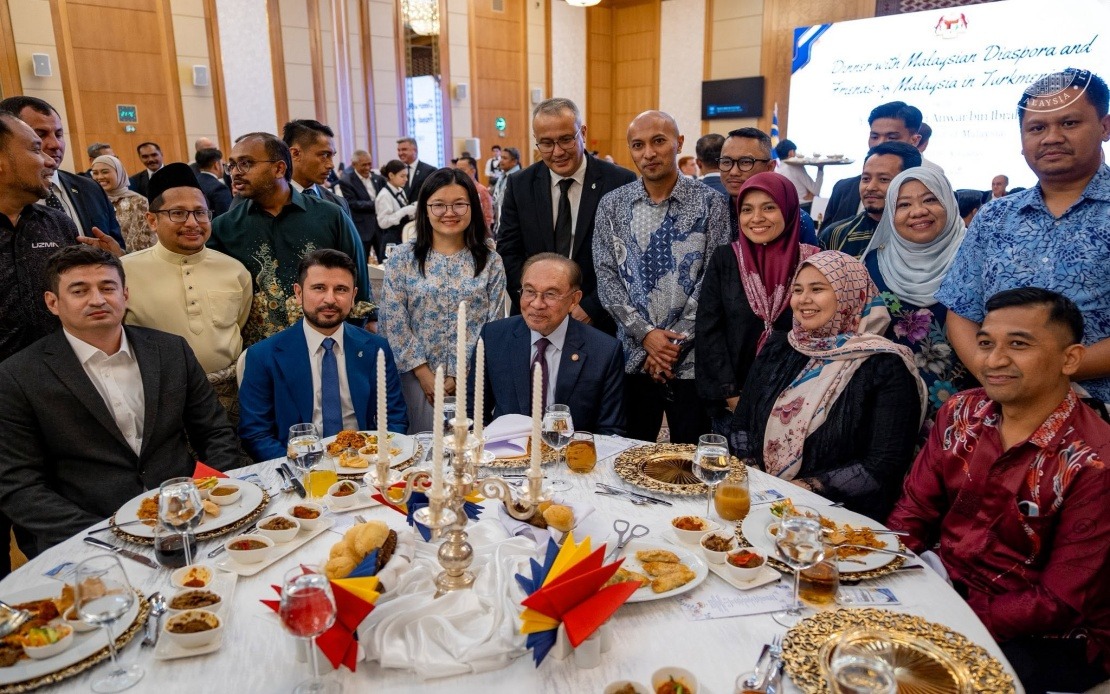
Prime Minister Datuk Seri Anwar Ibrahim has underscored the importance of Malaysia's diaspora communities as vital cultural and economic bridges, meeting with compatriots in Ashgabat during his ongoing official visit to Turkmenistan. The engagement reflects a deliberate strategy by the MADANI Government to maintain meaningful connections with Malaysians scattered across the globe, treating these expatriate communities not merely as citizens abroad but as strategic assets in advancing national interests on the international stage.
During the encounter, Anwar expressed gratitude for the opportunity to connect with fellow Malaysians despite the geographical distance separating them from home. He characterised the gathering as a moment of profound national pride, noting that the sense of community and warmth transcended borders, creating an atmosphere reminiscent of gatherings in Kuala Lumpur itself. This sentiment carries particular weight in diplomatic contexts, where such personal engagements often translate into sustained goodwill and support for government initiatives among expatriate populations who maintain emotional and financial ties to Malaysia.
The Prime Minister articulated a vision of the diaspora as unofficial ambassadors who actively construct Malaysia's international reputation through their professional achievements, business endeavours, and civic participation in their host countries. This framing elevates the status of overseas Malaysians beyond mere economic contributors, positioning them as conscious agents in a broader campaign to enhance national prestige and expand diplomatic networks. Such recognition resonates deeply with diaspora communities who often struggle with questions of belonging and national relevance when living far from home.
Anwar emphasised the necessity for diaspora members to maintain active engagement with Malaysia's ongoing development trajectory, encouraging them to stay informed about the nation's progress across economic, social, and governance dimensions. This call to sustained connection addresses a common challenge facing diaspora communities worldwide: the risk of gradual disconnection from homeland affairs as expatriate tenure lengthens and local integration deepens. By encouraging information flow and awareness, the government seeks to cultivate long-term ambassadors whose understanding of contemporary Malaysia can influence perceptions in their adopted countries.
The Prime Minister's visit to Turkmenistan itself represents a carefully calibrated diplomatic initiative extending beyond conventional trade and investment frameworks. Anwar explained that the Central Asian engagement encompasses broader objectives centred on expanding bilateral friendship, deepening mutual understanding, and identifying collaborative opportunities that serve both nations' strategic interests. This multidimensional approach reflects Malaysia's positioning as a middle-power actor seeking to diversify international partnerships beyond traditional regional associations and established economic partners.
Turkmenistan, a significant energy producer controlling vast natural gas reserves and positioned strategically along the historic Silk Road trade corridors, represents an emerging opportunity for Malaysian engagement in Central Asia. The visit follows Turkmenistan President Serdar Berdimuhamedov's December 2024 official visit to Malaysia, establishing a reciprocal diplomatic rhythm that signals mutual commitment to deepening bilateral relations. For Malaysia, such engagement opens pathways for exploration in sectors ranging from energy cooperation to infrastructure development and technological transfer.
The timing and sequencing of these high-level visits reflect a deliberate strategy of relationship-building that moves beyond ceremonial protocols. Anwar's commitment to meeting diaspora communities during official foreign visits demonstrates an integrated approach where diplomatic missions simultaneously advance state-to-state relations and nurture connections with overseas Malaysian populations. This dual engagement strategy maximises the return on diplomatic investment by leveraging multiple channels of influence and goodwill generation.
For the Malaysian diaspora in Central Asia and beyond, such gestures carry symbolic significance indicating that their experiences, concerns, and contributions receive acknowledgment at the highest governmental levels. In an era where many nations compete for the loyalties and investments of their diaspora communities, Malaysia's deliberate cultivation of these relationships through prime ministerial engagement signals serious intent to maintain diaspora networks as enduring assets. This approach proves particularly relevant for a trading nation like Malaysia, where overseas networks facilitate commerce, knowledge exchange, and soft power projection.
The broader context of this engagement also reflects evolving perspectives on how nations conceptualise national interest in an increasingly globalised world. Rather than viewing diaspora members as citizens who have departed the national fold, the MADANI Government positions them as extended participants in national development, regardless of geographical location. This reconceptualisation has practical implications for diaspora policy formulation, citizenship engagement, and the development of programmes specifically designed to maintain diaspora loyalty and utilise their capabilities for national advancement.
As Malaysia seeks to strengthen its international positioning amid regional geopolitical shifts and global economic recalibration, the strategic importance of maintaining robust diaspora relationships becomes increasingly evident. Communities of Malaysians established in diverse countries provide invaluable insights into local market conditions, regulatory environments, and business opportunities while simultaneously serving as cultural ambassadors and bridges between Malaysia and their adopted nations. Prime ministerial engagement with these communities, particularly in the context of expanding bilateral relationships with emerging partners like Turkmenistan, reflects a sophisticated understanding of twenty-first-century statecraft where human networks and institutional relationships prove equally consequential as formal diplomatic protocols.

