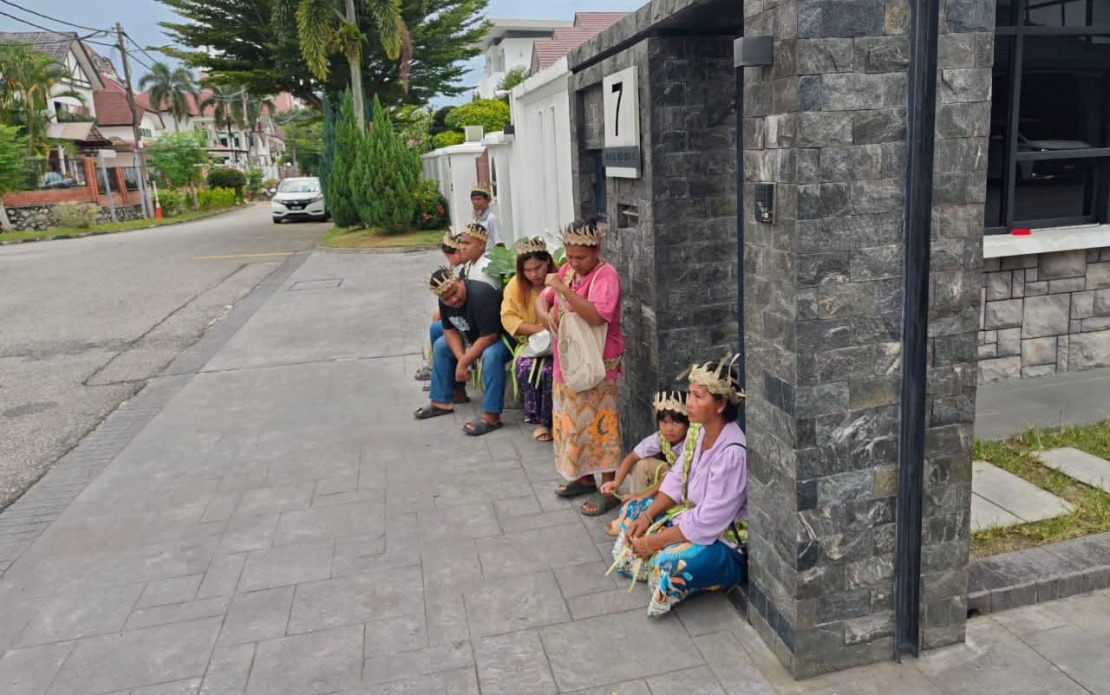
Prime Minister Datuk Seri Anwar Ibrahim has committed to raising the longstanding land dispute affecting the Orang Asli community of Kampung Sungai Cot, Maran, Pahang with the state government. Anwar announced his intention through a Facebook statement on July 17, following direct engagement with representatives from the indigenous settlement who had visited his residence earlier that day.
During the afternoon visit, the Orang Asli delegation briefed the Prime Minister on the difficulties they face stemming from the unresolved land dispute that has plagued the community for some time. The issue extends beyond property rights; the community has also been grappling with the detention of three village residents by police. However, Anwar noted in his statement that those detained have since been released, marking a potential easing of tensions within the community.
The Kampung Sungai Cot situation underscores a broader challenge facing Malaysia's Orang Asli populations. Indigenous communities across the peninsula have historically faced competing land claims, inadequate documentation of customary rights, and bureaucratic obstacles in asserting their territorial claims. The involvement of the Prime Minister's Office signals that the federal government views this particular case as sufficiently significant to warrant direct intervention at the highest level of government.
Anwar's public commitment carries weight partly because land disputes involving Orang Asli communities often reflect systemic gaps in how indigenous rights are protected and adjudicated. Many such disputes have languished for years or decades due to overlapping jurisdictional claims between federal land authority bodies and state governments, compounded by unclear documentation of ancestral territories that predate modern land registration systems.
The Prime Minister emphasised the need for restraint and factual accuracy in how the dispute is discussed publicly. He specifically cautioned against what he termed manipulation of the issue, appealing to all stakeholders to refrain from politicising or sensationalising the community's plight. Instead, Anwar called for a solution grounded in fairness, careful deliberation, and strict adherence to the law—a formulation suggesting his administration sees legal pathways available for resolution.
Pahang, as one of Malaysia's largest and least densely populated states, contains significant Orang Asli populations concentrated primarily in the interior regions. The state government's role in land administration is crucial, as most land titles and usage rights fall under state jurisdiction in accordance with Malaysia's federal structure. By committing to engage directly with Pahang authorities, Anwar indicated that resolution would likely require constructive dialogue between federal and state levels rather than unilateral federal intervention.
The detention and subsequent release of the three community members suggests that tensions had escalated to the point of law enforcement involvement, possibly related to alleged land encroachment, trespass, or civil unrest. The relatively swift release may indicate either that charges were determined to be unfounded or that authorities recognised the reputational and diplomatic costs of detaining indigenous community members in a high-profile dispute.
For Malaysian policymakers and the broader Southeast Asian region, the Kampung Sungai Cot case illustrates persistent challenges in balancing development, land certainty, and indigenous rights protection. Many nations across Southeast Asia have struggled with similar disputes, and the manner in which Malaysia addresses this situation could set precedent for how federal governments engage with Orang Asli communities on contentious issues.
Anwar's public acknowledgement of the problem and his commitment to federal-state coordination represents a shift from past approaches that sometimes left such disputes in administrative limbo. His emphasis on lawful solutions without political manipulation reflects an awareness that Orang Asli land disputes can become flashpoints for broader social tension if not handled with care and transparency.
The path forward will likely involve administrative and legal review of land titles, consultation with the Pahang state government, and dialogue with the Orang Asli community to understand their historical and customary claims. Such processes typically require cooperation between the Department of Orang Asli Development, state land offices, and potentially the courts if legal determinations are necessary.
This episode highlights the importance of proactive government engagement with indigenous communities facing resource-related disputes. The willingness of the Prime Minister's Office to receive community delegations and publicly commit to action demonstrates recognition that such grievances, if left unaddressed, can undermine social cohesion and public confidence in institutional fairness.

